
Catalogue Search | MBRL


Are you sure you want to remove the book from the shelf?

{{itemTitle}}
2,527
result(s) for
"Arab countries Foreign relations."
Sort by:

1948
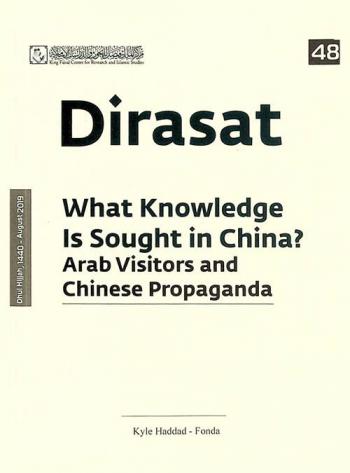
This history of the foundational war in the Arab-Israeli conflict is groundbreaking, objective, and deeply revisionist. A riveting account of the military engagements, it also focuses on the war's political dimensions. Benny Morris probes the motives and aims of the protagonists on the basis of newly opened Israeli and Western documentation. The Arab side-where the archives are still closed-is illuminated with the help of intelligence and diplomatic materials.
Morris stresses thejihadicharacter of the two-stage Arab assault on the Jewish community in Palestine. Throughout, he examines the dialectic between the war's military and political developments and highlights the military impetus in the creation of the refugee problem, which was a by-product of the disintegration of Palestinian Arab society. The book thoroughly investigates the role of the Great Powers-Britain, the United States, and the Soviet Union-in shaping the conflict and its tentative termination in 1949. Morris looks both at high politics and general staff decision-making processes and at the nitty-gritty of combat in the successive battles that resulted in the emergence of the State of Israel and the humiliation of the Arab world, a humiliation that underlies the continued Arab antagonism toward Israel.
eBook

The Arab World and Latin America
With the growing importance of emerging markets the focus of analysts has begun to concentrate on the contribution of Latin America and the Middle East to the global economy, and the relations between these two regions. This has become ever more important with the trend in Latin America to diversify their trade relations and establish closer economic and political ties with other emerging economies, including the Middle East and North African (MENA) countries. The Arab World and Latin America examines the relations between these two regions, highlighting the often-overlooked cultural similarities, as well as exploring the political and economic ties that are being developed. As relations with and between countries in the Global South become ever more important for trade and investment, both politically and economically, this volume offers vital analyses for researchers of international relations as well as the politics and culture of the Middle East and Latin America.
eBook

Arab France
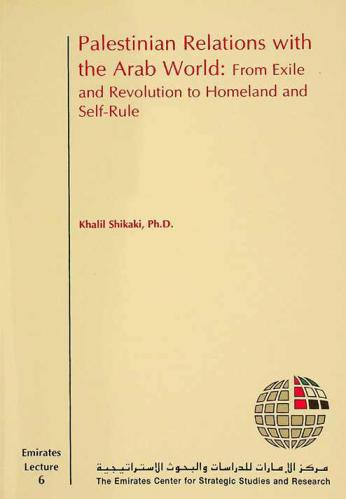
Many think of Muslims in Europe as a twentieth century phenomenon, but this book brings to life a lost community of Arabs who lived through war, revolution, and empire in early nineteenth century France. Ian Coller uncovers the surprising story of the several hundred men, women, and children—Egyptians, Syrians, Greeks, and others—who followed the French army back home after Napoleon’s occupation of Egypt. Based on research in neglected archives, on the rediscovery of forgotten Franco-Arab authors, and on a diverse collection of visual materials, the book builds a rich picture of the first Arab France—its birth, rise, and sudden decline in the age of colonial expansion. As he excavates a community that was nearly erased from the historical record, Coller offers a new account of France itself in this pivotal period, one that transcends the binary framework through which we too often view history by revealing the deep roots of exchange between Europe and the Muslim world, and showing how Arab France was in fact integral to the dawn of modernity.
eBook
The UAE and Foreign Policy
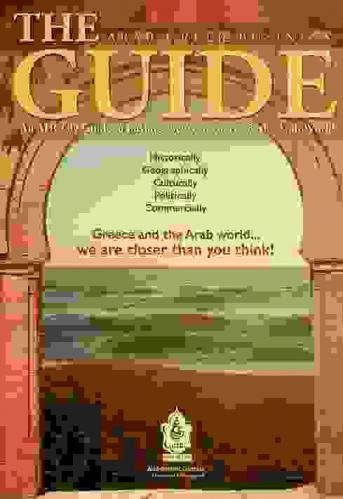
This book offers a concise and detailed analysis of the United Arab Emirates (UAE) foreign aid as a main instrument in its foreign policy. Exploring the cultural factors that have impacted on the foreign policy behaviour of the UAE and its foreign aid, the author argues that Arabism and Islamic traditions have shaped the country's foreign policy in general and foreign aid in particular.
Examining in depth the motives and purposes of this large aid program through the lens of International Relations theories (mainly Constructivism and Rationalism), the book details the UAE's foreign policy and aid program since its inception. Drawing on a comprehensive analysis of two major recipients of aid from the UAE - Palestine and Pakistan - the focus moves beyond the UAE to show how cultural factors have impacted on the behaviour of the authorities across the wider Arab Middle East.
This critical assessment and analysis of the UAE's foreign policy will be of particular interest to students, researchers and academics interested in Middle East studies, the Gulf States, Middle East politics, and foreign aid and foreign policy.
eBook

Euro-Mediterranean Relations after the Arab Spring
The 'Arab Spring' triggered paradigmatic shifts but, despite these changes, much in the Euro-Mediterranean region remains the same. Utilising 'Logics of Action', an innovative theoretical framework designed to capture the complexity of political interaction in one of the fastest changing regions in the world, this book discusses developments in the region before and after the Arab Spring that can be characterised by a continuation of the norm. Expert contributors identify patterns of interaction between governmental institutions, economic entrepreneurs, religious groups and other diverse actors that withstood these historical changes and explore why these relationships have proved so robust. Connecting a unique sample of case studies on changing and persistent 'Logics of Action' within the Euro-Mediterranean space this book provides a pivotal contribution to our understanding of political interaction between North Africa, the Middle East and the European Union. Offering a completely new perspective on the events of the 'Arab Spring' it identifies something that seems paradoxical at first sight; persistence in times of radical change.
eBook