
Catalogue Search | MBRL


Are you sure you want to remove the book from the shelf?

{{itemTitle}}
6
result(s) for
"Arab countries History Arab Revolt, 1916-1918"
Sort by:

Desert insurgency : archaeology, T.E. Lawrence, and the Arab revolt
In the desert sands of southern Jordan lies a once-hidden conflict landscape along the Hejaz Railway. Built at the beginning of the twentieth-century, this narrow-gauge 1,320 km track stretched from Damascus to Medina and served to facilitate participation in the annual Muslim Hajj to Mecca. The discovery and archaeological investigation of an unknown landscape of insurgency and counter-insurgency along this route tells a different story of the origins of modern guerrilla warfare, the exploits of T.E. Lawrence, Emir Feisal, and Bedouin warriors, and the dramatic events of the Arab Revolt of 1916-18. Ten years of research in this prehistoric terrain has revealed sites lost for almost 100 years: vast campsites occupied by railway builders; Ottoman Turkish machine-gun redoubts; Rolls Royce Armoured Car raiding camps; an ephemeral Royal Air Force desert aerodrome; as well as the actual site of the Hallat Ammar railway ambush. This unique and richly illustrated account from Nicholas Saunders tells, in intimate detail, the story of a seminal episode of the First World War and the reshaping of the Middle East that followed.
BOOK

The Hashemites
The story of the Arab Revolt and the Hashemite princes who led it during the First World War is inextricably linked in modern eyes to the legend of Lawrence of Arabia as portrayed in David Lean's 1962 film. But behind this romantic image lies a harsher reality of wartime expediency, double-dealing and dynastic ambition, which shaped the modern Middle East and laid the foundations of many of the conflicts that rack the region to this day. Arab nationalists claim that British instigation for the Arab Revolt against the Ottoman Empire was a commitment to independence for the Arab people, but in this book Robert McNamara shows how the British cultivated the Hashemite Sherifs of Mecca more as an alternative focus during the First World War for Muslim loyalty from the Ottoman Sultan, who as Caliph had declared a jihad against the Allies when the Turks joined the Central Powers, than a leader of an independent and united Arabia. At the same time, the Sykes-Picot Agreement divided up the Middle East between British and French spheres of influence. The sense of betrayal that this caused has coloured Arab nationalists' views of the West ever since. The main countries of the Middle East -Jordan, Syria and Iraq-are all the creations of the post-First World War settlement worked out at the Paris Peace Conference. The story of the Hashemite dynasty at the Paris Peace Conference is the story of the birth of the modern history of a region that is now more than ever at the centre of world affairs.
eBook

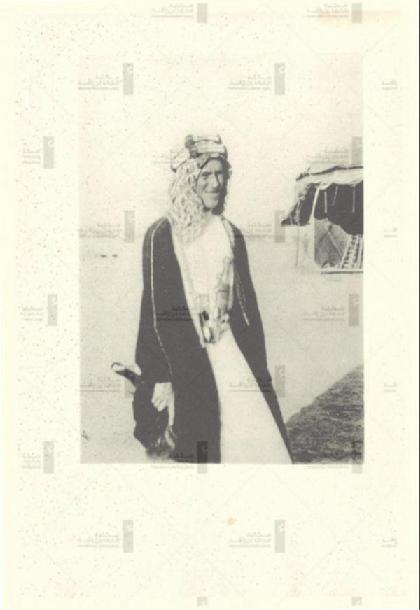

Behind the Lawrence Legend : The Forgotten Few Who Shaped the Arab Revolt
T. E. Lawrence became world-famous as \"Lawrence of Arabia\" after helping Sherif Hussein of Mecca gain independence from Turkey during the Arab Revolt of 1916-18. His achievements, however, would have been impossible without the unsung efforts of a forgotten band of fellow officers and spies. This groundbreaking account by Philip Walker interweaves the compelling stories of Colonel Cyril Wilson and a colorful supporting cast with the narrative of Lawrence and the desert campaign. These men's lost tales provide a remarkable and fresh perspective on Lawrence and the Arab Revolt. While Lawrence and others blew up trains in the desert, Wilson and his men carried out their shadowy intelligence and diplomatic work. His deputies rooted out anti-British soldiers who were trying to sabotage the revolt. Meanwhile, Lieutenant Lionel Gray, a cipher officer, provided a gateway into unknown aspects of the revolt through his previously unpublished photographs and eyewitness writings. Wilson's crucial influence underpinned all these missions and steadied the revolt on a number of occasions when it could have collapsed. Without Wilson and his circle there would have been no \"Lawrence of Arabia.\" Wilson's band mostly fell through the cracks of history into obscurity. Behind the Lawrence Legend reveals their vital impact and puts Lawrence's efforts into context, helping to set the record straight for one of the most beguiling and iconic characters of the twentieth century.
Book