Catalogue Search | MBRL


Are you sure you want to remove the book from the shelf?

{{itemTitle}}
26
result(s) for
"Arabic fiction-Iraq"
Sort by:

Contemporary Iraqi Fiction
The first anthology of its kind in the West, Contemporary Iraqi Fiction gathers work from sixteen Iraqi writers, all translated from Arabic into English. Shedding a bright light on the rich diversity Iraqi experience, Shakir Mustafa has included selections by Iraqi women, Iraqi Jews now living in Israel, and Christians and Muslims living both in Iraq and abroad.While each voice is distinct, they are united in writing about a homeland that has suffered under repression, censorship, war, and occupation. Many of the selections mirror these grim realities, forcing the writers to open up new narrative terrains and experiment with traditional forms. Muhammad Khodayyir's surrealist portraits of his home city, Basra, in an excerpt from Basriyyatha and the magical realism of Mayselun Hadi's \"Calendars\" both offer powerful expressions of the absurdity of everyday life. Themes range from childhood and family to war, political oppression, and interfaith relationships. Mustafa provides biographical sketches for the writers and an enlightening introduction, chronicling the evolution of Iraqi literature.
eBook


Fantasy as 'Recovery, Escape and Consolation' in the Short Stories of Isaac Bar Moshe
Isaac Bar Moshe (1927-2004) was born in Baghdad and immigrated to Israel in 1950. This article deals with his literary world, which is split between realism on the one hand and fantasy, mysticism and dreams on the other, with both these planes reflecting his perspective on various existential questions. The article focuses on the short stories in his book Behind the Wall (1973), which, like many of his other works, are largely anchored in his private life and depict a bleak reality, with dreams and fantasy offering the only hope of escape into a better, more spiritual world. The article concludes with an analysis of Bar Moshe's stories in terms of the three functions of fantasy - 'recovery, escape and consolation' - as formulated by writer and philologist J.R.R. Tolkien in his book Tree and Leaf.
Journal Article
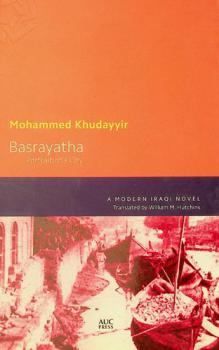
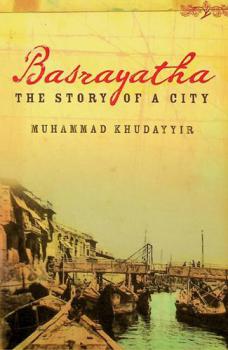
Basrayatha : portrait of a city
\"Basrayatha is a literary tribute by author Mohammed Khudayyir to the city of his birth, Basra, on the Shatt al-Arab waterway in southern Iraq. Just as a city's inhabitants differ from outsiders through their knowledge of its streets as well as its stories, so Khudayyir distinguishes between the real city of Basra and Basrayatha, the imagined city he has created through stories, experiences, and folklore.\" \"By turns a memoir, a travelogue, a love letter, and a meditation, Basrayatha summons up images of a city long gone. In loving detail, Khudayyir recounts his discovery of his city as a child, as well as past communal banquets, the public baths, the delights of the Muslim day of rest, the city's flea markets and those who frequent them, a country bumpkin's big day in the city. Hollywood films at the local cinema, daily life during the Iran-Iraq War, and the canals and rivers around Basra. Above all, however, the book illuminates the role of the storyteller in creating the cities we inhabit. Evoking the literary modernism of authors like Calvino and Borges, and tinged with nostalgia for a city now disappeared, Basrayatha is a tribute to the power of memory and imagination.\"--Jacket.
BOOK