
Catalogue Search | MBRL


Are you sure you want to remove the book from the shelf?

{{itemTitle}}
135
result(s) for
"Arabic language Dialects Syntax."
Sort by:


The Feature Structure of Functional Categories
Focusing on the relation between functional categories and lexical and phrasal categories in Arabic dialects, Benmamoun proposes that universally functional categories are specified for categorial features which determine their relation with lexical categories.
eBook
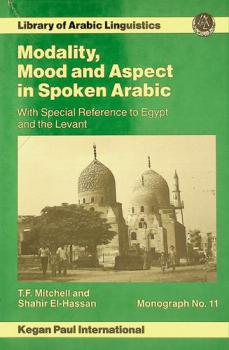
Modality, mood, and aspect in spoken Arabic : with special reference to Egypt and the Levant
This is the first full-length monograph derived from the Leeds University investigation into the structure of Educated Spoken Arabic which has so far been published. It would be difficult to underestimate the value of this corpus for the study of variation in modern Educated Spoken Arabic, since it is unique in its size, comprehensiveness and geographical representativeness, covering educated spoken usage in all the major population centres of the eastern Arab world, and drawing from a wide variety of contexts of use. The major contributions such studies can make to Arabic linguistics are two: synchronically, in showing just how much of the syntactic structure of modern Educated Spoken Arabic - however much morphological and lexical variation may divide one region from another - is in fact shared property; and, diachronically, if the degree of sharing of syntactic phenomena which cannot be plausibly derived from Classical Arabic turns out to be high (as from the present study it seems to be), is providing more evidence that ESA in fact represents a contemporary pan-Arab continuation of age-old shared spoken forms which were never identical with what we now call Classical Arabic, and which, through centuries of trade and constant contacts throughout the eastern Arab area, have continued to develop independently of it.
Book

Word Order, Agreement and Pronominalization in Standard and Palestinian Arabic
Grounded in the generative grammar framework of Minimalism, this text considers the related issues of word order and subject-verb agreement, which have occupied centre stage in the study of Arabic syntax since the eighth century.
eBook
Creation of annotated country-level dialectal Arabic resources: An unsupervised approach
The wide usage of multiple spoken Arabic dialects on social networking sites stimulates increasing interest in Natural Language Processing (NLP) for dialectal Arabic (DA). Arabic dialects represent true linguistic diversity and differ from modern standard Arabic (MSA). In fact, the complexity and variety of these dialects make it insufficient to build one NLP system that is suitable for all of them. In comparison with MSA, the available datasets for various dialects are generally limited in terms of size, genre and scope. In this article, we present a novel approach that automatically develops an annotated country-level dialectal Arabic corpus and builds lists of words that encompass 15 Arabic dialects. The algorithm uses an iterative procedure consisting of two main components: automatic creation of lists for dialectal words and automatic creation of annotated Arabic dialect identification corpus. To our knowledge, our study is the first of its kind to examine and analyse the poor performance of the MSA part-of-speech tagger on dialectal Arabic contents and to exploit that in order to extract the dialectal words. The pointwise mutual information association measure and the geographical frequency of word occurrence online are used to classify dialectal words. The annotated dialectal Arabic corpus (Twt15DA), built using our algorithm, is collected from Twitter and consists of 311,785 tweets containing 3,858,459 words in total. We randomly selected a sample of 75 tweets per country, 1125 tweets in total, and conducted a manual dialect identification task by native speakers. The results show an average inter-annotator agreement score equal to 64%, which reflects satisfactory agreement considering the overlapping features of the 15 Arabic dialects.
Journal Article

Prominence Assignment in Saudi Arabic: Are Prosodic Cues Complementary to Word Order, or Are They Redundant?
Languages differ in how they convey prominence and information structure (IS). In Modern Standard Arabic (MSA), a flexible word order language, new information focus is marked by accent, and contrastive focus by word order displacement (Moutaouakil, 1989). Traditionally, rigid word order languages rely on prosody, while flexible word order languages employ syntactic movement (Donati & Nespor, 2003; Cole, 2015). However, the combined use of word order and prosody to mark prominence in flexible-word order languages has not been well studied. This study investigates the interaction between syntactic and prosodic strategies in two Saudi Arabic varieties (Hijazi and Najdi) to determine whether prosody complements or merely replicates the function of word order. A production task with 12 Saudi speakers elicited responses that varied in word order, focus type, and prosodic marking. Acoustic analysis revealed that focused elements exhibited longer vowel durations and wider F0 ranges than non-focused elements, while maximum intensity also varied, though it was influenced by domain-initial strengthening. These results suggest that Saudi speakers use both word order and prosody to mark focus, indicating that prosodic cues are complementary rather than redundant. In addition, the findings contribute to the broader theoretical debate on the syntax-prosody interface and imply the need for a revised typology of focus-marking strategies that integrates both prosodic and syntactic methods.
Journal Article
Potential Use of ChatGPT-4 for Translating the Emirati Dialect Into English
For translators and conventional machine systems, Arabic dialects pose translation challenges including scarce linguistic resources and the complexity of nonstandard Arabic. However, large language models (LLMs) are able to understand contextual meaning and showcase promising translation capabilities. This study investigates ChatGPT-4’s understanding and translations of five excerpts, including 39 lexical items, from the Emirati dialect into English. The data were analyzed qualitatively for clarity, fluency, and structure. Additionally, four bilingual raters quantitatively evaluated the translated lexical items according to the context. Qualitative analysis revealed that ChatGPT-4 could understand the Emirati dialect’s linguistic, cultural, and semantic intricacies and successfully translate them into English. Quantitative evaluation, based on accuracy of meaning, word choice, naturalness, syntactic harmony, and clarity, demonstrated a high level of agreement among the raters. However, the source of the data, which was an online forum, might have impacted the results, as ChatGPT could have been trained on similar data from such forums, potentially influencing its translation outcomes. This study contributes to the discussion of LLMs’ viability in translation practice, with implications for translators, translation trainers, and tool makers.
Journal Article

When Developmental Language Disorder Meets Diglossia: A Cross-Sectional Investigation of Listening Comprehension Among Native Arabic-Speaking Preschoolers
Diglossia in the Arabic language refers to the existence of two varieties of the same language: the Spoken Arabic (SA) and the Literary Arabic (LA). This study examined the development of listening comprehension (LC) among diglossic Arabic K1–K3. For this purpose, a large sample of typically developing (TD; N = 210) and developmental language disorder children (DLD; N = 118) were examined using SA and LA texts. The analysis of variance conducted on their performance in LC revealed significant effects of K-level, group (TD vs. DLD) and text affiliation (SA vs. LA): higher scores in TD and in SA. A significant interaction between text affiliation and K-level was observed among the TD but not the DLD group. This interaction indicated that the gap in LC between the SA and LA varieties decreased with age only among TD children. The theoretical and pedagogical implications of these results are discussed.
Journal Article
A Sociolinguistics Perspective of Interrogative Forms in English, Standard Arabic and Jordanian Dialects
This paper aims to investigate some forms of interrogatives in Standard Arabic (SA), two Jordanian Arabic dialects (JAD): urban Jordanian Arabic (UJA) and rural Jordanian Arabic (RJA), and their impact on the Jordanian people's use of English Interrogative forms. It also examines how SA, and the two JAD are similar and different based on their forms and uses of interrogatives. Further, this study analyzes how each interrogative form is used in different classifications and contexts. The descriptive approach is used to describe the impact of SA, UJA and RJA on the use of English interrogative forms in social contexts. The study concludes that JADs share some interrogative forms and that some of them hold multiple meanings or usages. It also confirms that SA and its Jordanian dialects, UJA and RJA, to some extent, impact the Jordanian people's use of English interrogative forms.
Journal Article

The syntax of wh-questions in unaccusative and (Un)ergative structures in Mehri language: A Phase-based approach
The Mehri Language is an endangered language spoken in eastern Yemen, a sub-group of the Semitic language family, and a Southern Arabic language. The syntax of Mehri wh-questions has not been explored within minimalism; hence, there is a morpho-syntactic need to provide a modern analysis of wh-questions in order to show how the interrogative structures can be derived. This study aims to examine the syntax of the wh-question movement in Mehri’s unaccusative/ergative and unergative structures and answer the following questions within Chomsky’s (2000 and 2008) Phase-based Theory: (i) Does the Mehri language allow fronting of wh-phrases to [Spec-CP]? And (ii) how can wh-movement in Mehri unaccusative and (un)ergative structures be accounted for? This work presents a novel analysis of wh-question movement in unaccusative/ergative and unergative structures in Mehri; it demonstrates that the source head C triggers the movement of wh-adjunct and wh-subject phrases. In wh-adjunct extraction, two strategies are employed: overt wh-fronting and wh-in-situ; when the head Foc inherits an edge feature from C, wh-adjunct overtly undergoes movement from its original position within v*P to the left peripheries of [Spec-FocP] and subsequently to [Spec-CP]. When the lexical wh-adjunct remains within v*P, its question features covertly move to [Spec-CP], because the head Foc does not inherit an edge feature from C. In wh-subject extraction, the wh-subject overly undergoes movement to [Spec-CP] because C obligatorily inherits the edge feature to the head Top, which triggers movement of the illogical subject in unaccusative/ergative structures and the logical external specifier in unergative structures to [Spec-CP]. Moreover, Mehri obeys the Phase Impenetrability Condition of Chomsky, where wh-subject and wh-adjunct phrases must pass through certain phases until [Spec-CP].
Journal Article