
Catalogue Search | MBRL


Are you sure you want to remove the book from the shelf?

{{itemTitle}}
625
result(s) for
"Arabic language Social aspects"
Sort by:

The Routledge Handbook of Arabic and Identity
The Routledge Handbook of Arabic and Identity offers a comprehensive and up-to-date account of studies that relate the Arabic language in its entirety to identity. This handbook offers new trajectories in understanding language and identity more generally and Arabic and identity in particular.
Split into three parts, covering ‘Identity and Variation’, ‘Identity and Politics’ and ‘Identity Globalisation and Diversity’, it is the first of its kind to offer such a perspective on identity, linking the social world to identity construction and including issues pertaining to our current political and social context, including Arabic in the diaspora, Arabic as a minority language, pidgin and creoles, Arabic in the global age, Arabic and new media, Arabic and political discourse.
Scholars and students will find essential theories and methods that relate language to identity in this handbook. It is particularly of interest to scholars and students whose work is related to the Arab world, political science, modern political thought, Islam and social sciences including: general linguistics, sociolinguistics, discourse analysis, anthropological linguistics, anthropology, political science, sociology, psychology, literature media studies and Islamic studies.
eBook

Language and identity in the Arab world
\"Language and Identity in the Arab World explores the inextricable link between language and identity, referring particularly to the Arab world. Spanning from Indonesia to the United States, the Arab world is here imagined as a continually changing one, with the Arab diaspora asserting its linguistic identity across the world. Crucial questions on transforming linguistic landscapes, the role and implications of migration, the impact of technology on language use are explored by established and emerging scholars in the field of applied and socio-linguistics. The book asks such crucial questions as how language contact affects or transforms identity, how language reflects changing identities among migrant communities, and how language choices contribute to identity construction in social media. As well as appreciating the breadth and scope of the Arab world, this anthology focuses on the transformative role of language within indigenous and migrant communities as they negotiate between their heritage languages and those spoken by the wider society. Investigating the ways in which identify continues to be imagined and re-constructed in, and among Arab communities, this book is indispensable to students, teachers and anyone who is interested in language contact, linguistic landscapes, minority language retention as well as the intersections of language and technology\"-- Provided by publisher.
Book


Aspect, Tense and Action in the Arabic Dialect of Beirut
The linguistic categories of aspect, tense and action are closely interrelated. In the first part of Aspect, Tense and Action in the Arabic dialect of Beirut, Stefan Bruweleit defines the three categories and describes the interplay between them at a metagrammatical level. In the next parts he applies the theoretical findings of the first part to the Arabic dialect of Beirut, investigates the ways temporal, aspectual and actional categories are expressed and shows how to decide whether the verb system of the dialect has to be regarded as aspectual or as temporal. One of the main results of the work is the fact that a thorough understanding of a verb system is only possible through an understanding of the categorial interplay of aspect, tense and action.
eBook

A cultural history of the Arabic language
\"This is a multimedia history of literary Arabic that describes the evolution of Arabic poetry and prose in the context of music, ritual performance, the arts, and architecture. This work focuses on what is unique about Arabic compared to other languages and how the distinct characteristics of Arabic took shape at various points of its history\"-- Provided by publisher.
Book

A Grammar of the Bedouin Dialects of Central and Southern Sinai
This book complements A Grammar of the Bedouin Dialects of the Northern Sinai Littoral: Bridging the Linguistic Gap between the Eastern and Western Arab World (Brill: 2000) thus completing the author's description of Bedouin dialects of Sinai. Earlier and new data are synthesized in a dialectometrical approach for a subdivision into eight groups.
eBook
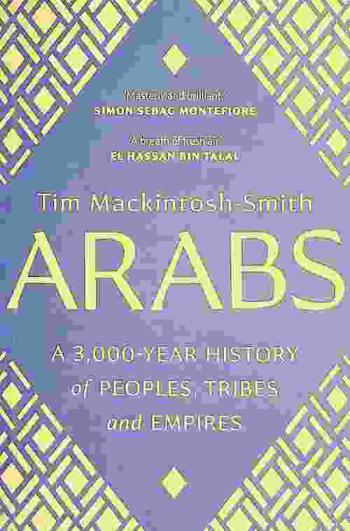
Arabs : a 3,000-year history of peoples, tribes and empires
This kaleidoscopic book covers almost 3,000 years of Arab history and shines a light on the footloose Arab peoples and tribes who conquered lands and disseminated their language and culture over vast distances. Tracing this process to the origins of the Arabic language, rather than the advent of Islam, Tim Mackintosh-Smith begins his narrative more than a thousand years before Muhammad and focuses on how Arabic, both spoken and written, has functioned as a vital source of shared cultural identity over the millennia. Mackintosh-Smith reveals how linguistic developments, from pre-Islamic poetry to the growth of script, Muhammad's use of writing, and the later problems of printing Arabic, have helped and hindered the progress of Arab history, and investigates how, even in today's politically fractured post-Arab Spring environment, Arabic itself is still a source of unity and disunity.
Book

Arabic Sociolinguistics
The first introduction to the field of Arabic sociolinguistics, this book discusses major trends in research on diglossia, code-switching, gendered discourse, language variation and change, and language policies in relation to Arabic. In doing so, it introduces and evaluates the various theoretical approaches, and illustrates the usefulness and the limitations of these approaches with empirical data. The book shows how sociolinguistic theories can be applied to Arabic and, conversely, what the study of Arabic can contribute to our understanding of the function of language in society. Key features:
*Introduces current theories and methods of sociolinguistics, with a special focus on Arabic
*Topics include: language variation and change, gender, religion and politics
*Aimed at students and scholars of Arabic with an interest in linguistics and students and scholars of linguistics with an interest in Arabic
eBook