
Catalogue Search | MBRL


Are you sure you want to remove the book from the shelf?

{{itemTitle}}
7
result(s) for
"Arabic literature History and criticism Congresses."
Sort by:


Esoteric and exoteric aspects in Judeo-Arabic culture
This volume represents the interdisciplinary nature of Judeo-Arabic studies. There are articles on Jewish thought, philosophy and mysticism, language and linguistics, religious studies, intellectual and social history, law, biblical exegesis, and more. The book is an important contribution to our understanding of Judeo-Arabic society in the Middle Ages.
eBook
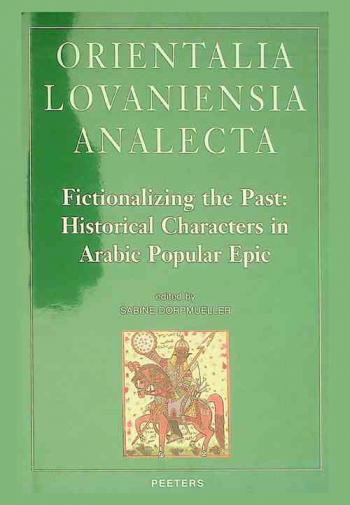
Fictionalizing the past : historical characters in Arabic popular epic : workshop held at the Netherlands-Flemish Institute in Cairo, 28th-29th of November 2007 : in honor of Remke Kruk
The present collection of articles deals with the relation between the Arabic popular epic and 'official' historiography. The Arabic popular epic can be considered as popular history since it represents a way in which a large, but mainly illiterate audience perceives, conceptualizes and commemorates history. Using methods based in literary criticism, modern research has come up with new and refreshing approaches to study the historicity of the heroic literature. The contributors to this volume are all experts in the field of the Arabic popular epic. They examine which narrative structures popular epics share with historiography and how historical characters and events are fictionalized in order to create the story. Each contribution deals with a different epic, including Sirat 'Antar, Sayf ibn Dhi Yazan, al-Iskandar, al-Amira Dhat al-Himma, al-Zahir Baybars, Bani Hilal, and epics in the Thousand and One Nights. One so far rather unknown epic, the Sirat al-Hakim bi-Amrillah, is discussed here in detail for the first time.
Book

Disarming words
In a book that radically challenges conventional understandings of the dynamics of cultural imperialism, Shaden M. Tageldin unravels the complex relationship between translation and seduction in the colonial context. She examines the afterlives of two occupations of Egypt--by the French in 1798 and by the British in 1882--in a rich comparative analysis of acts, fictions, and theories that translated the European into the Egyptian, the Arab, or the Muslim.
eBook


Arabic literature in a posthuman world : proceedings of the 12th Conference of the European Association for Modern Arabic Literature (EURAMAL), May 2016, Oslo
Arabic Literature in a Posthuman World explores Arabic literary production after the so-called ?Arab Spring?. 23 specialists of modern Arabic literature analyze the many ways in which contemporary Arab authors view and comment on a world that is dramatically changing and disintegrating, a world full of violent conflict, social instability, ideological vacuum and political collapse where there does not seem to be any place for humanity any more. The spread of new technologies and media added, this world not only appears inhumane, but also posthuman, a world of monstrosity in which mankind no longer controls its own destiny. Authors react to this with a writing of a new quality that makes the old humanist project of an Arab nah?a appear as a failed utopia.0A first section focuses on the increased interest that authors assign to the past as a shaper of the present. The other sections highlight the many subversive techniques with which the writers try to reassert humanity against the overall trend of de-humanization. The spectrum spans from ?Contested Spaces over Science Fiction and Dystopia? and methods of ?Countering/Resisting Fragmentation?, ?Dispersal?, ?Loss?, ?Oblivion?, to ?Satire and Rap?. The volume is the first to explore what Ihab Hassan?s term posthuman(ism), widely debated only in and for Western contexts so far, may mean in other parts of the world
Book