
Catalogue Search | MBRL


Are you sure you want to remove the book from the shelf?

{{itemTitle}}
291
result(s) for
"Arabs Folklore"
Sort by:

Tales from the Arabian nights : stories of adventure, magic, love, and betrayal
A collection of tales told by Scheherazade to amuse the cruel sulttan and stop him from executing her as he had his other daily wives.
Book

Vanquishers of the Crusaders: Mujāhidūn Characters in Arabic Folk Epics
Although the militant jihād remains one of the most popular topics in modern Islamic studies, most of the works focus on ideologies and actions, leaving out the popular perception of this phenomenon. Our study of the storylines about confronting the Franks (ifranj) in the Arabic folk epics, inspired by the Crusades, shows that the protagonists of the epics are presented in the narratives precisely as the holy warriors, i.e., mujāhidūn, whose key attributes are the power of faith, which often goes through tests in the fights against the infidels, as well as the divine support and readiness for martyrdom on the path of jihād. The widespread jihād and anti-Frankish rhetorics in the epics make them a valuable source for the study of the Crusades’ memory in the Medieval Arab culture.
Journal Article

Tales from 1,001 nights : Aladdin, Ali Baba and other favourite tales
A collection of tales from the classic work, including the stories of Ali Baba, Aladdin, and Sindbad.
Book

HISTORY OF SAUDI FOLKLORE AND FACTORS THAT SHAPED IT
This study investigates the history of Saudi folk heritage as well as the different historical and cultural factors that shaped Saudi folklore. Based on studies by eminent scholars of folk literature, such as William John Thoms, Walter J. Ong, Campbell, James Wynbrandt and Zwettler Michael, this study explains how folk elements pass down from generation to another, how they function significantly as a vehicle to transmit the nation's experience and demonstrate how such genres are relevant to the present human life. Saudi Arabia is a rich country in folkloric elements represented by the two most compelling folk genres of oral poetry and music. This research opens much-needed criteria of research on diverse heritage of a country that inherited from different cultures. Discussion in this study helps familiarize the readers with history of this country because an account of modern Saudi Arabian folk heritage without discussing these realities would be incomplete.
Journal Article

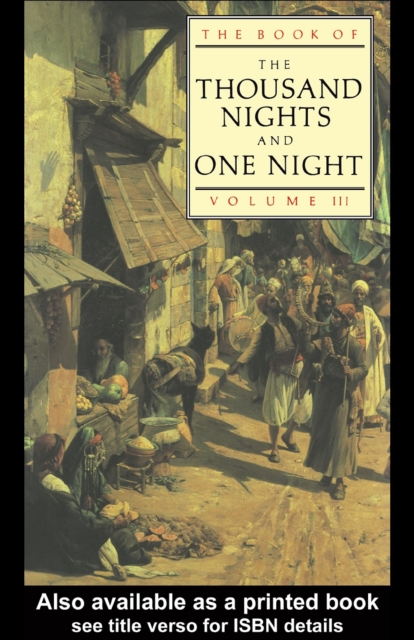
The Book of the Thousand and One Nights (Vol 3)
First published in 1986. Routledge is an imprint of Taylor & Francis, an informa company.
eBook


The Book of the Thousand and One Nights (Vol 4)
First published in 1986. Routledge is an imprint of Taylor & Francis, an informa company.
eBook
The Book of the Thousand Nights and One Night (Vol 2)
First published in 1986. Routledge is an imprint of Taylor & Francis, an informa company.
eBook