
Catalogue Search | MBRL


Are you sure you want to remove the book from the shelf?

{{itemTitle}}
1,367
result(s) for
"Arabs Music"
Sort by:

Tarab : music, ecstasy, emotion, and performance
\"Often described as \"ecstasy\" or \"rapture\" brought on by listening to and producing music, tarab is a central concept within Arab music traditions. With A.J. Racy's Making Music in the Arab World: The Culture and Artistry of Tarab (Cambridge, 2004) came the first book-length examination of the phenomenon in English-language scholarship. Tarab: Music, Ecstasy, Emotion, and Performance in the Middle East is a follow-up to Racy's pivotal work, combining an assortment of geographic and disciplinary focuses to expand beyond the Arab world and into the present day. The volume asserts that the transnational character of tarab and its spread is critical to understanding the concept's historical, geographic, and sociological impact\"-- Provided by publisher.
BOOK
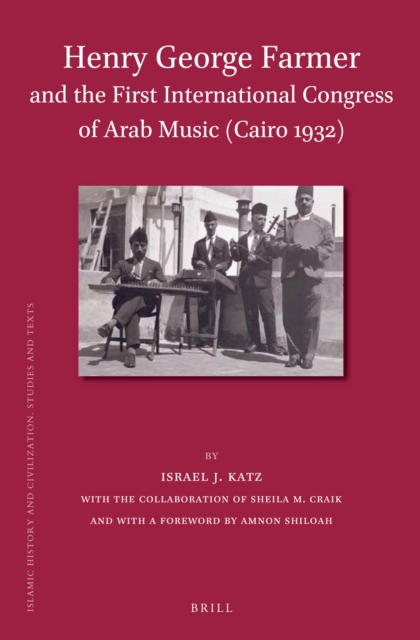
Henry George Farmer and the First International Congress of Arab Music (Cairo 1932)
Musicologist Henry George Farmer (1882-1965) participated in the First International Congress of Arab Music in Cairo in 1932. His journal and minutes, which are presented in this book, reveal aspects and inner-workings of the Congress that have hitherto remained unknown.
eBook

Unholyland : the trilogy : a love story
\"Through the story of two lovers, Mosh and Jalilah, this verse novel encapsulates the personal tragedy of the Palestine-Israel conflict. Set in the popular music culture of modern Palestine, using rap rhythms and the sonnet form, Aidan Andrew Dun s new book is verbally accomplished and rhythmically creative, and yet gripping to read as the story unfolds in a fast-moving narrative of twists and turns. From a first meeting in an underground dive in the Galilee, through Jalilah s home life in Sabra and Shatila camp, and Mosh s capture and interrogation by Israeli security, the story builds to a climax in an improvised music gathering in the Sinai desert. This is a unique and original piece of writing. It will also appeal to younger readers through the use of rap rhythms and the inclusion of leading rap and reggae musicians in the narrative\"--Back cover.
Book

Music in Arabia : perspectives on heritage, mobility, and nation
Music in Arabia extends and challenges existing narratives of the region's distinctive but understudied music to reveal diverse and dynamic music cultures rooted in centuries-old heritage. Contributors to Music in Arabia bring a critical eye and ear to the contemporary soundscape, musical life, and expressive culture in the Gulf region. Including work by leading scholars and local authorities, this collection presents fresh perspectives and new research addressing why musical expression is fundamental to the area's diverse, transnational communities. The volume also examines music circulation as a commodity, such as with the production of early recordings, the transnational music industry, the context of the Arab Spring, and the region's popular music markets. As a bonus, readers can access a linked website containing audiovisual examples of the music, dance, and expressive culture introduced throughout the book. With the work of resident scholars and heritage practitioners in conversation with that of researchers from the United States and Europe, Music in Arabia offers both context and content to clarify how music articulates identity and nation among multiethnic, multiracial, and multinational populations.
eBook

The lost paradise : Andalusi music in urban North Africa
For more than a century, urban North Africans have sought to protect and revive Andalusi music, a prestigious Arabic-language performance tradition said to originate in the \"lost paradise\" of medieval Islamic Spain. Yet despite the Andalusi repertoire's enshrinement as the national classical music of postcolonial North Africa, its devotees continue to describe it as being in danger of disappearance. In The Lost Paradise, Jonathan Glasser explores the close connection between the paradox of patrimony and the questions of embodiment, genealogy, secrecy, and social class that have long been central to Andalusi musical practice.
Through a historical and ethnographic account of the Andalusi music of Algiers, Tlemcen, and their Algerian and Moroccan borderlands since the end of the nineteenth century, Glasser shows how anxiety about Andalusi music's disappearance has emerged from within the practice itself and come to be central to its ethos. The result is a sophisticated examination of musical survival and transformation that is also a meditation on temporality, labor, colonialism and nationalism, and the relationship of the living to the dead.
eBook

Arab music : a survey of its history and its modern practice
Arab Music: A survey of its history and modern practice' is primarily meant for the general Western reader with some basic knowledge of music and music notation. It aims at correcting the still prevalent romantic image of Arab music, spread in the 19th century, as exotic and typified by long, plaintive and erotic sounding melodic lines and inciting rhythms. It offers the reader a comprehensive survey of the history and the development of Arab music and musical theory from its pre-Islamic roots until 1970, as well as a discussion of the major genres and forms practiced today, such as the Egyptian gil, the Algerian rai and Palestinian hip hop. Other topics touched upon are musical instruments and folk music. The analysis of each genre is accompanied by a complete musical notation of an exemplary composition or improvisation, including lyrics and translation.
Book

Playing across a divide : Israeli-Palestinian musical encounters
In the last decade of the twentieth century and on into the twenty-first, Israelis and Palestinians saw the signing of the Oslo Peace Accords, the establishment of the Palestinian Authority, the assassination of Israeli Prime Minister Yitzhak Rabin, and the escalation of suicide bombings and retaliations in the region. During this tumultuous time, numerous collaborations between Israeli and Palestinian musicians coalesced into a significant musical scene. Following the bands Bustan Abraham and Alei Hazayit from their creation and throughout their careers, as well as the collaborative projects of Israeli artist Yair Dalal, this book demonstrates the possibility of musical alternatives to violent conflict and hatred in an intensely contested, multicultural environment. These artists' music drew from Western, Middle Eastern, Central Asian, and Afro-diasporic musical practices, bridging differences and finding innovative solutions to the problems inherent in combining disparate musical styles and sources. Creating this new music brought to the forefront the musicians' contrasting assumptions about sound production, melody, rhythm, hybridity, ensemble interaction, and improvisation. The author traces the tightly interconnected field of musicians and the people and institutions that supported them as they and their music circulated within the region and along international circuits. The book argues that the linking of Jewish and Arab musicians' networks, the creation of new musical means of expression, and the repeated enactment of culturally productive musical alliances provides a unique model for mutually respectful and beneficial coexistence in a chronically disputed land.
eBook

Resistance in Contemporary Middle Eastern Cultures
This study highlights the connections between power, cultural products, resistance, and the artistic strategies through which that resistance is voiced in the Middle East. Exploring cultural displays of dissent in the form of literary works, films, and music, the collection uses the concept of 'cultural resistance' to describe the way culture and cultural creations are used to resist or even change the dominant political, social, economic, and cultural discourses and structures either consciously or unconsciously. The contributors do not claim that these cultural products constitute organized resistance movements, but rather that they reflect instances of defiance that stem from their peculiar contexts. If culture can be used to consolidate and perpetuate power relations in societies, it can also be used as the site of resistance to oppression in its various forms: gender, class, ethnicity, and sexuality, subverting existing dominant social and political hegemonies in the Middle East.
eBook