
Catalogue Search | MBRL


Are you sure you want to remove the book from the shelf?

{{itemTitle}}
756
result(s) for
"Arabs Spain."
Sort by:
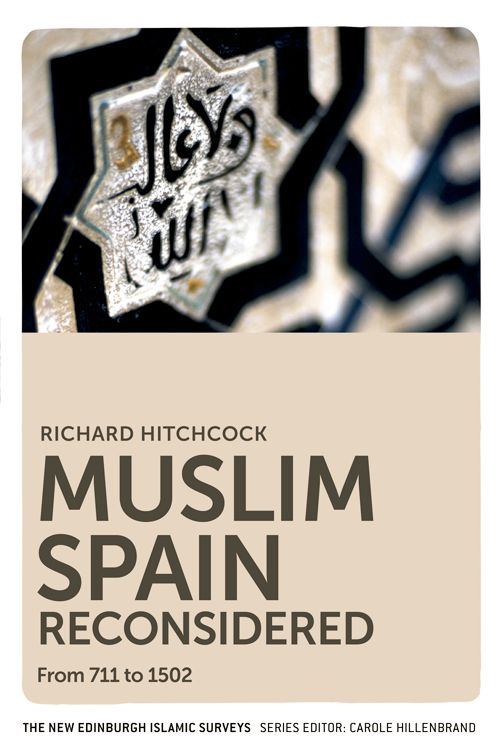
Muslim Spain reconsidered : from 711 to 1502
Covers the period from 711 to1502, giving readers a substantial overview of what it was that made Muslim Spain a unique and successful society, and of its powerful legacy in the formation of modern Spain.
eBook

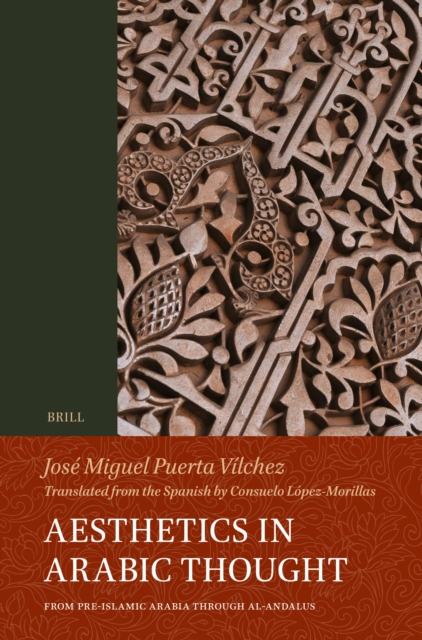
Aesthetics in Arabic thought : from pre-Islamic Arabia through al-Andalus
Aesthetics in Arabic Thought from Pre-Islamic Arabia through al-Andalus offers a history of aesthetic thought in the Arabic language from the pre-Islamic period to the Alhambra, with special attention to the great Arab philosophers of the Middle East and al-Andalus.
eBook

Muslim Spain Reconsidered
A comprehensive survey of Muslim Spain from 711-1502. This introduction to Muslim Spain covers the period from 711 to1502, giving readers a substantial overview of what it was that made it a unique and successful society, and of its powerful legacy in the formation of modern Spain. Using a chronological framework and pushing the main historical developments to the forefront, the author keeps in view the shifting social patterns caused by the changing balance between town and country, major and minor dynasties, foreign groupings and repeated invasions from North Africa. He also includes discussion of topics such as inter-faith relations, multi-ethnic competing groups, and how intellectual life was enriched by pluralism and influence from abroad.
eBook

A king travels
A King Travelsexamines the scripting and performance of festivals in Spain between 1327 and 1620, offering an unprecedented look at the different types of festivals that were held in Iberia during this crucial period of European history. Bridging the gap between the medieval and early modern eras, Teofilo Ruiz focuses on the travels and festivities of Philip II, exploring the complex relationship between power and ceremony, and offering a vibrant portrait of Spain's cultural and political life.
Ruiz covers a range of festival categories: carnival, royal entries, tournaments, calendrical and noncalendrical celebrations, autos de fe, and Corpus Christi processions. He probes the ritual meanings of these events, paying special attention to the use of colors and symbols, and to the power relations articulated through these festive displays. Ruiz argues that the fluid and at times subversive character of medieval festivals gave way to highly formalized and hierarchical events reflecting a broader shift in how power was articulated in late medieval and early modern Spain. Yet Ruiz contends that these festivals, while they sought to buttress authority and instruct different social orders about hierarchies of power, also served as sites of contestation, dialogue, and resistance.
A King Travelssheds new light on Iberian festive traditions and their unique role in the centralizing state in early modern Castile.
eBook

The Gibraltar Crusade
The epic battle for control of the Strait of Gibraltar waged by Castile, Morocco, and Granada in the late thirteenth and early fourteenth centuries is a major, but often overlooked, chapter in the history of the Christian reconquest of Spain. After the Castilian conquest of Seville in 1248 and the submission of the Muslim kingdom of Granada as a vassal state, the Moors no longer loomed as a threat and the reconquest seemed to be over. Still, in the following century, the Castilian kings, prompted by ideology and strategy, attempted to dominate the Strait. As self-proclaimed heirs of the Visigoths, they aspired not only to reconstitute the Visigothic kingdom by expelling the Muslims from Spain but also to conquer Morocco as part of the Visigothic legacy. As successive bands of Muslims over the centuries had crossed the Strait from Morocco into Spain, the kings of Castile recognized the strategic importance of securing Algeciras, Gibraltar, and Tarifa, the ports long used by the invaders.At a time when European enthusiasm for the crusade to the Holy Land was on the wane, the Christian struggle for the Strait received the character of a crusade as papal bulls conferred the crusading indulgence as well as ancillary benefits. The Gibraltar Crusade had mixed results. Although the Castilians seized Gibraltar in 1309 and Algeciras in 1344, the Moors eventually repossessed them. Only Tarifa, captured in 1292, remained in Castilian hands. Nevertheless, the power of the Marinid dynasty of Morocco was broken at the battle of Salado in 1340, and for the remainder of the Middle Ages Spain was relieved of the threat of Moroccan invasion. While the reconquest remained dormant during the late fourteenth and early fifteenth centuries, Ferdinand and Isabella conquered Granada, the last Muslim outpost in Spain, in 1492. In subsequent years Castile fulfilled its earlier aspirations by establishing a foothold in Morocco.
eBook

Exotic Nation
In the Western imagination, Spain often evokes the colorful culture of al-Andalus, the Iberian region once ruled by Muslims. Tourist brochures inviting visitors to sunny and romantic Andalusia, home of the ingenious gardens and intricate arabesques of Granada's Alhambra Palace, are not the first texts to trade on Spain's relationship to its Moorish past. Despite the fall of Granada to the Catholic Monarchs in 1492 and the subsequent repression of Islam in Spain, Moorish civilization continued to influence both the reality and the perception of the Christian nation that emerged in place of al-Andalus. InExotic Nation, Barbara Fuchs explores the paradoxes in the cultural construction of Spain in relation to its Moorish heritage through an analysis of Spanish literature, costume, language, architecture, and chivalric practices. Between 1492 and the expulsion of the Moriscos (Muslims forcibly converted to Christianity) in 1609, Spain attempted to come to terms with its own Moorishness by simultaneously repressing Muslim subjects and appropriating their rich cultural heritage. Fuchs examines the explicit romanticization of the Moors in Spanish literature-often referred to as \"literary maurophilia\"-and the complex, often silent presence of Moorish forms in Spanish material culture. The extensive hybridization of Iberian culture suggests that the sympathetic depiction of Moors in the literature of the period does not trade in exoticism but instead reminded Spaniards of the place of Moors and their descendants within Spain. Meanwhile, observers from outside Spain recognized its cultural debt to al-Andalus, often deliberately casting Spain as the exotic racial other of Europe.
eBook

The Last Crusade in the West
By the middle of the fourteenth century, Christian control of the Iberian Peninsula extended to the borders of the emirate of Granada, whose Muslim rulers acknowledged Castilian suzerainty. No longer threatened by Moroccan incursions, the kings of Castile were diverted from completing the Reconquest by civil war and conflicts with neighboring Christian kings. Mindful, however, of their traditional goal of recovering lands formerly ruled by the Visigoths, whose heirs they claimed to be, the Castilian monarchs continued intermittently to assault Granada until the late fifteenth century.Matters changed thereafter, when Fernando and Isabel launched a decade-long effort to subjugate Granada. Utilizing artillery and expending vast sums of money, they methodically conquered each Naṣrid stronghold until the capitulation of the city of Granada itself in 1492. Effective military and naval organization and access to a diversity of financial resources, joined with papal crusading benefits, facilitated the final conquest. Throughout, the Naṣrids had emphasized the urgency of ajihādwaged against the Christian infidels, while the Castilians affirmed that the expulsion of the \"enemies of our Catholic faith\" was a necessary, just, and holy cause. The fundamentally religious character of this last stage of conflict cannot be doubted, Joseph F. O'Callaghan argues.
eBook