
Catalogue Search | MBRL


Are you sure you want to remove the book from the shelf?

{{itemTitle}}
1,942
result(s) for
"Arachnida"
Sort by:
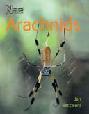
Arachnids
\"Arachnids is a detailed guide to this diverse and complex group of invertebrates. Although the term 'arachnophobia' means the fear of spiders, the class of Arachnida does not consist of spiders alone. It also contains ten other orders including harvestmen, ticks and mites, scorpions, palpigrades, schizomids and others which are lesser known.\" \"Museum Curator Jan Beccaloni explores each of the eleven orders, their varied habitats and their often complex relationships. She also explains arachnid courtship, feeding techniques, defence strategies, silk production, as well as the unusual practice of autotomy - the deliberate shedding of a body part.\" \"This accessible reference will appeal to arachnid enthusiasts and those with a wider interest in the natural world.\" --Book Jacket.
Book

A Critical Appraisal of the Placement of Xiphosura (Chelicerata) with Account of Known Sources of Phylogenetic Error
Horseshoe crabs (Xiphosura) are traditionally regarded as sister group to the clade of terrestrial chelicerates (Arachnida). This hypothesis has been challenged by recent phylogenomic analyses, but the non-monophyly of Arachnida has consistently been disregarded as artifactual. We re-evaluated the placement of Xiphosura among chelicerates using the most complete phylogenetic data set to date, expanding outgroup sampling, and including data from whole genome sequencing projects. In spite of uncertainty in the placement of some arachnid clades, all analyses show Xiphosura consistently nested within Arachnida as the sister group to Ricinulei (hooded tick spiders). It is apparent that the radiation of arachnids is an old one and occurred over a brief period of time, resulting in several consecutive short internodes, and thus is a potential case for the confounding effects of incomplete lineage sorting (ILS). We simulated coalescent gene trees to explore the effects of increasing levels of ILS on the placement of horseshoe crabs. In addition, common sources of systematic error were evaluated, as well as the effects of fast-evolving partitions and the dynamics of problematic long branch orders. Our results indicated that the placement of horseshoe crabs cannot be explained by missing data, compositional biases, saturation, or ILS. Interrogation of the phylogenetic signal showed that the majority of loci favor the derived placement of Xiphosura over a monophyletic Arachnida. Our analyses support the inference that horseshoe crabs represent a group of aquatic arachnids, comparable to aquatic mites, breaking a long-standing paradigm in chelicerate evolution and altering previous interpretations of the ancestral transition to the terrestrial habitat. Future studies testing chelicerate relationships should approach the task with a sampling strategy where the monophyly of Arachnida is not held as the premise.
Journal Article


Homeobox Gene Duplication and Divergence in Arachnids
Homeobox genes are key toolkit genes that regulate the development of metazoans and changes in their regulation and copy number have contributed to the evolution of phenotypic diversity. We recently identified a whole genome duplication (WGD) event that occurred in an ancestor of spiders and scorpions (Arachnopulmonata), and that many homeobox genes, including two Hox clusters, appear to have been retained in arachnopulmonates. To better understand the consequences of this ancient WGD and the evolution of arachnid homeobox genes, we have characterized and compared the homeobox repertoires in a range of arachnids. We found that many families and clusters of these genes are duplicated in all studied arachnopulmonates (Parasteatoda tepidariorum, Pholcus phalangioides, Centruroides sculpturatus, and Mesobuthus martensii) compared with nonarachnopulmonate arachnids (Phalangium opilio, Neobisium carcinoides, Hesperochernes sp., and Ixodes scapularis). To assess divergence in the roles of homeobox ohnologs, we analyzed the expression of P. tepidariorum homeobox genes during embryogenesis and found pervasive changes in the level and timing of their expression. Furthermore, we compared the spatial expression of a subset of P. tepidariorum ohnologs with their single copy orthologs in P. opilio embryos. We found evidence for likely subfunctionlization and neofunctionalization of these genes in the spider. Overall our results show a high level of retention of homeobox genes in spiders and scorpions post-WGD, which is likely to have made a major contribution to their developmental evolution and diversification through pervasive subfunctionlization and neofunctionalization, and paralleling the outcomes of WGD in vertebrates.
Journal Article

Phylogenomic Interrogation of Arachnida Reveals Systemic Conflicts in Phylogenetic Signal
Chelicerata represents one of the oldest groups of arthropods, with a fossil record extending to the Cambrian, and is sister group to the remaining extant arthropods, the mandibulates. Attempts to resolve the internal phylogeny of chelicerates have achieved little consensus, due to marked discord in both morphological and molecular hypotheses of chelicerate phylogeny. The monophyly of Arachnida, the terrestrial chelicerates, is generally accepted, but has garnered little support from molecular data, which have been limited either in breadth of taxonomic sampling or in depth of sequencing. To address the internal phylogeny of this group, we employed a phylogenomic approach, generating transcriptomic data for 17 species in combination with existing data, including two complete genomes. We analyzed multiple data sets containing up to 1,235,912 sites across 3,644 loci, using alternative approaches to optimization of matrix composition. Here, we show that phylogenetic signal for the monophyly of Arachnida is restricted to the 500 slowest-evolving genes in the data set. Accelerated evolutionary rates in Acariformes, Pseudoscorpiones, and Parasitiformes potentially engender long-branch attraction artifacts, yielding nonmonophyly of Arachnida with increasing support upon incrementing the number of concatenated genes. Mutually exclusive hypotheses are supported by locus groups of variable evolutionary rate, revealing significant conflicts in phylogenetic signal. Analyses of gene-tree discordance indicate marked incongruence in relationships among chelicerate orders, whereas derived relationships are demonstrably robust. Consistently recovered and supported relationships include the monophyly of Chelicerata, Euchelicerata, Tetrapulmonata, and all orders represented by multiple terminals. Relationships supported by subsets of slow-evolving genes include Ricinulei + Solifugae; a clade comprised of Ricinulei, Opiliones, and Solifugae; and a clade comprised of Tetrapulmonata, Scorpiones, and Pseudoscorpiones. We demonstrate that outgroup selection without regard for branch length distribution exacerbates long-branch attraction artifacts and does not mitigate gene-tree discordance, regardless of high gene representation for outgroups that are model organisms. Arachnopulmonata (new name) is proposed for the clade comprising Scorpiones + Tetrapulmonata (previously named Pulmonata).
Journal Article

Wicked bugs : the louse that conquered Napoleon's army & other diabolical insects
In this darkly comical look at the sinister side of our relationship with the natural world, Stewart has tracked down over one hundred of our worst entomological foes-creatures that infest, infect, and generally wreak havoc on human affairs.
Book

Developmental gene expression as a phylogenetic data class: support for the monophyly of Arachnopulmonata
Despite application of genome-scale datasets, the phylogenetic placement of scorpions within arachnids remains contentious between two different phylogenetic data classes. Paleontologists continue to recover scorpions in a basally branching position, partly owing to their morphological similarity to extinct marine orders like Eurypterida (sea scorpions). Phylogenomic datasets consistently recover scorpions in a derived position, as the sister group of Tetrapulmonata (a clade of arachnids that includes spiders). To adjudicate between these hypotheses using a rare genomic change (RGC), we leveraged the recent discovery of ancient paralogy in spiders and scorpions to assess phylogenetic placement. We identified homologs of four transcription factors required for appendage patterning (dachshund, homothorax, extradenticle, and optomotor blind) in arthropods that are known to be duplicated in spiders. Using genomic resources for a spider, a scorpion, and a harvestman, we conducted gene tree analyses and assayed expression patterns of scorpion gene duplicates. Here we show that scorpions, like spiders, retain two copies of all four transcription factors, whereas arachnid orders like mites and harvestmen bear a single copy. A survey of embryonic expression patterns of the scorpion paralogs closely matches those of their spider counterparts, with one paralog consistently retaining the putatively ancestral pattern found in the harvestman, as well as the mite, and/or other outgroups. These data comprise a rare genomic change in chelicerate phylogeny supporting the inference of a distal placement of scorpions. Beyond demonstrating the diagnostic power of developmental genetic data as a phylogenetic data class, a derived placement of scorpions within the arachnids, together with an array of stem-group Paleozoic scorpions that occupied marine habitats, effectively rules out a scenario of a single colonization of terrestrial habitat within Chelicerata, even in tree topologies contrived to recover the monophyly of Arachnida.
Journal Article
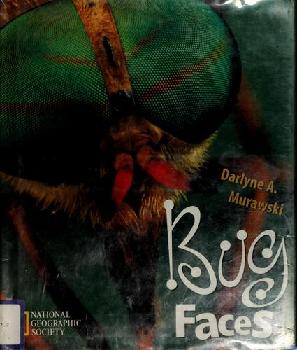
Bug faces
Presents close-up photographs of insect faces and describes some of their unique facial features, including compound eyes and pincher jaws.
Book

Autophagic activity in the midgut cells of three arachnids responds selectively to different modes of overwintering in caves
Autophagy is a highly conserved metabolic process that regulates cellular homeostasis and energy supply by degrading dysfunctional and excess cell constituents and reserve materials into products that are reused in metabolic and biosynthetic pathways. Macroautophagy is the best studied form of autophagy in invertebrates. Starvation is a common stress factor triggering autophagy in overwintering animals. In arachnids, the midgut diverticula cells perform many vital metabolic functions and are therefore critically involved in the response to starvation. Here we studied macroautophagy in three species which apply different modes for overwintering in caves: the harvestmen
Gyas annulatus
in diapause,
Amilenus aurantiacus
with ongoing ontogenesis under fasting conditions, and the spider
Meta menardi
, which feeds opportunistically even in winter. The main goal was to find eventual qualitative and quantitative differences in autophagic processes by inspecting TEM micrographs. In all three species, the rates of midgut epithelial cells with autophagic structures gradually increased during overwintering, but were significantly lower in
G. annulatus
in the middle and at the end of overwintering than in the other two species, owing to metabolic activity having been more suppressed. Decomposition of mitochondria and glycogen took place in autophagic structures in all three species. Moreover, spherite disintegration in
A. aurantiacus
and a special form of lipid disintegration through “lipid bubbly structures” in
M. menardi
indicate the crucial involvment of selective autophagy, while no specific autophagy was observed in
G. annulatus
. We conclude that autophagic activities support overwintering in different ways in the species studied.
Journal Article