
Catalogue Search | MBRL


Are you sure you want to remove the book from the shelf?

{{itemTitle}}
632
result(s) for
"Archaeoastronomy"
Sort by:

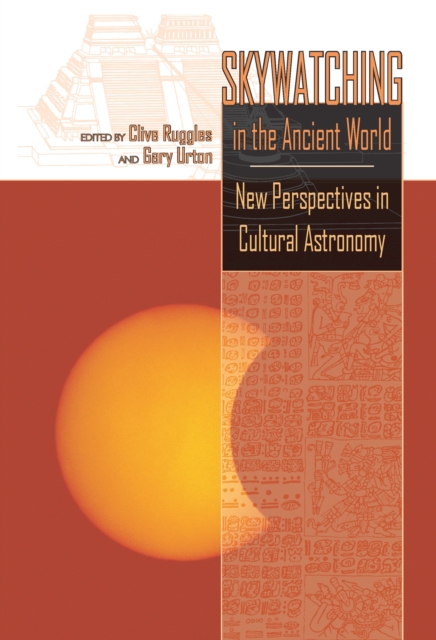
Skwatching in the ancient world: new perspectives in cultural astronomy : studies in honor of Anthony F. Aveni
Compiled in honor of Anthony F. Aveni, America's leading archaeoastronomer, Skywatching in the Ancient World offers state-of-the-art work in cultural astronomy by well-known experts in Mayan glyphic studies, cultural history, ethnohistory, and the history of science and of religions. This collection's wide range of outstanding scholarship reveals that cultural astronomy has come into its own. The diverse topics addressed by the contributors include the correlation between Colonial Northern Zapotec and Gregorian calendars, the period of use of the Dresden Codex Venus table and the significance of the Lunar Almanacs that precede it, a new interpretation of an Inka tapestry mantle as a commemorative calendar, temple orientations in Hawai'i and church orientations in Medieval England, and the connection in cultural imagery between astronomers (science) and wizards (magic).Contributors include: Harvey M. Bricker, Victoria R. Bricker, Edward E. Calnek, Clemency Coggins, John Justeson, Edwin C. Krupp, Stephen C. McCluskey, Susan Milbrath, Clive Ruggles, David Tavrez, Barbara Tedlock, Dennis Tedlock, Gary Urton, and R. Tom Zuidema. Mesoamerican Worlds Series
eBook


Landscapes, Religion, and Social Change in Pueblo History
In this article, we explore transformations and continuities in cosmology and cultural landscape structure across Pueblo history in the US Southwest. Many researchers have directly compared the archaeology of the society centered at Chaco Canyon (ca. AD 850–1140) in northwestern New Mexico with ethnographic documentation of Pueblo communities from the nineteenth and twentieth centuries. This approach makes it difficult to understand how cultural transformation played out in the intervening centuries. Here, we investigate this history by comparing Kin Nizhoni, a Chaco-era Great House community in the Red Mesa Valley, with Wiyo’owingeh, a post-Chacoan community in the Rio Grande Valley. We find that the built environments of both sites expressed similar cosmological principles, but architectural expressions of these concepts became less explicitly marked over time. We also find that this similar cosmology was mapped onto different social structures, with a focus on elite architecture in the Chaco era as opposed to communal dwellings with spatially separated shrines in later Pueblo contexts. We close by proposing a connection between the functions of Chacoan Great Houses and later Pueblo World Quarter Shrines. Overall, our findings underscore the utility of cultural landscape studies for tracing relationships between religion and society across North American Indigenous histories.
Journal Article

The power of stars
Completely revised and updated, this new edition provides a readable, beautifully illustrated journey through world cultures and the vibrant array of sky mythology, creation stories, models of the universe, temples and skyscrapers that each culture has created to celebrate and respond to the power of the night sky. With the rapid pace of discovery in astronomy and astrophysics, entirely new perspectives are emerging about dark matter, inflation and the future of the universe. The Power of Stars puts these discoveries in context and describes how they fit into the modern perspective of cosmology, which has arisen from the universal human response to the sky that has inspired both ancient and modern cultures.
Book

Architecture, Astronomy and Sacred Landscape in Ancient Egypt
This book examines the interplay between astronomy and dynastic power in the course of ancient Egyptian history, focusing on the fundamental role of astronomy in the creation of the pyramids and the monumental temple and burial complexes. Bringing to bear the analytical tools of archaeoastronomy, a set of techniques and methods that enable modern scholars to better understand the thought, religion and science of early civilizations, Giulio Magli provides in-depth analyses of the pyramid complexes at Giza, Abusir, Saqqara and Dahshur, as well as of the Early Dynastic necropolis at Abydos and the magnificent new Kingdom Theban temples. Using a variety of data retrieved from study of the sky and measurements of the buildings, he reconstructs the visual, symbolic and spiritual world of the ancient Egyptians and thereby establishes an intimate relationship among celestial cycles, topography and architecture. He also shows how they were deployed in the ideology of the pharaoh's power in the course of Egyptian history.
eBook

Astronomy and culture
Studies and gives myriad examples of the interrelationships between astronomy and the cultures of civilizations past and present.
Book

Astronomy, Architecture, and Landscape in the Olmec Area and Western Maya Lowlands: Implications for Understanding Regional Variability and Evolution of Orientation Patterns in Mesoamerica
In the area along the southern Gulf Coast in Mexico, a large number of previously unrecorded archaeological sites have recently been detected with the aid of lidar data, which also allowed us to determine the orientations of hundreds of structures and architectural assemblages, including many standardized complexes dated to the Early-to-Middle Formative transition. As revealed by our analyses, most orientations were based on astronomical and calendrical principles, occasionally combined with certain concepts of sacred geography. While the results of these analyses were presented in a recently published article, here we explore the potential of alignment data for addressing other questions of archaeological relevance. The distribution of particular building types and regional variations in alignment patterns in the study area suggest the existence of two somehow different cultural spheres, loosely corresponding to the areas conventionally called the Gulf Olmec region and the western Maya Lowlands. Examining pertinent evidence, we argue that it was in this area where some of the most prominent orientation groups materialized in later Mesoamerican architecture originated. We also attempt to reconstruct the paths of their diffusion, which are expected to contribute to understanding the dynamics of long-distance cultural interaction in Mesoamerica.
Journal Article

Mysteries and discoveries of archaeoastronomy : from Giza to Easter Island
This complete, authoritative study of the growing discipline of Archaeoastronomy examines the role of astronomy in antiquity. Professor Giulio Magli provides a clear, up-to-date survey of current thinking on the motives of the ancients for building fabulous and mysterious monuments all over our planet.
BOOK

Astronomically calibrated ⁴⁰Ar/³⁹Ar age for the Toba supereruption and global synchronization of late Quaternary records
The Toba supereruption in Sumatra, ∼74 thousand years (ka) ago, was the largest terrestrial volcanic event of the Quaternary. Ash and sulfate aerosols were deposited in both hemispheres, forming a time-marker horizon that can be used to synchronize late Quaternary records globally. A precise numerical age for this event has proved elusive, with dating uncertainties larger than the millennial-scale climate cycles that characterized this period. We report an astronomically calibrated ⁴⁰Ar/ ³⁹Ar age of 73.88 ± 0.32 ka (1σ, full external errors) for sanidine crystals extracted from Toba deposits in the Lenggong Valley, Malaysia, 350 km from the eruption source and 6 km from an archaeological site with stone artifacts buried by ash. If these artifacts were made by Homo sapiens , as has been suggested, then our age indicates that modern humans had reached Southeast Asia by ∼74 ka ago. Our ⁴⁰Ar/ ³⁹Ar age is an order-of-magnitude more precise than previous estimates, resolving the timing of the eruption to the middle of the cold interval between Dansgaard–Oeschger events 20 and 19, when a peak in sulfate concentration occurred as registered by Greenland ice cores. This peak is followed by a ∼10 °C drop in the Greenland surface temperature over ∼150 y, revealing the possible climatic impact of the eruption. Our ⁴⁰Ar/ ³⁹Ar age also provides a high-precision calibration point for other ice, marine, and terrestrial archives containing Toba sulfates and ash, facilitating their global synchronization at unprecedented resolution for a critical period in Earth and human history beyond the range of ¹⁴C dating.
Journal Article