
Catalogue Search | MBRL


Are you sure you want to remove the book from the shelf?

{{itemTitle}}
160
result(s) for
"Archaeological assemblages"
Sort by:

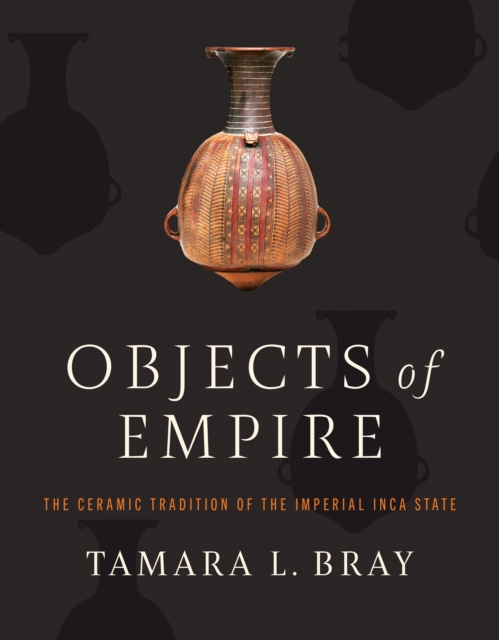
Objects of Empire
A comparative, empire-wide study of the ceramics associated with the imperial Inca state, theorizing the role of these highly recognizable vessel forms in legitimizing Inca rule and establishing imperial identities.
eBook

Incomplete Archaeologies
Incomplete Archaeologies takes a familiar archaeological concept – assemblages – and reconsiders such groupings, collections and sets of things from the perspective of the work required to assemble them. The discussions presented here engage with the practices of collection, construction, performance and creation in the past (and present) which constitute the things and groups of things studied by archaeologists – and examine as well how these things and thing-groups are dismantled, rearranged, and even destroyed, only to be rebuilt and recreated. The ultimate aim is to reassert an awareness of the incompleteness of assemblage, and thus the importance of practices of assembling (whether they seem at first creative or destructive) for understanding social life in the past as well as the present. The individual chapters represent critical engagements with this aim by archaeologists presenting a broad scope of case studies from Eurasia and the Mediterranean. Case studies include discussions of mortuary practice from numerous angles, the sociopolitics of metallurgy, human-animal relationships, landscape and memory, the assembly of political subjectivity and the curation of sovereignty. These studies emphasize the incomplete and ongoing nature of social action in the past, and stress the critical significance of a deeper understanding of formation processes as well as contextual archaeologies to practices of archaeology, museology, art history, and other related disciplines. Contributors challenge archaeologists and others to think past the objects in the assemblage to the practices of assembling, enabling us to consider not only plural modes of interacting with and perceiving things, spaces, human bodies and temporalities in the past, but also to perhaps discover alternate modes of framing these interactions and relationships in our analyses. Ultimately then, Incomplete Archaeologies takes aim at the perceived totality not only of assemblages of artifacts on shelves and desks, but also that of some of archaeology’s seeming-seamless epistemological objects.
eBook
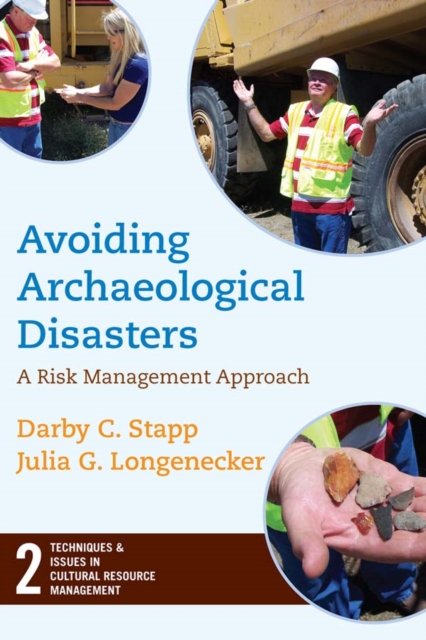
Avoiding Archaeological Disasters
You think it can’t happen to you, but it can. One day, months into your construction project, your front end load operator runs into bones and wooden slats. Your county coroner says it is not a crime scene, and refers you to the local archaeology department. The archaeologist tells you that it is a very important discovery. Work stops. Archaeological discoveries happen all the time in the course of projects. Most are manageable, some are less so, and some are mismanaged, wasting time and money. If you are not prepared, the consequences can be disastrous. This book is for project engineers, project managers, construction managers, the staff of affected government agencies, and archaeological consultants. In its pages you receive enough information, enough archaeological perspective, to intelligently work with the various parties involved in your project and avoid an archaeological disaster.
eBook

Avoiding Archaeological Disasters
You think it can't happen to you, but it can. One day, months into your construction project, your front end load operator runs into bones and wooden slats. Your county coroner says it is not a crime scene, and refers you to the local archaeology department. The archaeologist tells you that it is a very important discovery. Work stops. Archaeological discoveries happen all the time in the course of projects. Most are manageable, some are less so, and some are mismanaged, wasting time and money. If you are not prepared, the consequences can be disastrous. This book is for project engineers, project managers, construction managers, the staff of affected government agencies, and archaeological consultants. In its pages you receive enough information, enough archaeological perspective, to intelligently work with the various parties involved in your project and avoid an archaeological disaster.
eBook


INTRODUCTION
On 12 October 2015, a round table gathering at the University of the Witwatersrand brought archaeologists and historians together for the first time to write a history of archaeology from South Africa. The meeting took place on the eve of the first rumblings of the student movement that would come to be called FeesMustFall. In a way, it was the last conference to take place in South Africa without concern for possible disruption by students, and without concern for the question that such disruption poses to all scientific meetings in the country: how to decolonise the knowledge produced by the university? Everyone agrees that the issue of decolonisation is highly relevant to archaeology as a whole, and particularly on continents such as Africa or the Americas (Shepherd 2002a,b; Haber and Gnecco 2007; Tantalean and Aguilar 2012; Haber 2014; Pikirayi 2015; Monton-Subias and Hernando 2017). Decolonisation becomes all the more pressing when, for example, it relates to the very practice of excavations (Schmidt 2009; Lane 2011; Schmidt and Pikirayi 2016; Manyanga and Chirikure, this volume; among others). Even if the intellectual demands of the young SouthAfrican generation did not burst into the lecture hall that day, it is clear that the majority, if not the entirety, of the speakers were, manifestly or tacitly, already asking such a question. The chapters assembled in this volume of the Goodwin Series aim to respond by suggesting a few methodological and other avenues. The historians, archaeologists, and 'social scientists' who have contributed to this collection perceive the need to go back over more than a century of the eventful history of archaeology in the south of the continent. South African archaeology has seen some major changes since the advent of democracy. A particularly visible result has been the internationalisation of certain areas of research. The discussion on human complexity in the Middle Stone Age provides a good example (Wadley 2014). Some of the most downloaded research papers from journals devoted to human evolution, prehistory and archaeology include southern African research on modern human origins (Marean et al. 2004; Henshilwood et al. 2004, 2009; Mackay and Welz 2008;Mourre et al. 2010;Wadley et al. 2011; Wilkins et al. 2012; Texier et al. 2013; among many other examples). Some have argued that this internationalisation stems from the discovery of new chronological methodologies (Thackeray 1992; Wadley 2014), which permit a better understanding of the deep past and the 'complexity' of Homo sapiens in Africa. However, the antiquity of Homo sapiens in Africa was proposed some decades ago (see Vogel and Beaumont 1972; Beaumont et al. 1978; Rightmire 1979), and the real internationalisation seems to have been stimulated, at least in part, by the political changes that took place in South Africa during the early 1990s. Another example of significant change in South African archaeology over the last two decades has been the impact of contract archaeology (Esterhuysen 2009, 2012; Ndlovu 2014), as it has been in the rest of the world since the 1970s.
Journal Article
HISTORICAL PERSPECTIVES ON THE SIGNIFICANCE OF ARCHAEOLOGY IN THE CRADLE OF HUMANKIND, SOUTH AFRICA
The Cradle of Humankind World Heritage Site (CoHWHS), Gauteng Province, South Africa, preserves a remarkable palaeontological and archaeological record. Since the 1950s, stone tool assemblages have been excavated from well-known cave sites in this region, offering valuable insight into the behavioural and cognitive capabilities of early human ancestors. Modern research perspectives draw on a wealth of information to understand taphonomic, site formation, and technological aspects of these assemblages, and to interpret their significance in human evolution. At a point when high-resolution spatial data can be captured at sites in the Cradle region, reviewing the history of how current interpretive models of archaeological assemblages have developed is important for forging future directions in research. This history highlights the evolution of classification and analytical trends that have led to current multidisciplinary approaches to archaeology in southern Africa. It also illuminates the fact there has been a narrow focus on palaeoanthropological cave systems, with less information derived from archaeological assemblages found on the landscape above. As such, cave sites in the Cradle have provided perspectives on the Earlier Stone Age, while the Middle and Later Stone Ages have unfortunately been under-represented. Future directions in research should focus on increasing chronological, environmental and spatial resolution of the archaeological record in this region, which requires the collation of a wide array of data from cave and open-air sites.
Journal Article

WHAT IS IN A NAME? CHARACTERISING THE 'POST-HOWIESON'S POORT' AT SIBUDU
Since the recognition in the 1980s and 1990s that modern humans originated in Africa, studies of the Middle Stone Age (MSA) have moved from obscurity to a central topic for defining the cultural adaptions that accompanied the advent and spread of modern humans. Much of recent research in southern Africa has focused on Still Bay and Howieson's Poort assemblages, and these industries have often been viewed as central to our understanding of cultural evolution during the MSA. As part of the process of correcting this bias, we examine lithic assemblages from Sibudu Cave in KwaZulu-Natal where there are deep and archaeologically rich strata with ages of c. 58 ka. We argue that the 'post-Howieson's Poort' forms a coherent entity with a clear technological signature. We suggest that detailed studies of technology and subsistence and settlement dynamics at Sibudu can provide important information on human adaptations and provide key data to help researchers gain a better understanding of cultural evolution during the MSA. From this point of view Sibudu can serve as a type site for characterising what has informally been referred to as the post-Howieson's Poort. Future work will help to define the spatial-temporal distribution and the variability of what we have called the Sibudu assemblage type in the Stone Age prehistory of KwaZulu-Natal and within southern Africa. The first step in this process is to characterise the key elements of the post-Howieson's Poort lithic technology documented at Sibudu.
Journal Article

The reliability of bottle form for ascertaining function
Despite calls to reconsider the reliability of bottle forms for indicating function made over 20 years ago, archaeologists continue to equate bottle function with form, using descriptions based on those previously assigned by collectors. Although this methodology can be a simple and useful way to organise information in catalogues and describe assemblages, problems exist where the reuse of bottles is not acknowledged. This paper explores the identification of bottle reuse in the archaeological record, with reference to a cesspit assemblage recovered from 35-37 A'Beckett Street, Melbourne. It aims to expand the understanding of bottles, bottle reuse and the relationship between bottle form and function.
Journal Article