
Catalogue Search | MBRL


Are you sure you want to remove the book from the shelf?

{{itemTitle}}
233
result(s) for
"Archaeology -- Field work"
Sort by:
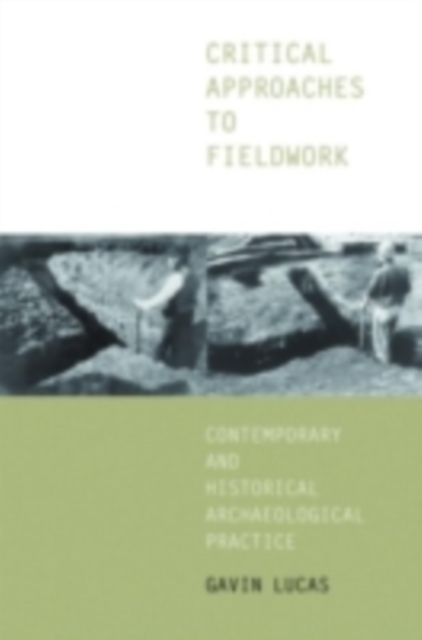
Critical Approaches to Fieldwork
This work takes as its starting point the role of fieldwork and how this has changed over the past 150 years. The author argues against progressive accounts of fieldwork and instead places it in its broader intellectual context to critically examine the relationship between theoretical paradigms and everyday archaeological practice. In providing a much-needed historical and critical evaluation of current practice in archaeology, this book opens up a topic of debate which affects all archaeologists, whatever their particular interests.
'This is the most intelligent and thought-provoking book on archaeological fieldwork I have read. It is full of numerous insights and re-evaluations and genuinely bridges the split between theory and practice that so disables archaeology...for those committed to a thoughtful archaeological practice, this book is long overdue and essential reading' - Michael Shanks, Stanford University
eBook

Indigenous archaeologies : decolonizing theory and practice
With case studies from North America to Australia and South Africa and covering topics from archaeological ethics to the repatriation of human remains, this book charts the development of a new form of archaeology that is informed by indigenous values and agendas. This involves fundamental changes in archaeological theory and practice as well as substantive changes in the power relations between archaeologists and indigenous peoples. Questions concerning the development of ethical archaeological practices are at the heart of this process.
eBook
Archaeological Theory and Scientific Practice
Is archaeology an art or a science? This question has been hotly debated over the last few decades with the rise of archaeological science. At the same time, archaeologists have seen a change in the intellectual character of their discipline, as many writers have adopted approaches influenced by social theory. The discipline now encompasses both archaeological scientists and archaeological theorists, and discussion regarding the status of archaeology remains polarised. In this 2001 book, Andrew Jones argues that we need to analyse the practice of archaeology. Through an analysis of archaeological practice, influenced by recent developments in the field of science studies, and with the aid of extensive case studies, he develops a new framework which allows the interpretative and methodological components of the discipline to work in tandem. His reassessment of the status and character of archaeology will be of interest to students, scholars and professionals.
eBook

Field Archaeology
Since its first publication, Field Archaeology: An Introduction has proved to be a key handbook for all those undertaking introductory courses in archaeology or volunteering on their first excavation. In this revised second edition, key developments in technology, theory and changes in the law are included, bringing it up to date with the most recent fieldwork practices. The dig is the face of archaeology most immediately recognised by the general public, and is often what attracts both students and amateurs to the discipline. Yet there is much more to working in the field than digging alone. Peter Drewett's comprehensive survey explores the process, from the core work of discovery and excavation to the final product, the published archaeological report. The main topics are:
How an archaeological site is formed
Finding and recording archaeological sites
Planning excavations, digging the site and recording the results
Post-fieldwork planning, processing and finds analysis
Interpreting the evidence
Publishing the report
Illustrated with 100 photographs and line drawings, and using numerous case studies, this second edition of Field Archaeology ensures it will remain the essential introductory guide for archaeology students and the growing number of enthusiasts for the subject.
1. Introduction 2. What is an archaeological site? How is it formed and transformed? 3. Finding archaeological sites 4. Recording archaeological sites 5. Planning the excavation 6. Digging the site 7. Recording archaeological excavations 8. Post-fieldwork planning, processing and finds analysis 9. Interpreting the evidence 10. Publishing the report
Peter Drewett is Emeritus Professor of Archaeology at the University of Sussex. Prior to this, he taught field archaeology at the Institute of Archaeology, University College London, where he directed the undergraduate field training excavations and established the Institute’s Field Archaeology Unit. Early in his career he was particularly involved in the rescue excavation of plough damaged sites on the South Downs. He set up and directed the Barbados Archaeological Survey, as well as running field courses and rescue excavations in Portugal and Hong Kong. Professor Drewett has over 100 published works, including (with Mark Gardiner and David Rudling) The South East to AD 1000 (1988, Longman) and Prehistoric Barbados (1991, Archetype).
'In a time of uncertainty in the profession, it’s refreshing to read a book that puts archaeology in the context of the best field practice ... This is an optimistic book, with an upbeat, breezy style that reviews all the major field techniques from the formation of deposits and how to find sites, through how to record them to postexcavation. There is detailed discussion of the problems of excavation and interpretation, and the rapidly changing means of publishing the results ... [This book] remains one of the best introductions to the techniques and problems of dirt archaeology.' - Mike Nevell, British Archaeology
'... it remains that Drewett’s Field Archaeology is a companionable introduction to archaeological fieldwork, with a good balance between survey and excavation.' – Antiquity
eBook
Theory and practice in late antique archaeology
This volume explores the theoretical frameworks, methodology and field practice suited to late antique archaeology. It considers broad themes such as social life, the economy, topography and long-term change, but also engages fully with the specific historical issues and evidential problems of the Mediterranean world.
eBook
Indigenous Archaeologies
With case studies from North America to Australia and South Africa and covering topics from archaeological ethics to the repatriation of human remains, this book charts the development of a new form of archaeology that is informed by indigenous values and agendas. This involves fundamental changes in archaeological theory and practice as well as substantive changes in the power relations between archaeologists and indigenous peoples. Questions concerning the development of ethical archaeological practices are at the heart of this process.
eBook


Dangerous Places: Health, Safety, and Archaeology
Reviews ^IDangerous Places^R is an excellent health and safety reference manual for all archaeologists who are actively engaged in fieldwork...From start to finish, the book is well-written, straightforward, and presents information necessary for project managers, field school directors, and field archaeologists at all levels to protect themselves (and those under their supervision) from taking unecessary health risks while pursuing fieldwork. I recommend this volume without reservation. ...should be required reading for field crews and their supervisors to emphasize the risks of digging in areas of human use and occupancy and to provide guidance for ensuring health and safety in specific environments.
eBook

Ancient Macedonia, Alexander the Great and the Star or Sun of Vergina: National Symbols and the Conflict between Greece and the Republic of Macedonia
This chapter contains sections titled:
The Macedonian Question: An Overview
The Construction of National Identities, Cultures and Histories
Ancient Macedonia
Alexander the Great
The Star or Sun of Vergina
The First International Congress on Macedonian Studies
International Recognition of the Republic of Macedonia
The Macedonian Minority of Northern Greece
Conclusion
Bibliographical Essay
Book Chapter

Revisiting reflexive archaeology at Çatalhöyük: integrating digital and 3D technologies at the trowel's edge
Excavations at Çatalhöyük have been ongoing for over 20 years and have involved multi-national teams, a diverse range of archaeological specialists and a vast archive of records. The task of marshalling this data so that it can be useful not only at the post-excavation stage, but also while making decisions in the field, is challenging. Here, members of the team reflect on the use of digital technology on-site to promote a reflexive engagement with the archaeology. They explore how digital data in a fieldwork context can break down communication barriers between specialists, foster an inclusive approach to the excavation process and facilitate reflexive engagement with recording and interpretation.
Journal Article