
Catalogue Search | MBRL


Are you sure you want to remove the book from the shelf?

{{itemTitle}}
78
result(s) for
"Archaeology China History 20th century."
Sort by:

The archaeology of China : from the late paleolithic to the early bronze age
\"Past, present and future \"The archaeological materials recovered from the Anyang excavations ... in the period between 1928 and 1937...have laid a new foundation for the study of ancient China (Li, C. 1977: ix).\" When inscribed oracle bones and enormous material remains were found through scientific excavation in Anyang in 1928, the historicity of the Shang dynasty was confirmed beyond dispute for the first time (Li, C. 1977: ix-xi). This excavation thus marked the beginning of a modern Chinese archaeology endowed with great potential to reveal much of China's ancient history.. Half a century later, Chinese archaeology had made many unprecedented discoveries which surprised the world, leading Glyn Daniel to believe that \"a new awareness of the importance of China will be a key development in archaeology in the decades ahead (Daniel 1981: 211). This enthusiasm was soon shared by the Chinese archaeologists when Su Bingqi announced that \"the Golden Age of Chinese archaeology is arriving (Su, B. 1994: 139--140)\". In recent decades, archaeology has continuously prospered, becoming one of the most rapidly developing fields in social science in China\"-- Provided by publisher.
Book

The Archaeology of China
This book explores the roles of agricultural development and advancing social complexity in the processes of state formation in China. Over a period of about 10,000 years, it follows evolutionary trajectories of society from the last Palaeolithic hunting-gathering groups, through Neolithic farming villages and on to the Bronze Age Shang dynasty in the latter half of the second millennium BC. Li Liu and Xingcan Chen demonstrate that sociopolitical evolution was multicentric and shaped by inter-polity factionalism and competition, as well as by the many material technologies introduced from other parts of the world. The book illustrates how ancient Chinese societies were transformed during this period from simple to complex, tribal to urban, and preliterate to literate.
eBook


China and Africa
The People's Republic of China once limited its involvement in African affairs to building an occasional railroad or port, supporting African liberation movements, and loudly proclaiming socialist solidarity with the downtrodden of the continent. Now Chinese diplomats and Chinese companies, both state-owned and private, along with an influx of Chinese workers, have spread throughout Africa. This shift is one of the most important geopolitical phenomena of our time.China and Africa: A Century of Engagementpresents a comprehensive view of the relationship between this powerful Asian nation and the countries of Africa. This book, the first of its kind to be published since the 1970s, examines all facets of China's relationship with each of the fifty-four African nations. It reviews the history of China's relations with the continent, looking back past the establishment of the People's Republic of China in 1949. It looks at a broad range of areas that define this relationship-politics, trade, investment, foreign aid, military, security, and culture-providing a significant historical backdrop for each. David H. Shinn and Joshua Eisenman's study combines careful observation, meticulous data analysis, and detailed understanding gained through diplomatic experience and extensive travel in China and Africa.China and Africademonstrates that while China's connection to Africa is different from that of Western nations, it is no less complex. Africans and Chinese are still developing their perceptions of each other, and these changing views have both positive and negative dimensions.
eBook


Analysis of factors related to the morphological evolution of Lingnan export mugs in the 18th-20th centuries in the context of one belt and one road
As a significant trade item on the ancient Silk Road, the evolution of mug shapes represents a confluence of Eastern and Western economic history and cultural-artistic exchanges, also reflecting the flourishing export culture of Guangzhou. This paper analyzes the functional and social factors influencing the morphological changes of Lingnan mugs from 1616 to 1949 from the perspective of quantitative typological analysis. The overall design trend of these mugs transitioned from complex to simple, enhancing user comfort, while variations in mug scale reflect the diversity of consumer classes and regional drinking cultures. Among the 30 mugs analyzed, the average capacity was 356ml, with a range of 1588ml. Common shapes included cylindrical bodies and ear-shaped handles. Morphologically, the belly of the mugs transformed from arc-barrel bodies (emphasizing heat retention) to bulbous bodies, and eventually to cylindrical bodies (combining heat retention, practicality, and economy), with handles also showing signs of East-West integration. The analysis of the mug body’ s inclination, with handle-side junction angles ranging from 34° to 53° and wall-side junction angles from 50° to 90°, indicates that these features are associated with stability in placement, aesthetic design, and practicality in liquid containment. These morphological evolutions reflect genuine responses to market demands and advancements in production technology, manifesting as products of market orientation and societal needs. By measuring changes in morphology, scale, volume, and external contour curves, this paper addresses how social factors shape material morphology in an academic context.
Journal Article

Where Chiang Kai-shek Lost China
The civil war in China that ended in the 1949 victory of Mao Zedong's Communist forces was a major blow to US interests in the Far East and led to heated recriminations about how China was \"lost.\" Despite their significance, there have been few studies in English of the war's major campaigns. The Liao-Shen Campaign was the final act in the struggle for control of China's northeast. After the Soviet defeat of Japan in Manchuria, Communist Chinese and then Nationalist troops moved into this strategically important area. China's largest industrial base and a major source of coal, Manchuria had extensive railways and key ports (both still under Soviet control). When American mediation over control of Manchuria failed, full-scale civil war broke out. By spring of 1946, Chiang Kai-shek's Nationalist armies had occupied most of the southern, economically developed part of Manchuria, pushing Communist forces north of the Songhua (Sungari) River. But over the next two years, the tide would turn. The Communists isolated the Nationalist armies and mounted a major campaign aimed at destroying the Kuomintang forces. This is the story of that campaign and its outcome, which were to have such far-reaching consequences.
eBook
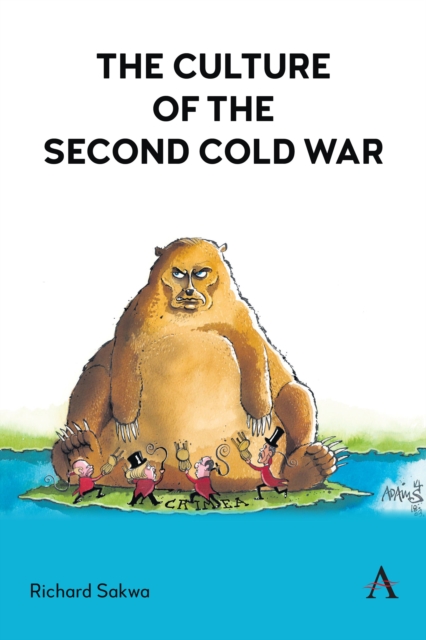
The Culture of the Second Cold War
The work examines the metapolitics of the Second Cold War. The focus is less on the detailed analysis of diplomatic history and processes in international politics, and more on the underlying attitudes and ideologies that have generated and sustained Cold War 2. The work examines the definition of a Cold War and reasons for the persistence of this form of international politics, as well as the clash over interpretations of the causes of renewed conflict. The work then looks at how this Cold War is being conducted, including renewed militarism, the suppression of dissent, the decline of diplomacy and the reduced opportunities for dialogue. The instruments of the Cold War 2 include sanctions and the reinterpretation of history and memory wars. Many of the familiar methods drawn from Cold War 1 are now applied, but in novel ways to reflect technological change as well as the different ideological contexts. The position of the global South in this Cold War is examined, and the work ends with some reflections on possible ways this Cold War could end.
eBook

1919 - The Year That Changed China
The year 1919 changed Chinese culture radically, but in a way that completely took contemporaries by surprise. At the beginning of the year, even well-informed intellectuals did not anticipate that, for instance, baihua (aprecursor of the modern Chinese language), communism, Hu Shi and Chen Duxiu would become important and famous – all of which was very obvious to them at the end of the year. Elisabeth Forster traces the precise mechanisms behind this transformation on the basis of a rich variety of sources, including newspapers, personal letters, student essays, advertisements, textbooks and diaries. She proposes a new model for cultural change, which puts intellectual marketing at its core. This book retells the story of the New Culture Movement in light of the diversifi ed and decentered picture of Republican China developed in recent scholarship. It is a lively and ironic narrative about cultural change through academic infi ghting, rumors and conspiracy theories, newspaper stories and intellectuals (hell-)bent on selling agendas through powerful buzzwords.
eBook
China between Peace and War
In China between Peace and War, Victor S. C. Cheng explores the gripping history of peace talks and international negotiations from 1945 to 1947 that helped determine the shape of the Chinese Civil War. The book focuses on the efforts of the two belligerent parties—the Chinese Nationalists, or Guomindang, and the Communists—to achieve an enduring peace. It presents previously unexplored major elements of the peace talks: ambiguous treaties, package deals and short-term solutions. It identifies the burning challenges that confronted attempts at peacemaking, including the two warring parties' high-risk decision-making styles and the temptation to veto agreements and resume fighting. Cheng argues against popular notions that differences between the two belligerents in the Chinese Civil War were irreconcilable, that the failure of the peace talks was predetermined and that the US government mediators needed to remain neutral. Because the actions around the negotiating table occurred in a developing theatre of war, Cheng also explores the military decision-making of the opposing sides as well as the conflicts that ultimately plunged China into the world’s largest military engagement of the seven-plus decades since World War II. China between Peace and War highlights the contradictory role of political leaders who micromanaged the military, including their struggle to connect political objectives and military power, their rhetorical use of the 'decisive war’ concept, and their pursuit of radical military-political goals at the expense of a negotiated peace.
eBook