
Catalogue Search | MBRL


Are you sure you want to remove the book from the shelf?

{{itemTitle}}
1,103
result(s) for
"Archaeology Egypt History."
Sort by:

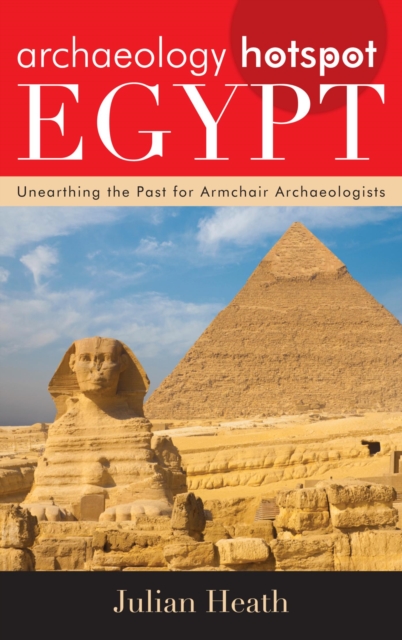
Archaeology Hotspot Egypt
The Archaeology Hotspots series offers reader-friendly and engaging narratives of the archaeology in particular countries.Written by archaeological experts with a general reader in mind, each book in the series focuses on what has been found and by whom, what the controversies and scandals have been, ongoing projects, and how it all fits into a.
eBook


Villa of the Birds
This fascinating book describes the excavation and preservation of three early Roman villas in Egypt's ancient port city of Alexandria. Chronicling the work of the Polish Archaeological Mission in Alexandria, Villa of the Birds is an engaging and informative account of how these ancient dwellings were unearthed, and how the famous mosaic floors were brought to light two thousand years after they were laid.With the expert guidance of the archaeologists responsible for the excavation, the reader is led through layers of clues reaching ten meters below today's street level, and to an in-depth appreciation of this extraordinary site's rich history.
eBook

The coffins of the priests of Amun : Egyptian coffins from the 21st dynasty in the collection of the national museum of antiquities in Leiden
Ancient Egyptian coffins provided a shell to protect the deceased both magically and physically. They guaranteed an important requirement for eternal life: an intact body. Not everybody could afford richly decorated wooden coffins. As commodities, coffins also pl ayed a vital role in the daily life of the living and marked their owner's taste and status. Coffin history is an ongoing process and does not end with the ancient burial. The coffins that were discovered and shipped to museums have become part of the National heritages. The Vatican Coffin Project is the first international research project to study the entire use-life of Egyptian coffins from an interdisciplinary perspective. This edited volume presents the first Leiden results of the project focusing on the lavishly decorated coffins of the Priests of Amun that are currently in the collection of the Dutch National Museum of Antiquities. Six chapters, written by international specialists, present the history of the Priests of Amun, the production of their coffins and use-life of the coffins from Ancient Egypt until modern times. The book appeals to the general public interested in Egyptian culture, heritage studies, and restoration research, and will also be a stimulating read for both students and academics.
eBook
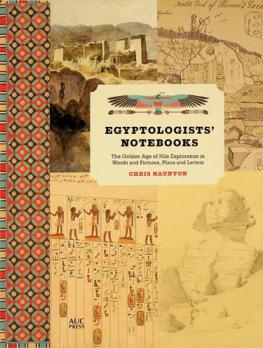
Egyptologists' notebooks : the golden age of Nile exploration in words, pictures, plans, and letters
\"A gorgeous presentation of intimate diaries and journals that captures the excitement of the golden age of Egyptology. For centuries, the ancient ruins of Egypt have provided an endless source of fascination for explorers, antiquarians, archaeologists, and the public. All, from the very earliest travelers, were entranced by the beauty of the landscape and the remains of tombs, temples, and cities consumed by drift sand. Early adventurers were gripped by the urge to capture what they saw in writings, sketches, paintings, and photographs. While it was always the Egyptologists who were in charge, they depended on the assistance of architects, artists, engineers, and photographers. Yet when we read about Flinders Petrie and Norman de Garis Davies, we rarely hear about their wives, Hilda and Nina, or how the work of Amelia Edwards helped to fund their explorations. Only through diaries, letters, and other archival discoveries have we come to realize how important these other partners were. Similarly, the contributions of Egyptians, such as Hassan Effendi Hosni, are only now coming to light. Egyptologists' Notebooks is a visual celebration of Egypt's ancient past, featuring evocative sketches, paintings, and photographs from pioneering explorers' and archaeologists' journals. Reproduced in their original form, they provide intimate, behind-the-scenes access to the archaeological discovery of Egypt.\"-- Provided by publisher
BOOK

Century of Excavation
This work offers a unique overview of the work done in the field of Egyptology during the nineteenth and beginning of the twentieth centuries. An excellent starting point and reference for anyone fascinated by ancient Egypt, this book includes such topics as Mariette and his work, the beginnings of the modern period, the pyramids and their explorers, the temples, buried royalties, Tutankhamen, ancient life, and arts and crafts.
eBook

Searching for the lost tombs of Egypt
\"Egypt boasts some of the most spectacular ancient ruins in the world, scattered across the entire country. Over the past two centuries, archaeologists have unearthed the burials of some of Egypt's celebrated pharaohs, from the chambers deep within the famed pyramids at Giza to the tombs hidden away in the rocky hills of the Valley of the Kings. And yet, many of the most intriguing and notorious individuals remain unaccounted for. Where are Alexander the Great and Cleopatra, both said by the historians of the Greek and Roman empires to have been buried in Egypt? Chris Naunton describes the quest for these and other great 'missing' tombs and those that we know must exist, but have yet to be found and presents the key moments of discovery that have yielded astonishing finds and created the archetypal image of the archaeologist poised at the threshold of a tomb left untouched for millennia\"-- Provided by publisher.
BOOK

Berenike and the ancient maritime spice route
The legendary overland silk road was not the only way to reach Asia for ancient travelers from the Mediterranean. During the Roman Empire’s heyday, equally important maritime routes reached from the Egyptian Red Sea across the Indian Ocean. The ancient city of Berenike, located approximately 500 miles south of today’s Suez Canal, was a significant port among these conduits. In this book, Steven E. Sidebotham, the archaeologist who excavated Berenike, uncovers the role the city played in the regional, local, and “global” economies during the eight centuries of its existence. Sidebotham analyzes many of the artifacts, botanical and faunal remains, and hundreds of the texts he and his team found in excavations, providing a profoundly intimate glimpse of the people who lived, worked, and died in this emporium between the classical Mediterranean world and Asia.
eBook