
Catalogue Search | MBRL


Are you sure you want to remove the book from the shelf?

{{itemTitle}}
44
result(s) for
"Archaeology Malta"
Sort by:

The significance of cart-ruts in ancient landscapes : a joint project of heritage malta, restoration unit malta environment and planning authority, university of malta, university of urbino (italy) and aproteco (spain) with the support of the culture 2000 programme of the eu
The cart-ruts are one of the most elusive enigmas of Maltese archaeology. Like the prehistoric megalithic temples and the corpulent statues found in them, they defy a comprehensive and satisfying explanation. They are a fascinating subject for discussion not only for archaeologists but also for the ordinary citizens, whether resident or visiting. In fact they have been treated both in archaeological and in other kinds of literature, as well as in television documentaries.
Book

The Maltese Archipelago at the Dawn of History
This collection of essays provides a reassessment of the multifaceted evidence which emerged from excavations carried out in 1909 and 1959 in the settlement of Bahrija, both largely unpublished until now. Bahrija is a key site for understanding the later stages of Maltese prehistory before the beginning of the Phoenician colonial period.
eBook


The Late Prehistory of Malta
Borg in-Nadur, Malta, is a major multi-period site, with archaeological remains that span several thousand years. Excavations were carried out here in 1881 and again in 1959. This volume provides an exhaustive account of the stratigraphy, the pottery, the lithic assemblages, the bones, and the molluscs.
eBook
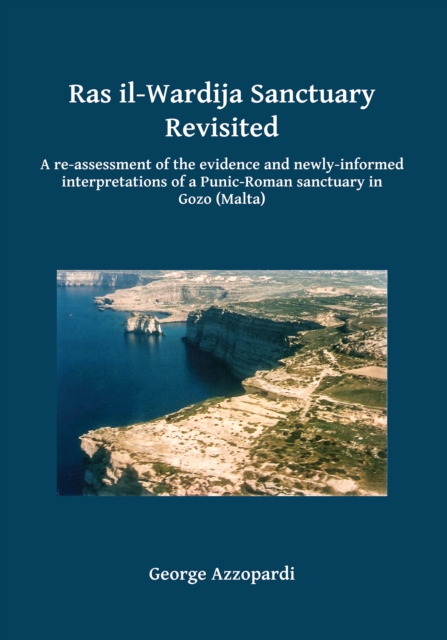
Ras il-Wardija Sanctuary Revisited
The secluded sanctuary on the coastal promontory of Ras il-Wardija on the central Mediterranean island of Gozo (near Malta) constitutes another landmark on the religious map of the ancient Mediterranean. Ritual activity at the sanctuary seems to be evidenced from around the 3rd century BC to the 2nd century AD and, possibly, even as late as the 4th century AD. This ritual activity was focused in a small built temple and in a rock-cut cave that seems to have incorporated a built extension in a later stage. This text examines the significance of the site.
eBook

Stones, Books and Flags: Born and the Role of Archaeological Heritage Management under the Barcelona Model
Since the 1980s, Barcelona's local institutions have been pioneers in creating a close relationship between culture, urban regeneration, and the social and economic development of the city, and subsequently in implementing a new paradigm in cultural policy for entrepreneurial, cultural, and creative cities. As a consequence, the city has also become a model for place branding and cultural tourism. In this context, Born, an archaeological site of the early eighteenth century which offers detailed testimony to both the cultural and economic lifestyle of the city at that time and the defeat of the Catalans during the War of the Spanish Succession, has been preserved and opened to the public in line with the city's varying cultural policies and attitudes to national identity over the last two decades. This article discusses Born from 2000 to 2017 and the political and cultural management context in relation to the Barcelona model that has defined its current form as a cultural centre. In this context, this article also discusses the role of archaeology in Barcelona's cultural governance, as a case study through which to consider the role of urban archaeological heritage management today. Depuis les années 1980, les institutions locales de Barcelone ont joué un rôle pionnier dans la création de relations plus étroites entre la culture, la réhabilitation urbaine et le développement social et économique de la ville, puis dans la mise en œuvre d'un nouveau modèle de politique culturelle destiné aux villes à vocations entrepreneuriales, culturelles et créatives. Ainsi la ville est devenue un modèle de tourisme culturel et d’élaboration d'une image de marque pour un lieu donné. C'est dans ce contexte qu'El Born, un site archéologique qui a produit des indications détaillées sur la vie culturelle et économique de la ville au début du XVIIIe siècle et sur la défaite des Catalans pendant la Guerre de Succession d'Espagne, a été conservé et ouvert au public conformément aux diverses politiques et attitudes de la ville envers l'identité nationale qui ont eu cours durant les deux dernières décennies. Dans cet article, il sera question d'El Born entre 2000 et 2017 et du contexte dans lequel sa gestion politique et culturelle s'est inscrite par rapport au modèle de Barcelone, un modèle qui a déterminé le centre culturel sous sa forme actuelle. On examinera aussi le rôle de l'archéologie dans la gestion culturelle de Barcelone, une étude de cas pouvant servir à considérer le rôle que la gestion du patrimoine archéologique urbain joue de nos jours. Translation by Madeleine Hummler Seit den 1980er Jahren haben die lokalen Institutionen in Barcelona als Pioniere bei der Förderung von engen Beziehungen zwischen Kultur, Stadterneuerung und die soziale und wirtschaftliche Entwicklung der Stadt gewirkt, und dann bei der Verwirklichung eines neuen Modells in der Kulturpolitik von unternehmerischen, kulturellen und kreativen Städten. Dadurch ist die Stadt ein Modell der Markenbildung eines Ortes und des Kulturtourismus geworden. In diesem Zusammenhang ist El Born, eine archäologische Stätte des frühen 18. Jahrhunderts mit ausführlichen Angaben über das kulturelle und wirtschaftliche Leben in der derzeitigen Stadt und über den Niederschlag der Katalanen im Spanischen Erbfolgekrieg, erhalten worden und der Öffentlichkeit zugänglich gemacht worden, in Übereinstimmung mit den verschiedenen Strategien und Einstellungen zur nationalen Identität, die in den letzten zwei Jahrzehnten in der Stadt vorlagen. In diesem Artikel wird El Born zwischen 2000 und 2017 und seine politische und denkmalpflegerische Führung in Bezug auf das Barcelona Modell, welche seine aktuelle Form als Kulturzentrum geprägt hat, dargelegt. Dabei wird auch die Bedeutung der Archäologie in der Leitung des Kulturbereichs in Barcelona als Fallstudie für die Rolle der Bodendenkmalpflege in den heutigen Städten untersucht. Translation by Madeleine Hummler
Journal Article
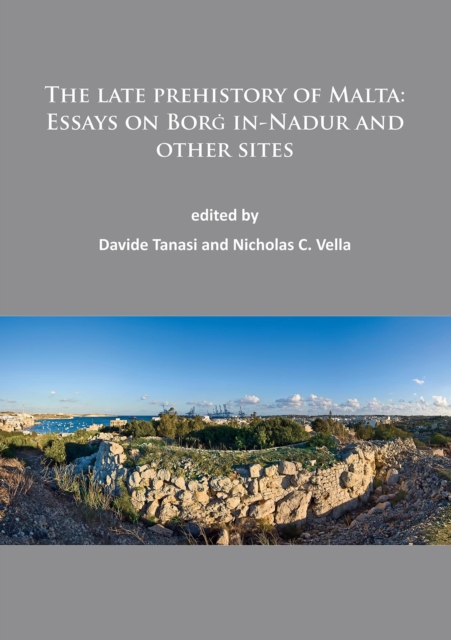
The late prehistory of Malta
Borġ in-Nadur, on the south-east coast of the island of Malta, is a major multi-period site, with archaeological remains that span several thousand years. In the course of the Late Neolithic, the steep-sided ridge was occupied by a large megalithic temple complex that was re-occupied in the succeeding Bronze Age. In the course of the second millennium BC, the ridge was heavily fortified by a massive wall to protect a settlement of huts. Excavations were carried out here in 1881 and again in 1959. This volume brings together a number of contributions that report on those excavations, providing an exhaustive account of the stratigraphy, the pottery, the lithic assemblages, the bones, and the molluscs. Additional studies look at other sites in Malta and in neighbouring Sicily in an effort to throw light on the late prehistory of the south-central Mediterranean at a period when connections with regions near and far were increasing. The volume forms a companion to another monograph which concentrated on the temple remains at Borġ in-Nadur (D. Tanasi and N. C. Vella (eds), Site, artefacts and landscape: prehistoric Borġ in-Nadur, Malta. Praehistorica Mediterranea 3. Monza: Polimetrica, 2011). About the Editors: Davide Tanasi (Ph.D.) is Professor of Archaeology at Arcadia University, The College of Global Studies - Arcadia Sicily Center. His research interests include Mediterranean prehistory, island archaeology, archaeometry of ancient ceramics, computer graphics in archaeology, and digital communication of cultural heritage. He has authored a hundred scientific papers in these fields and produced 3D documentaries about Sicilian archaeology and cultural heritage. His publications include La Sicilia e l’arcipelago maltese nell’eta del Bronzo Medio (Palermo, 2008) and Site, Artefacts and Landscape: Prehistoric Borġ in-Nadur, Malta with Nicholas C. Vella (Monza, 2011). He is editor of the international scientific journal Open Archaeology (De Gruyter) and since 2012, he has been directing the Field School in Archaeology of Arcadia University in Sicily. Nicholas C. Vella is Senior Lecturer and Head of the Department of Classics and Archaeology at the University of Malta, and works on Mediterranean history and archaeology. He has co-edited another volume of essays on Malta’s late prehistory called Site, Artefacts and Landscape: Prehistoric Borġ in- Nadur, Malta with Davide Tanasi (Monza, 2011) and contributed, with him, to the Cambridge Prehistory of the Bronze and Iron Age Mediterranean edited by P. van Dommelen and B. Knapp (Cambridge, 2014). He edits the Malta Archaeological Review, and co-directs excavations at the Żejtun Roman Villa (Malta). He is also co-investigator of the FRAGSUS project, funded by the European Research Council, that is examining the environmental and cultural background of prehistoric Malta.
eBook

Slavery, captivity and galley rowing in early modern Malta
For nearly 300 years, the Knights of St John forced a range of captives to labour on their galleys, with slave, convict and debtor oarsmen propelling the Knights’ navy in their crusade against Islam. This article considers how we can investigate these captives and the consequences of their presence in Malta by reconfiguring captivity as a process that extended into wider society. By seeking material traces of captivity at sea on board galleys and on land, the article opens new investigative avenues into early modern captivity in the Mediterranean. In addition, it brings to current debates a rare archaeological example of modern slavery within a European context.
Journal Article
The Routledge Handbook of Archaeological Human Remains and Legislation
Methodologies and legislative frameworks regarding the archaeological excavation, retrieval, analysis, curation and potential reburial of human skeletal remains differ throughout the world. As work forces have become increasingly mobile and international research collaborations are steadily increasing, the need for a more comprehensive understanding of different national research traditions, methodologies and legislative structures within the academic and commercial sector of physical anthropology has arisen. The Routledge Handbook of Archaeological Human Remains and Legislation provides comprehensive information on the excavation of archaeological human remains and the law through 62 individual country contributions from Europe, Asia, Africa, North America, South America and Australasia.
More specifically, the volume discusses the following:
What is the current situation (including a brief history) of physical anthropology in the country?
What happens on discovering human remains (who is notified, etc.)?
What is the current legislation regarding the excavation of archaeological human skeletal remains? Is a license needed to excavate human remains? Is there any specific legislation regarding excavation in churchyards? Any specific legislation regarding war graves?
Are physical anthropologists involved in the excavation process?
Where is the cut-off point between forensic and archaeological human remains (e.g. 100 years, 50 years, 25 years...)?
Can human remains be transported abroad for research purposes?
What methods of anthropological analysis are mostly used in the country? Are there any methods created in that country which are population-specific?
Are there particular ethical issues that need to be considered when excavating human remains, such
eBook