
Catalogue Search | MBRL


Are you sure you want to remove the book from the shelf?

{{itemTitle}}
1,888
result(s) for
"Archaeology Philosophy History."
Sort by:


Archaeology and Memory
Memory can be both a horrifying trauma and an empowering resource. From the Ancient Greeks to Nietzsche and Derrida, the dilemma about the relationship between history and memory has filled many pages, with one important question singled out: is the writing of history to memory a remedy or a poison? Recently, a growing interest in and preoccupation with the issue of memory, remembering and forgetting has resulted in a proliferation of published works, in various disciplines, that have memory as their focus. This trend, to which the present volume contributes, has started to occupy the dominant discourses of disciplines such as sociology, philosophy, history, anthropology and archaeology, and has also disseminated into the wider public discourse of society and culture today. Such a condition may perhaps echo the phenomenon of a melancholic experience at the turn of the millennium. Archaeology and Memory seeks to examine the diversity of mnemonic systems and their significance in different past contexts as well as the epistemological and ontological importance of archaeological practice and narratives in constituting the human historical condition. The twelve substantial contributions in this volume cover a diverse set of regional examples and focus on a range of prehistoric and classical case studies in Eurasian regional contexts as well as on the predicaments of memory in examples of the archaeologies of 'contemporary past'. From the Mesolithic and Neolithic burial chambers to the trenches of World War I and the role of materiality in international criminal courts, a number of contributors examine how people in the past have thought about their own pasts, while others reflect on our own present-day sensibilities in dealing with the material testimonies of recent history. Both kinds of papers offer wider theoretical reflections on materiality, archaeological methodologies and the ethical responsibilities of archaeological narration about the past.
eBook


Ancient muses : archaeology and the arts
Known widely in Europe as interpretive narrative archaeology, the practice of using creative methods to interpret and present current knowledge of the past is gaining popularity in North America. This book is the first compilation of international case studies of the various artistic methods used in this new form of education—one that makes archaeology come alive for the nonprofessional. Plays, opera, visual art, stories, poetry, performance dance, music, sculpture, digital imagery—all can effectively communicate archaeological processes and cultural values to public audiences. The 23 contributors to this volume are a diverse group of archaeologists, educators, and artisans who have direct experience in schools, museums, and at archaeological sites. Citing specific examples, such as the film The English Patient , science fiction mysteries, and hypertext environments, they explain how creative imagination and the power of visual and audio media can personalize, contextualize, and demystify the research process. A 16-page color section illuminates their examples, and an accompanying CD includes relevant videos, music, web sites, and additional color images. In their Introduction, the editors invoke the ancient muses to inspire the modern presenters and interpreters of archaeological research. They aptly quote George Santayana, from his poem The Power of Art: . . . may our hands immortalize the day When life was sweet, and save from utter death The sacred past that should not pass away. John H. Jameson Jr. is an archaeologist and John E. Ehrenhard is Director at the National Park Service's Southeast Archeological Center in Tallahassee, Florida. Christine A. Finn is research associate at the Institute of Archaeology at the University of Oxford in England.
eBook

Understanding the archaeological record
\"This book explores the diverse understandings of the archaeological record in both historical and contemporary perspective, while also serving as a guide to reassessing current views. Gavin Lucas argues that archaeological theory has become both too fragmented and disconnected from the particular nature of archaeological evidence. The book examines three ways of understanding the archaeological record - as historical sources, through formation theory, and as material culture - then reveals ways to connect these three domains through a reconsideration of archaeological entities and archaeological practice. Ultimately, Lucas calls for a rethinking of the nature of the archaeological record and the kind of history and narratives written from it\"-- Provided by publisher.
Book
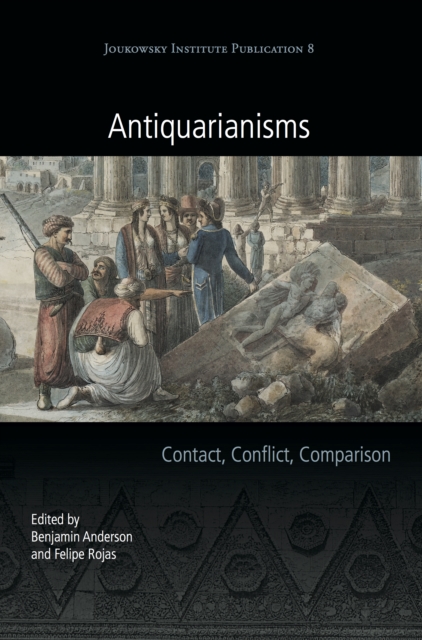
Antiquarianisms
Antiquarianism and collecting have been associated intimately with European imperial and colonial enterprises, although both existed long before the early modern period and both were (and continue to be) practiced in places other than Europe. Scholars have made significant progress in the documentation and analysis of indigenous antiquarian traditions, but the clear-cut distinction between “indigenous\" and “colonial\" archaeologies has obscured the intense and dynamic interaction between these seemingly different endeavours. This book concerns the divide between local and foreign antiquarianisms focusing on case studies drawn primarily from the Mediterranean and the Americas. Both regions host robust pre-modern antiquarian traditions that have continued to develop during periods of colonialism. In both regions, moreover, colonial encounters have been mediated by the antiquarian practices and preferences of European elites. The two regions also exhibit salient differences. For example, Europeans claimed the “antiquities\" of the eastern Mediterranean as part of their own, “classical,\" heritage, whereas they perceived those of the Americas as essentially alien, even as they attempted to understand them by analogy to the classical world. These basic points of comparison and contrast provide a framework for conjoint analysis of the emergence of hybrid or cross-bred antiquarianisms. Rather than assuming that interest in antiquity is a human universal, this book explores the circumstances under which the past itself is produced and transformed through encounters between antiquarian traditions over common objects of interpretation.
eBook

Traces of the past : classics between history and archaeology
\"What are we doing when we walk into an archaeological museum or onto an archaeological site? What do the objects and features we encounter in these unique places mean and, more specifically, how do they convey to us something about the beliefs and activities of formerly living humans? In short, how do visible remains and ruins in the present give meaning to the human past? Karen Bassi addresses these questions through detailed close readings of canonical works spanning the archaic to the classical periods of ancient Greek culture, showing how the past is constituted in descriptions of what narrators and characters see in their present context. She introduces the term protoarchaeological to refer to narratives that navigate the gap between linguistic representation and empirical observation--between words and things--in accessing and giving meaning to the past. Such narratives invite readers to view the past as a receding visual field and, in the process, to cross the disciplinary boundaries that divide literature, history, and archaeology. Aimed at classicists, literary scholars, ancient historians, cultural historians, and archaeological theorists, the book combines three areas of research: time as a feature of narrative structure in literary theory; the concept of 'the past itself' in the philosophy of history; and the ontological status of material objects in archaeological theory. Each of five central chapters explores how specific protoarchaeological narratives--from the fate of Zeus' stone in Hesiod's Theogony to the contest between words and objects in Aristophanes' Frogs--both expose and attempt to bridge this gap. Throughout, the book serves as a response to Herodotus' task in writing the Histories, namely, to ensure that 'the past deeds of men do not fade with time'\"-- Provided by publisher.
Book

The Aesthetics and Politics of Cinematic Pedestrianism
This book offers a rich exploration of the cinematic aesthetics that filmmakers devised to reflect the corporeal and affective experience of walking in the city. Winner of the 2023 Best Book Award from the Amsterdam School of Cultural Analysis (ASCA).
eBook

Travels with an archaeologist : finding a sense of place
\"A memoir of travels by an eminent archaeologist and historian\"-- Provided by publisher.
Book

The origins of culture history in prehistoric archaeology: rethinking plausibility and disciplinary tradition
This paper explores the fundamental question of what makes archaeological accounts plausible. By using a worked example related to the rise of culture-historical approaches to archaeology during the late nineteenth century, I conclude that the conditions of plausibility have frequently been, and continue to be, opaque, requiring detailed analysis by practitioners.
Journal Article