
Catalogue Search | MBRL


Are you sure you want to remove the book from the shelf?

{{itemTitle}}
5,836
result(s) for
"Archipelagos"
Sort by:

Political geography II
This second of two progress reports on the subdiscipline of political geography explores islands and archipelagos as material sites and political concepts with which to understand spatial ontologies of power. The piece reviews thematic interests in the interdisciplinary field of island studies as well as those taken up by political geographers. Areas for future research are also identified.
Journal Article
First record of Saddle Barb, Barbodes sellifer Kottelat amp; Lim 2021 (Cypriniformes, Cyprinidae), on Belitung, Indonesia, with an update of its geographic distribution
Saddle Barb, Barbodes sellifer, is a freshwater fish endemic to Malay Peninsula and the Indonesian archipelago and is here recorded for the first time from Belitung Island, Indonesia. This is a range extension of about 300 km to the southeast from the closest previously known locality on Bangka Island, and, in addition to reporting its occurrence on another island of the Indonesian archipelago, this is the southernmost known locality for the species. We also provide an updated map showing the species’ distribution.
Journal Article
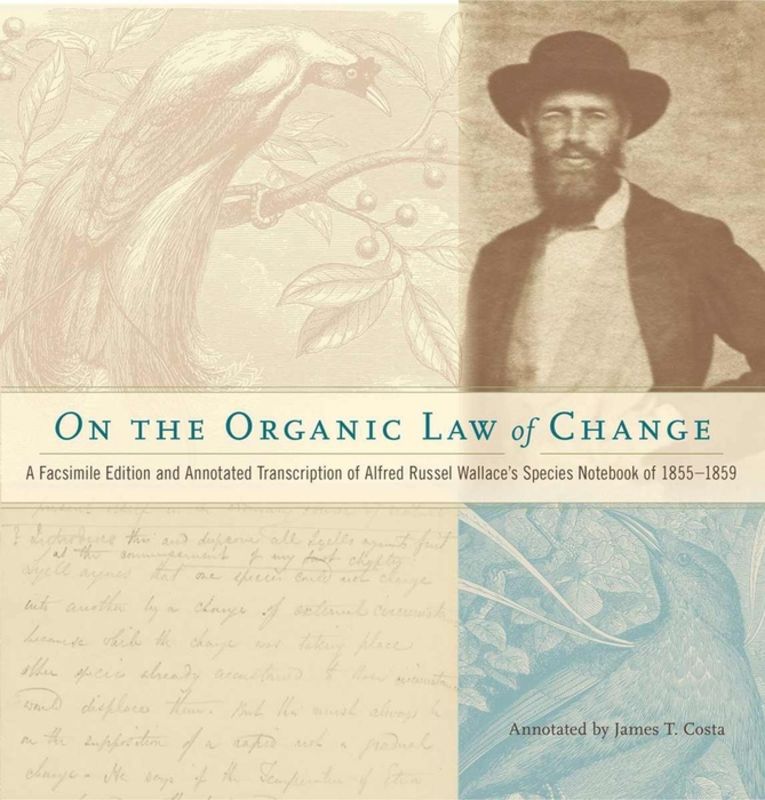
On the organic law of change : a facsimile edition and annotated transcription of Alfred Russel Wallace's Species notebook of 1855-1859
A giant of the discipline of biogeography and co-discoverer of natural selection, Alfred Russel Wallace was the most famous naturalist in the world when he died in 1913. To mark the centennial of Wallace's death, James Costa offers an elegant edition of the \"Species Notebook\" of 1855-1859, which Wallace kept during his legendary expedition in peninsular Malaysia, Indonesia, and western New Guinea. Presented in facsimile with text transcription and annotations, this never-before-published document provides a new window into the travels, personal trials, and scientific genius of the co-discoverer of natural selection.
In one section, headed \"Note for Organic Law of Change\"--an extended critique of geologist Charles Lyell's anti-evolutionary arguments--Wallace sketches a book he would never write, owing to the unexpected events of 1858. In that year he sent to Charles Darwin an essay announcing his discovery of the mechanism for species change: natural selection. Darwin's friends Lyell and the botanist Joseph Hooker proposed a \"delicate arrangement\": a joint reading at the Linnean Society of his essay with Darwin's earlier private writings on the subject. Darwin would publish On the Origin of Species in 1859, to much acclaim; pre-empted, Wallace's first book on evolution waited two decades, but by then he had abandoned his original concept.
On the Organic Law of Change realizes in spirit the project Wallace left unfinished, and asserts his stature as not only a founder of biogeography and the preeminent tropical biologist of his day but as Darwin's equal among the pioneers of evolution.
eBook

In the Shadow of Tungurahua
In the Shadow of Tungurahua relates the stories of the people of Penipe, Ecuador living in and between several villages around the volcano Tungurahua and two resettlement communities built for people displaced by government operations following volcanic eruptions in 1999 and 2006. The stories take shape in ways that influence prevailing ideas about how disasters are produced and reproduced, in this case by shifting assemblages of the state first formed during Spanish colonialism attempting to settle (make \"legible\") and govern Indigenous and campesino populations and places. The disasters unfolding around Tungurahua at the turn of the 21st century also provide lessons in the humanitarian politics of disaster—questions of deservingness, reproducing inequality, and the reproduction of bare life. But this is also a story of how people responded to confront hardships and craft new futures, about forms of cooperation to cope with and adapt to disaster, and the potential for locally derived disaster recovery projects and politics.
eBook

High-precision radiocarbon dating shows recent and rapid initial human colonization of East Polynesia
The 15 archipelagos of East Polynesia, including New Zealand, Hawaii, and Rapa Nui, were the last habitable places on earth colonized by prehistoric humans. The timing and pattern of this colonization event has been poorly resolved, with chronologies varying by >1000 y, precluding understanding of cultural change and ecological impacts on these pristine ecosystems. In a meta-analysis of 1,434 radiocarbon dates from the region, reliable short-lived samples reveal that the colonization of East Polynesia occurred in two distinct phases: earliest in the Society Islands A.D. ~1025-1120, four centuries later than previously assumed; then after 70-265 y, dispersal continued in one major pulse to all remaining islands A.D. ~1190-1290. We show that previously supported longer chronologies have relied upon radiocarbon-dated materials with large sources of error, making them unsuitable for precise dating of recent events. Our empirically based and dramatically shortened chronology for the colonization of East Polynesia resolves longstanding paradoxes and offers a robust explanation for the remarkable uniformity of East Polynesian culture, human biology, and language. Models of human colonization, ecological change and historical linguistics for the region now require substantial revision.
Journal Article

The historical biogeography of coral reef fishes: global patterns of origination and dispersal
Aim: To use recently published phylogenies of three major reef fish families to explore global patterns of species origin and dispersal over the past 65 million years. The key questions are: when and where did reef fishes arise, and how has this shaped current biodiversity patterns? Location: Biogeographic reconstructions were performed on globally distributed reef fish lineages. Patterns of lineage origination and dispersal were explored in five major biogeographic regions: the East Pacific, the Atlantic, the Indian Ocean, the Indo-Australian Archipelago hotspot, and the Central Pacific. Methods: A dispersal, extinction and cladogenesis (DEC) model implemented in Lagrange was used to infer the most likely biogeographic scenarios at nodes on chronograms of three diverse reef fish families (Labridae, Pomacentridae, Chaetodontidae). For the terminal branches ANOVA was used to compare patterns of origination on a regional and global scale. Patterns of origination and dispersal were examined within discrete time periods for the five biogeographic regions. Results: Temporal examination of hypothetical ancestral lineages reveal a pattern of increasing isolation of the East Pacific and Atlantic regions from the Eocene, and the changing role of the Indo-Australian Archipelago from a location of accumulating ranges in the Palaeo/Eocene, a centre of origination in the Miocene, to extensive expansion of lineages into adjacent regions from the Pliocene to Recent. Main conclusions: While the East Pacific and Atlantic have a history of isolation, the Indo-Australian Archipelago has a history of connectivity. It has sequentially and then simultaneously acted as a centre of accumulation (Palaeocene/Eocene onwards), survival (Eocene/Oligocene onwards), origin (Miocene onwards), and export (Pliocene/Recent) for reef fishes. The model suggests that it was the proliferation and expansion of lineages in the Indo-Australian Archipelago (the Coral Triangle) during the Miocene that underpinned the current biodiversity in the Indian and Pacific Oceans.
Journal Article

Evolutionary Processes of Diversification in a Model Island Archipelago
Long celebrated for its spectacular landscapes and strikingly high levels of endemic biodiversity, the Philippines has been studied intensively by biogeographers for two centuries. Concentration of so many endemic land vertebrates into a small area and shared patterns of distribution in many unrelated forms has inspired a search for common mechanisms of production, partitioning, and maintenance of life in the archipelago. In this review, we (a) characterize an ongoing renaissance of species discovery, (b) discuss the changing way biogeographers conceive of the archipelago, (c) review the role molecular phylogenetic studies play in understanding the evolutionary history of Philippine vertebrates, and (d) describe how a 25-year Pleistocene island connectivity paradigm continues to provide some explanatory power, but has been augmented by increased understanding of the archipelago's geological history and ecological gradients. Finally, we (e) review new insights provided by studies of adaptive versus nonadaptive radiation and phylogenetic perspectives on community ecology.
Journal Article

En‐échelon Rifting and Origin of the Volcanism in the Comoros
Two volcanic provinces have been recently discovered during the SISMAORE oceanographic cruise in the Comoros archipelago in the North Mozambique Channel between Madagascar and East Africa: N’Droundé, along the North‐eastern insular slopes of Grande Comores Island and Mwezi, in the abyssal plain, north‐east of Mayotte and Anjouan islands. By combining bathymetry and backscatter data, high‐resolution seismic reflection and sub‐bottom profiles, we have identified and mapped various tectonic (faults, forced folds) and volcanic structures (lava flows, edifices, sills, dykes) at several spatial scales on the seabed and in cross‐section within the sedimentary cover. We have characterized the volcano‐tectonic structures (geometry, segmentation, and kinematics) to better understand the link (geometry, chronology) between tectonic and volcanic processes. We show that volcanic and tectonic features are controlled by tectonic processes and vice‐versa. Ridges, volcanic cones and lava flows are set up along fissures and dikes during main rifting events to accommodate a N40°E regional extension within an E‐W right lateral shear transfer zone. The volcano tectonic features are Plio‐Pleistocene. This transfer zone lies between the offshore branch of the East African rift system and Malagasy grabens and may have formed when the East African rifts propagated offshore. We evidence a major rifting episode in the last Ma. The estimated volume and flux of extruded lavas show that the volcanism of the Comoros could be related to shallow tectonic processes. Key Points Characterization of NW‐SE‐striking active volcanic and tectonic structures in the Comoros archipelago from high resolution marine data Evidence for late Quaternary rifting episodes in the Mwezi and N’Droundé submarine volcanic provinces within a N40°E regional extension En‐échelon rifts compatible with right lateral shear in a transfer zone between the offshore East African rift system and Malagasy rift
Journal Article
The island species-area relationship: biology and statistics
Aim: We conducted the most extensive quantitative analysis yet undertaken of the form taken by the island species-area relationship (ISAR), among 20 models, to determine: (1) the best-fit model, (2) the best-fit model family, (3) the best-fit ISAR shape (and presence of an asymptote), (4) system properties that may explain ISAR form, and (5) parameter values and interpretation of the logarithmic implementation of the power model. Location: World-wide. Methods: We amassed 601 data sets from terrestrial islands and employed an information-theoretic framework to test for the best-fit ISAR model, family, and shape, and for the presence/absence of an asymptote. Two main criteria were applied: generality (the proportion of cases for which the model provided an adequate fit) and efficiency (the overall probability of a model, when adequate, being the best at explaining ISARs; evaluated using the mean overall AIC c weight). Multivariate analyses were used to explore the potential of island system properties to explain trends in ISAR form, and to describe variation in the parameters of the logarithmic power model. Results: Adequate fits were obtained for 465 data sets. The simpler models performed best, with the power model ranked first. Similar results were obtained at model family level. The ISAR form is most commonly convex upwards, without an asymptote. Island system traits had low descriptive power in relation to variation in ISAR form. However, the æ and c parameters of the logarithmic power model show significant pattern in relation to island system type and taxon. Main conclusions: Over most scales of space, ISARs are best represented by the power model and other simple models. More complex, sigmoid models may be applicable when the spatial range exceeds three orders of magnitude. With respect to the log power model, z-values are indicative of the process(es) establishing species richness and composition patterns, while c-values are indicative of the realized carrying capacity of the system per unit area. Variation in ISAR form is biologically meaningful, but the signal is noisy, as multiple processes constrain the ecological space available within island systems and the relative importance of these processes varies with the spatial scale of the system.
Journal Article

Functional biogeography of oceanic islands and the scaling of functional diversity in the Azores
Significance Biogeographic theory builds upon a long history of analyzing species-diversity patterns of remote islands, but no previous studies have attempted to investigate corresponding patterns in functional traits on islands. Our analyses of functional diversity (FD) for spiders and beetles in the Azorean archipelago reveal that FD increases with species richness, which, in turn scales with island area regardless of the taxa and distributional group considered (endemics, natives, and exotics). Our results also support the hypothesis that each group contributes to FD in proportion to their species richness and that, being dominant, exotic species have significantly extended the realized trait space of the Azorean islands. Further analyses in other archipelagos are needed to establish whether our findings are representative of oceanic islands.
Analyses of species-diversity patterns of remote islands have been crucial to the development of biogeographic theory, yet little is known about corresponding patterns in functional traits on islands and how, for example, they may be affected by the introduction of exotic species. We collated trait data for spiders and beetles and used a functional diversity index (FRic) to test for nonrandomness in the contribution of endemic, other native (also combined as indigenous), and exotic species to functional-trait space across the nine islands of the Azores. In general, for both taxa and for each distributional category, functional diversity increases with species richness, which, in turn scales with island area. Null simulations support the hypothesis that each distributional group contributes to functional diversity in proportion to their species richness. Exotic spiders have added novel trait space to a greater degree than have exotic beetles, likely indicating greater impact of the reduction of immigration filters and/or differential historical losses of indigenous species. Analyses of species occurring in native-forest remnants provide limited indications of the operation of habitat filtering of exotics for three islands, but only for beetles. Although the general linear (not saturating) pattern of trait-space increase with richness of exotics suggests an ongoing process of functional enrichment and accommodation, further work is urgently needed to determine how estimates of extinction debt of indigenous species should be adjusted in the light of these findings.
Journal Article