
Catalogue Search | MBRL


Are you sure you want to remove the book from the shelf?

{{itemTitle}}
6,032
result(s) for
"Architects Biography."
Sort by:


Modernity, Sexuality, and Ideology in Iran
In Iran, since the mid–nineteenth century, one issue has been a common concern: how should Iran become modern? More than a century of struggle for or against modernity has constituted much of the social, political, and cultural history of the country. In the decades since the 1979 Revolution, the question has become even more critical. In Modernity, Sexuality, and Ideology in Iran, Talattof finds that the process of modernity never truly unfolded, due in large part to Iran’s reluctance to embrace the seminal subjects of gender and sexuality. Talattof’s approach reflects a unique look at modernity as not only advances in industry and economy but also advances toward an open, intellectual discourse on sexuality. Exploring the life and times of Shahrzad, a dancer, actress, filmmaker, and poet, Talattof illuminates the country’s struggle with modernity and the ideological, traditional, and religious resistance against it. Born in 1946, she performed in several theater productions, became an acclaimed film star in the 1970s, and pursued a career as a journalist and poet. Following the revolution, she was imprisoned and eventually became homeless on the streets of Tehran. Her success and eventual decline as a female artist and entertainer illustrate the conflict between modernity and tradition and Iran’s failure to embrace an overt expression of sexuality. Talattof also profiles several other female artists of the 1970s, analyzing their lives and work as windows through which to examine what Iranian culture allowed and what it repudiated.
eBook

Building Zaha : the story of architect Zaha Hadid
\"The city of Baghdad was full of thinkers, artists, and scientists, the littlest among them Zaha Hadid. Zaha knew from a young age that she wanted to be an architect. She set goals for herself and followed them against all odds. A woman in a man's world, and a person of color in a white field, Zaha was met with resistance at every turn. When critics called her a diva and claimed her ideas were unbuildable, she didn't let their judgments stop her from setting goals and achieving them one by one, finding innovative ways to build projects that became famous the world over. She persisted, she followed her dreams, and she succeeded.\"--Google Books.
Book

Lam Woo
This book focuses on Lam Woo, a wellknown, highly successful Chinese building contractor whose company was based in Hong Kong at the beginning of the twentieth century. It is also about the marginal group of people he exemplifies, those who joined the Chinese diaspora because of poverty and political turmoil and were later driven back home because of discrimination and other difficulties. An important contribution to Hong Kong Studies, this book provides a window onto the sociopolitical conditions in Hong Kong leading up to and following the 1911 revolution that established the Republic of China and the following two decades. In studying Lam Woo’s life and family, we catch a glimpse of the lives of a unique segment of the Hong Kong Chinese community—namely, the educated, westernized Chinese, mainly Christians, some of whom supported the revolution to overthrow the Qing dynasty and helped to establish Hong Kong’s influential YMCA. Professor Chan, who has written several books on Hong Kong History, draws on rich archival sources, and historical photographs to illustrate the life of a man who was a pioneer builder of majestic heritage buildings throughout Hong Kong such as St. Paul’s Church, St. Paul’s Coeducational College, the Diocesan Boys’ School, and St. Stephen’s College, all of which remain in use today. This book is a significant historical study that rediscovers an important but less studied part of Hong Kong’s development during the early twentieth century. For instance, the book details Lam Woo’s efforts in rebuilding the port facilities and docks that helped the colony’s transformation into a glamorous, international port. The author also discusses how Lam Woo’s contributions to the building of the roads encircling the New Territories and the bridges linked different parts of the territory with mainland China, where water and food supplies would later come from. In the later part of the book, the author highlights how Lam Woo, a devout Anglican, contributed to the expansion of the Chinese Anglican Church community. As one of the founders of St. Paul’s Church, he promoted the establishment of the Hong Kong YMCA, with its emphasis on character training in “the development of body, mind, and spirit\" for young people. The book emphasizes that his most lasting legacy for Hong Kong and his native Guangzhou was through his philanthropist activities in education. Lam Woo supported education for girls and founded St. Paul’s Girls’ School, the forerunner of the notable St. Paul’s Coeducational College, founded a primary and a secondary school in his native village, and donated extensively to Lingnan University.
eBook


Fanny Kemble
AForeWordmagazine Book of the Year for 2007 Charismatic, highly intelligent, and splendidly talented, Fanny Kemble (1809-93) was a Victorian celebrity, known on both sides of the Atlantic as an actress and member of the famous Kemble theatrical dynasty, as a fierce opponent of slavery despite her marriage to a wealthy slave owner, as a brilliantly successful solo performer of Shakespeare, and as the author of journals about her career and life on her husband's Georgia plantations. She was, in her own words, irresistible as a \"woman who has sat at dinner alongside Byron . . . and who calls Tennyson, Alfred.\" Touring in America with her father in the early 1830s, Kemble impulsively wed the wealthy and charming Philadelphia bachelor Pierce Butler, beginning a tumultuous marriage that ended in a sensational divorce and custody battle fourteen years later. At the time of their marriage, Kemble had not yet visited the vast Georgia rice and cotton plantations to which Butler was heir. In the winter of 1838, they visited Butler's southern holdings, and a horrified Kemble wrote what would later be published on both sides of the Atlantic asJournal of a Residence on a Georgian Plantation. An important text for abolitionists, it revealed the inner workings of a plantation and the appalling conditions in which slaves lived. Returning to England after her divorce, she fashioned a new career as a solo performer of Shakespeare's plays and as the author of memoirs, several travel narratives and collections of poems, a short novel, and miscellaneous essays on the theater. For the rest of her life, she would divide her time between the two countries. In the various roles she performed in her life, on stage and off-abolitionist, author, estranged wife-Kemble remained highly theatrical, appropriating and subverting nineteenth-century prescriptions for women's lives, ever rewriting the roles to which she was assigned by society and inheritance. Hers was truly a performed life, and in the first Kemble biography in twenty-five years to examine that life in its entirety, Deirdre David presents it in all its richness and complexity.
eBook

Mohamed Makiya : a modern architect renewing islamic tradition
Makiya was Baghdad and Baghdad was Makiya.' These words sum up the life of one of the Middle East's most famous architects. Mohamed Makiya's career spanned seven decades and included projects in more than ten countries. He was a master of incorporating traditional and classical styles into modern architecture. For Makiya, the continuity of tradition as a 'living dimension' was the justification for his work. 0Makiya was revered as a teacher of architecture in Iraq, where he set up the first Department of Architecture at Baghdad University in 1959. Makiya was also a promoter of Iraqi art, which he displayed at his Kufa Gallery in London that was set up to build a bridge between the East and the West. 0This compelling biography reveals the life of a visionary who achieved remarkable feats in Iraq and whose philosophy and humanity crossed all borders and cultures.
Book

Riviera Dreaming
In 1926 Barry Dierks, a young American architect, arrived in Paris and fell in love with France. With his partner, an ex-officer in the British Army, he built a white, flat-roofed Modernist masterpiece that rested on the rocks below the Esterel, with views across the Mediterranean. They called it Le Trident. From the moment it was built, it captivated Riviera society. As commissions for more villas flooded in, Barry Dierks and Eric Sawyer, 'those two charmers', flourished at the heart of Riviera society. Over the years, Dierks would design and build over 70 of the Riviera's most recognisable villas for clients ranging from Somerset Maugham's Villa Mauresque and Jack Warner's Villa Aujourd'hui to the Marquess of Cholmondeley's Villa Le Roc, and Maxine Elliott's ChÔteau de l'Horizon, later the home of Aly Khan and Rita Hayworth.
eBook

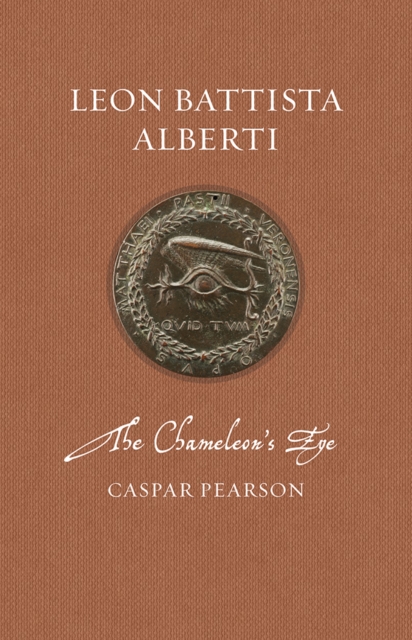
Leon Battista Alberti : the chameleon's eye
One of the most brilliant and original authors and architects of the entire Renaissance, Leon Battista Alberti had an output that encompassed engineering, surveying, cryptography, poetry, humour, political commentary and more. He employed irony, satire and playful allusion in his written works, and developed a sophisticated approach to architecture that combined the ancient and modern. Born into the Florentine elite, Alberti was nonetheless disadvantaged owing to exile and illegitimacy. As a result, he became an acute analyst of the social institutions of his time, as well as a profoundly existential writer who was intensely interested in the human condition. This new account explores Alberti's life and works, examining how his personal and intellectual preoccupations continually pushed him to engage with an ever-broader spectrum of Renaissance culture.
eBook