
Catalogue Search | MBRL


Are you sure you want to remove the book from the shelf?

{{itemTitle}}
222
result(s) for
"Architects Germany."
Sort by:

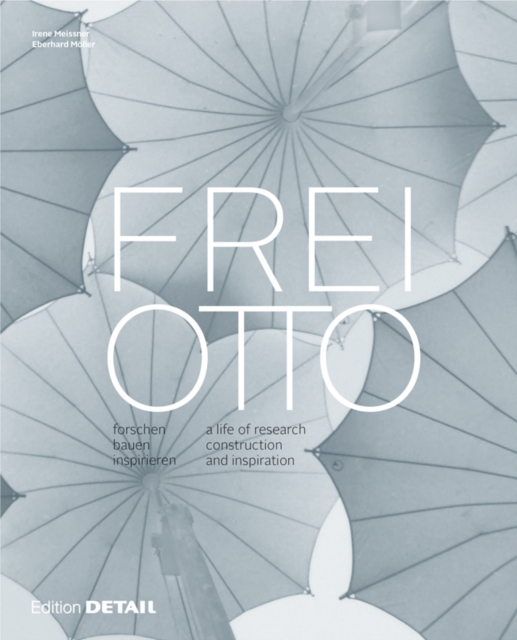
Frei Otto: forschen, bauen, inspirieren = a life of research, construction and inspiration
A depiction of his most important works New forms of lightweight and adaptable construction Insight into interdisciplinary research projects Frei Otto's work as a source of inspiration for architects and engineers worldwide No other architect provided as many ideas and inspiration to construction in the second half of the 20th century as Frei Otto. Lord Norman Foster described this great pioneer of lightweight construction simply as \"an inspiration\". Frei Otto explored the foundations of resource and energy-efficient building well before these issues received the attention of the wider public. By including users in construction planning and taking into account local and climatic conditions, he opened new avenues for the building industry. To celebrate his 90th birthday, the publication provides insights on the key aspects of his work. At its heart was the search for natural designs and an exploration of form-finding and self-development processes. As such he created a whole universe of ideas using membrane, net and convertible roofs with umbrellas, grid shells, and pneumatic structures. The book introduces his key works and highlights how his ideas were adopted and continued throughout the world.
eBook

Rudolf Schwarz and the monumental order of things
The product of a continuous European architectural and intellectual practice that bridged the Second World War, the work of Rudolf Schwarz (1897-1961) allows a deeper understanding of post-war German architecture. This book examines nine of his religious and secular buildings sited in the Rhineland, which are presented through new survey drawings and photographs. These are accompanied by Schwarz's project descriptions and his lecture 'Architecture of Our Times' from 1958, which contextualizes his approach. Essays by Wolfgang Pehnt and an interview with Schwarz's wife, the architect Maria Schwarz, provide further insight into this complex oeuvre.
Book
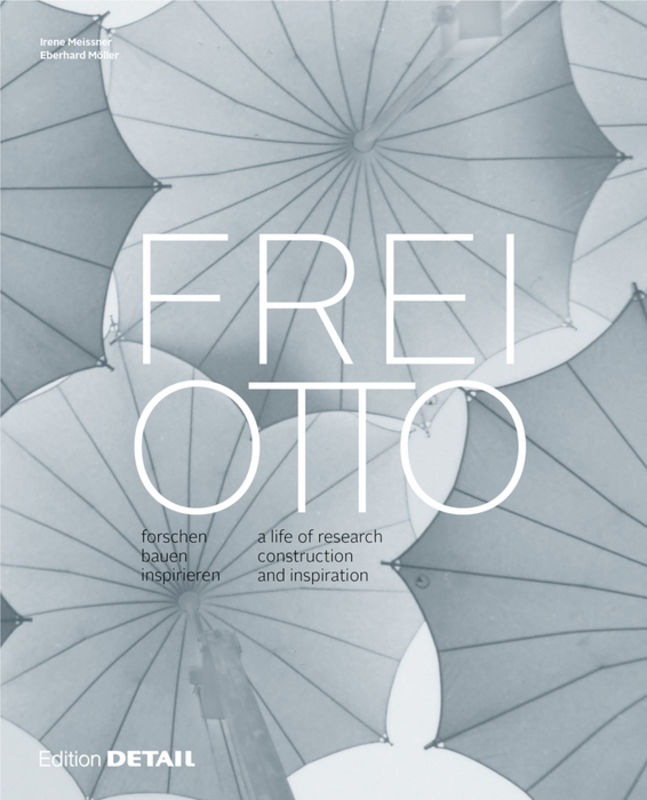
Frei Otto : forschen bauen inspirieren : a life of research construction and inspiration
Kein anderer Architekt hat dem Bauen in der zweiten Hälfte des 20.Jahrhunderts so viele Anregungen und Impulse gegeben wie Frei Otto.Frei Otto erforschte die Grundlagen zu ressourcenschonendem und energieeffizientem Bauen lange bevor diese Themen in den Fokus der breiten Öffentlichkeit rückten.
eBook

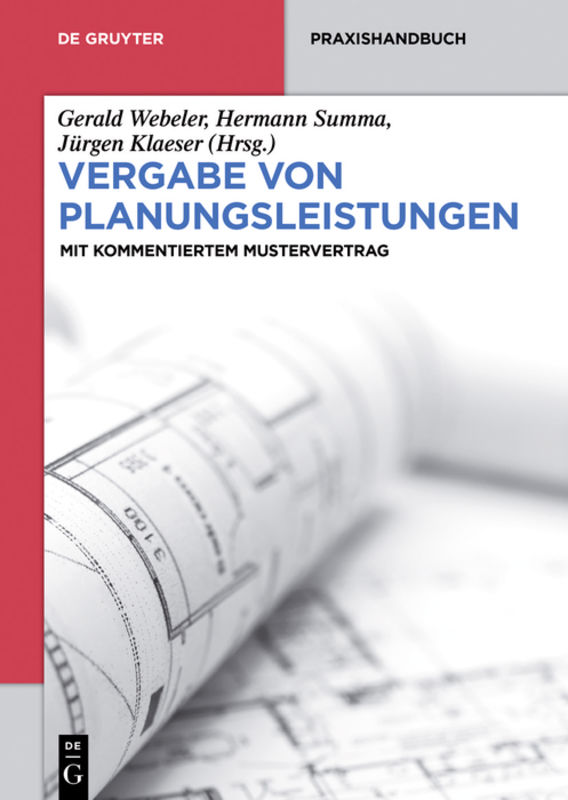
Vergabe von Planungsleistungen
Öffentliche Auftraggeber sind regelmäßig verpflichtet, Planungsleistungen förmlich auszuschreiben.Dieses Werk bringt Struktur in das Vergabeverfahren, und zwar sowohl im Unter- wie auch im Oberschwellenbereich.
eBook

Walter Gropius
\"As founder of the Bauhaus school, Walter Gropius (1883-1969) is one of the icons of 20th-century architecture. While his early buildings in Pomerania were still strongly marked by his teacher Peter Behrens, after an expressionistic phase focused on handicraft, he ultimately arrived at geometric abstraction. During the entire period he collaborated with other architects, founding the collective known as \"The Architects Collaborative\" in the US. This comprehensive monograph documents all 74 of the known buildings by Gropius that were realized, including many early works which he never publicized; but it also critically examines his unbuilt projects. The book is illustrated with new photographs by the author, historical figures, and with as-new plans drawn by the author\"-- Provided by publisher.
Book

Karl Friedrich Schinkel: Drama in Architecture
Chicago, the city that \"defined the meaning of the skyscraper\" (HUMANITIES), is lauded for some of the architectural giants-- including Frank Lloyd Wright and Mies van der Rohe--who shaped its skyline. Often overlooked however, is Karl Friedrich Schinkel. This 19th-century German architect never actually set foot on American soil, yet he had a significant impact on Chicago's architectural development. Biographical information on Schinkel, the man called the \"master\" of German neoclassicism, is included.
Magazine Article


Traces of a Jewish Artist
Graphic artist, illustrator, painter, and cartoonist Rahel
Szalit (1888-1942) was among the best-known Jewish women artists in
Weimar Berlin. But after she was arrested by the French police and
then murdered by the Nazis at Auschwitz, she was all but lost to
history, and most of her paintings have been destroyed or gone
missing. Drawing on a range of primary and secondary sources, this
biography recovers Szalit's life and presents a stunning collection
of her art.
Szalit was a sought-after artist. Highly regarded by art
historians and critics of her day, she made a name for herself with
soulful, sometimes humorous illustrations of Jewish and world
literature by Sholem Aleichem, Heinrich Heine, Leo Tolstoy, Charles
Dickens, and others. She published her work in the mainstream
German and Jewish press, and she ran in artists' and queer circles
in Weimar Berlin and in 1930s Paris. Szalit's fascinating life
demonstrates how women artists gained access to Jewish and
avant-garde movements by experimenting with different media and
genres.
This engaging and deeply moving biography explores the life,
work, and cultural contexts of an exceptional Jewish woman artist.
Complementing studies such as Michael Brenner's The Renaissance
of Jewish Culture in Weimar Germany , this book brings Rahel
Szalit into the larger conversation about Jewish artists,
Expressionism, and modern art.
eBook