
Catalogue Search | MBRL


Are you sure you want to remove the book from the shelf?

{{itemTitle}}
23
result(s) for
"Architects Norway."
Sort by:

Dark arkitekter
Dark is one of Norways's largest planning, architecture and interior design practices, consistently delivering creative solutions with a high degree of functionality. Their work includes master planning, urban design, building design, landscape architecture and interior architecture, as well as furniture design, graphic design and visualization. Dark's vision is to create the most vigorous and cutting-edge house of design, architecture and visualization within the Nordic countries. This book presents their history and major projects from the past 25 years.
Book
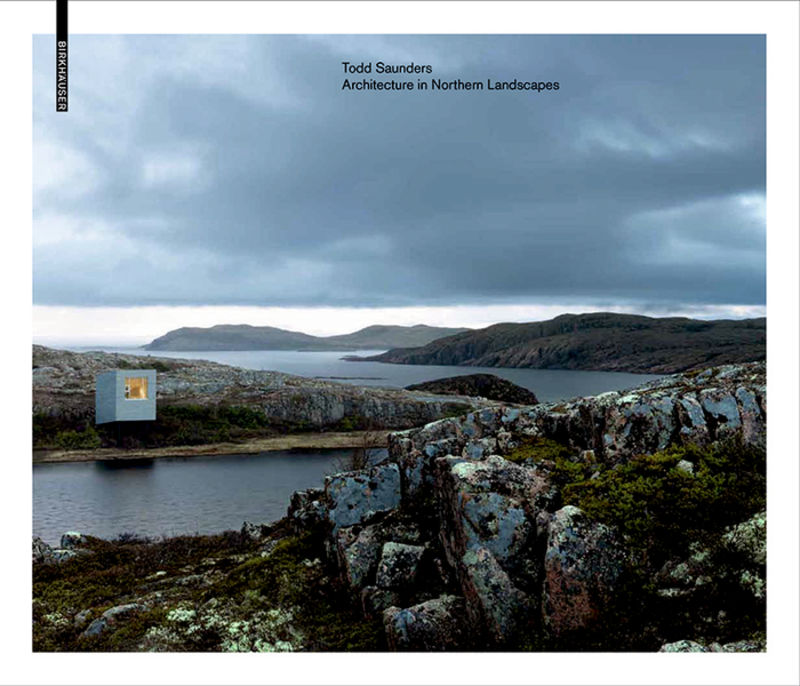
Todd Saunders - Architecture in Northern Landscapes
Todd Saunders (1969) is one of the most important young contemporary Canadian architects working internationally. His architecture, simple yet powerful, incorporates elements of his country's architectural identity - including the use of wood and carefully picked Modernist influences - bringing it at the same time into the 21st century with excellent execution, carefully chosen materials and a hands-on approach. Saunders (he lives and works in Bergen, Norway) has successfully executed work in both Canada, Norway, and Finland, creating architecture with a strong sense of northern identity, an individual approach that is informed by the strongness of natural landscape. The most important projects: Aurland Lookout, Long Studio, Fogo Island, Tower Studio, Fogo Island, Squish Studio, Fogo Island and Villa G. The first reference monograph on a remarkable young architect working in Scandinavia and Canada. The monograph provides interesting unpublished documents, curated by Jonathan Bell (Architecture Editor, Wallpaper* magazine) and Ellie Stathaki (Deputy Architecture Editor, Wallpaper* magazine) as well as three interviews by Olaf Gipser, Zita Cobb, and Brian MacKay-Lyons. The artwork of the book is by the international renowned graphic designer Henrik Nygren.
eBook

Deichman Bjørvika = Oslo Public Library : Lundhagem and Atelier Oslo Architects
After lengthy planning, the new public library in Oslo was completed and opened in summer 2020. Located opposite the Opera House and the Munch Museum, the imposing building fits into the ensemble in the new cultural quarter of the Norwegian capital. The project by Lund Hagem Architects and Atelier Oslo emerged from an international architectural competition and is characterized by a radical interpretation of the library as a vivid place to meet and spend time with an impressive multimedia offering in an unobtrusive inviting environment. The publication documents in detail the planning and building process from the first draft to the opening. Essays by the novelist Elif Shafak and the library's long-time director Liv Sæteren explain the significance of the institution as an integrative social force. Niklas Maak pays tribute to the building from the perspective of architectural criticism. Iwan Baan and Hélène Binet capture the architecture and atmosphere of the shining crystal in their photographs.
Book

The Role of Urban Tree Areas for Biodiversity Conservation in Degraded Urban Landscapes
Urban tree diversity plays a crucial role in enhancing the resilience of cities by contributing to ecosystem services such as mitigating the effects of land degradation, combating urban heat islands, improving air quality, and fostering biodiversity habitats. A diverse tree population enhances resilience to vulnerabilities related to climatic stress, disease, and habitat loss by promoting stability, adaptability, and efficiency within the ecosystem. Little is known about urban tree diversity in Serbia; therefore, this study examines the diversity of tree species in the City of Niš, Serbia, to assess its implications for urban resilience and biodiversity preservation in the context of land-use change. Using the Shannon Diversity Index, we quantify species richness and evenness across both central and suburban zones of the city. The results are benchmarked against similar indices in five other European cities to assess how patterns of urban tree distribution vary under different urbanisation pressures. The study reveals that tree diversity is markedly lower in the city centre than in peripheral areas, highlighting spatial inequalities in green infrastructure that may accelerate biodiversity loss due to compact urban development. These findings demonstrate how urban expansion and infrastructure density contribute to ecological fragmentation, potentially leading to long-term effects on ecosystem services. This study emphasises the strategic importance of integrating greenery diversity into urban and landscape planning, particularly in rapidly growing urban centres in Southeastern Europe. This research contributes to the existing body of literature, providing a deeper understanding of the interdependencies between urban tree diversity, land degradation, and biodiversity loss, offering data-driven insights. This enables urban planners, landscape architects, and policy advisors to make informed decisions about street tree diversity and green city infrastructure, contributing to the development of sustainable cities.
Journal Article
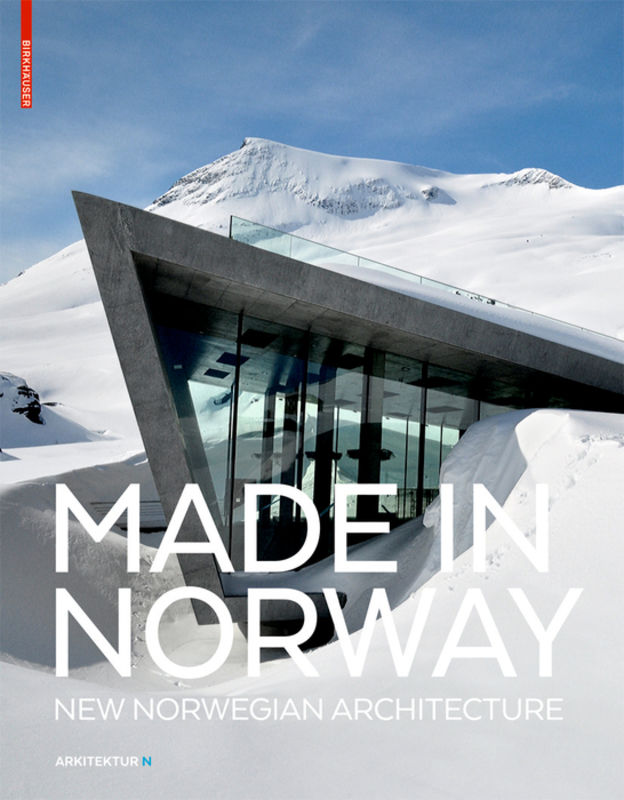
Made in Norway
Norwegische Architektur steht seit einigen Jahren im internationalen Fokus. Nach dem Erfolg der ersten Ausgabe von Made in Norway präsentiert der neue Band die besten neuen Projekte, die Norwegen zu bieten hat. Sie zeigen – ob groß oder klein, ländlich oder städtisch – , wie sich Architekten in Norwegen aktuellen Herausforderungen stellen: Wie werden die verschiedenen Aspekte und Bedürfnisse einer modernen Gesellschaft in ihrer Architektur reflektiert? Wie können die neuen technischen Möglichkeiten und Materialien in bedeutender Architektur des 21. Jahrhunderts umgesetzt werden?Das Buch zeigt 40 neue Beispiele und gibt Einblick in die zugrundeliegenden Diskussionen zeitgenössischen Architektur Norwegens; herausgegeben vom norwegischen Arkitektur N, the Norwegian Review of Architecture
Norwegian architecture has been in the international spotlight in recent years. Following the success of Made in Norway, this second volume presents a selection of 40 new examples of the best contemporary architecture Norway has to offer. These projects – large and small, rural and urban – are examples of how architects in Norway have reacted to the challenges of today. How are the different aspects of a modern Scandinavian society reflected in its architecture? How are new technical and material possibilities translated into relevant buildings for the 21st century? The book is based on presentations from Arkitektur N, the Norwegian Review of Architecture, but also contains new material, explaining and discussing some of the main challenges of architecture today, as seen from Norway.
eBook

Architect, Catalyst, Advocate, and Prophet: A Four-Lens View of Companies to Support Ecodesign Integration
Companies are increasingly expected to develop products with better environmental performance throughout their life cycle. Academic literature on ecodesign integration, which investigates firms’ practices of dealing with environmental concerns associated with their products, indicates a need for more focus on formal and informal organizational aspects. From the general management literature, the four-lens view of organizations provides a rich understanding of organizations by embracing their formal (structural lens) and informal (human, political and symbolic lenses) functioning. This article aims to explore the extent to which the four-lens view may support ecodesign integration in companies. This exploratory study builds on fifteen interviews about ecodesign integration at seven manufacturing companies in Denmark and Norway. The main results are threefold: (i) the different lenses of organizations could be found in measures mentioned at the case companies; (ii) measures from the architect’s perspective seemed necessary to provide an official scene for ecodesign and help prioritizing it in organizations; and (iii) the catalyst’s, advocate’s, and prophet’s perspectives seemed necessary to facilitate or complement the architect’s perspective. In the light of these findings, the four-lens view seems relevant to strengthen ecodesign integration, and its potential use as a reflective tool is an avenue for future work.
Journal Article
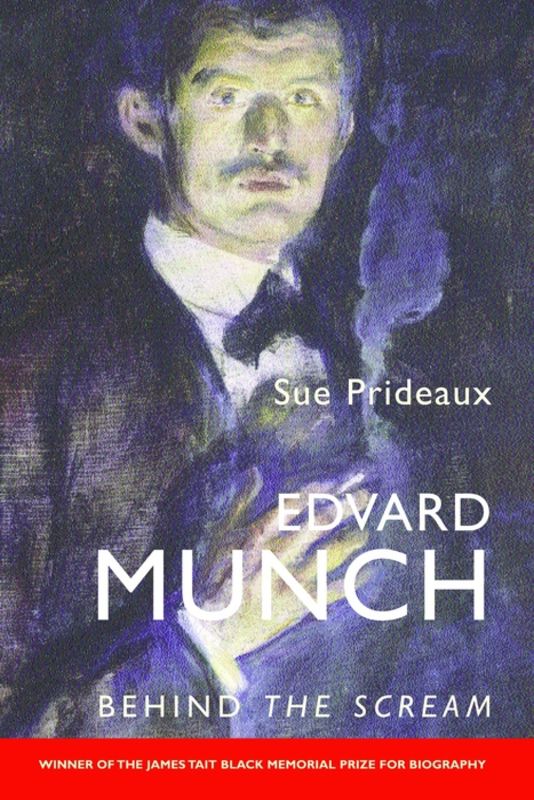
Edvard Munch
Although almost everyone recognizes Edvard Munch's famous paintingThe Scream,hardly anyone knows much about the man. What kind of person could have created this universal image, one that so vividly expressed all the uncertainties of the twentieth century? What kind of experiences did he have? In this book, the first comprehensive biography of Edvard Munch in English, Sue Prideaux brings the artist fully to life. Combining a scholar's precision with a novelist's insight, she explores the events of his turbulent life and unerringly places his experiences in their intellectual, emotional, and spiritual contexts.With unlimited access to tens of thousands of Munch's papers, including his letters and diaries, Prideaux offers a portrait of the artist that is both intimate and moving. Munch sought to paint what he experienced rather than what he saw, and as his life often veered out of control, his experiences were painful. Yet he painted throughout his long life, creating strange and dramatic works in which hysteria and violence lie barely concealed beneath the surface. An extraordinary genius, Munch connects with an audience that reaches around the world and across more than a century.
eBook

The Private Journals of Edvard Munch
Scandinavia's most famous painter, the Norwegian Edvard Munch (1863-1944), is probably best known for his painting The Scream, a universally recognized icon of terror and despair. (A version was stolen from the Munch Museum in Oslo, Norway, in August 2004, and has not yet been recovered.) But Munch considered himself a writer as well as a painter. Munch began painting as a teenager and, in his young adulthood, studied and worked in Paris and Berlin, where he evolved a highly personal style in paintings and works on paper. And in diaries that he kept for decades, he also experimented with reminiscence, fiction, prose portraits, philosophical speculations, and surrealism. Known as an artist who captured both the ecstasies and the hellish depths of the human condition, Munch conveys these emotions in his diaries but also reveals other facets of his personality in remarks and stories that are alternately droll, compassionate, romantic, and cerebral. This English translation of Edvard Munch's private diaries, the most extensive edition to appear in any language, captures the eloquent lyricism of the original Norwegian text. The journal entries in this volume span the period from the 1880s, when Munch was in his twenties, until the 1930s, reflecting the changes in his life and his work. The book is illustrated with fifteen of Munch's drawings, many of them rarely seen before. While these diaries have been excerpted before, no translation has captured the real passion and poetry of Munch's voice. This is a translation that lets Munch speak for himself and evokes the primal passion of his diaries. J. Gill Holland's exceptional work adds a whole new level to our understanding of the artist and the depth of his scream.
eBook

Atmosphere as a tool for enhancing organizational performance
The concept of atmosphere is often considered vague and difficult to capture, which hampers adequate feedback on atmospheric investments. This paper aims to report a systematic effort to capture the concept and enhancing factors, making adequate feedback for efforts to improve atmosphere possible. Owing to limited a priori insights, an exploratory, discovery-oriented approach was chosen. Semi-structured interviews, supplemented with secondary data, were conducted to gain insight into how managers and design experts think and cope to improve the atmosphere of establishments. The hospitality industry was selected as empirical context. Investments to improve the atmosphere of establishments can bring significant benefits. However, the positive effects are associated with uncertainty and consequently the risks can be substantial. However, such risks were only recognized by hospitality managers, not by design experts. This study is a first step and was therefore restricted to the supply side of the industry. For practical purposes, the empirical setting was limited to a single country. Care should be taken not to overkill with atmosphere and thereby lose focus on the main service/product offering. Hospitality managers and owners need to be assertive to get the right balance between aesthetic elements and operational requirements because design experts tend to neglect the latter. Given the considerable interest in, and consequently the presumed value of, atmosphere as an intangible asset, this paper provides important insights into an area where there is genuine need for empirical research. [PUBLICATION ABSTRACT]
Journal Article

Using a predictive model to analyze architects' intentions of using wood in urban construction
Norwegian architects' perceptions regarding the use of wood as a structural material in urban construction was investigated. Increased use of wood in the urban construction sector represents a substantial market opportunity for the wood industry. A theoretical model based on Ajzen's Theory of Planned Behavior was developed to explain architects' intentions of using wood as a structural material in urban construction. A questionnaire was used to measure attitudes toward the various properties of wood, aesthetic and environmental aspects, construction costs, as well as the use of wood in different types of urban buildings and building heights. Intentions, subjective norms, perceived behavioral control, and experience with wood as a structural material were also measured. Data from the questionnaire were analyzed using factor analysis and multiple regression analysis. Based on a multiple regression model, it was concluded that experience with use of wood as a structural material, perceived behavioral control over the use of wood, and attitudes toward the use of wood as a structural material in buildings three to five stories or higher, were statistically significant aspects that influenced architects' intentions of using wood as a structural material in urban construction. [PUBLICATION ABSTRACT]
Journal Article