
Catalogue Search | MBRL


Are you sure you want to remove the book from the shelf?

{{itemTitle}}
374
result(s) for
"Architectural design Methodology."
Sort by:


Ways to Study and Research Urban, Architectural and Technical Design
How can we develop a scientific basis for architectural, urban and technical design? When can a design be labelled as scientific output, comparable with a scientific report? What are the similarities and dis-similarities between design and empirical research, and between design research, typological research, design study and study by design? Is there a need for a particular methodology for design driven study and research? With these questions in mind, more than forty members of the Faculty of Architecture of the Delft University of Technology have described their ways of study and research. Each chapter shows the objectives, the methodology and its implementation in search for a deeper knowledge of design processes and an optimal quality of the design itself. The authors - among them architects, urban planners, social scientists, lawyers, technicians and information scientists - have widely differing backgrounds. Nevertheless, they share a great deal. The central focus is a better understanding of design processes, design tools and the effects of design interventions on issues such as utility, aesthetics meaning, sustainability and feasibility.
eBook
Design As Research
Are there differences between design practice and the practice of design research?What alliances between text and artefact are possible in the search for new knowledge?How does design research translate and transform theories and methods from other disciplines?.
eBook
Technological Innovation in Architectural Design
\"This book provides innovative ideas aimed at addressing the broad range of computational design and construction skills that might be fostered in architectural education and practices. This book also includes decision-making processes that are used and made to determine an optimal architectural production. The early chapters in this book will help designers gain new insights on the influence of parametric design systems on the design process and the later chapters will help designers foster their perceptions and creative attitudes in the construction process\"--.
eBook

Design Processes
Nowadays, the script of life is for a large part written by architects and designers. Urban planning decides how we spread our activities geographical. The design of modern residential districts determines for a large part how we communicate with each other. The design of shopping centers determines how we acquire our food. Designers for means of transport decide how we move ourselves and kitchen designers decide how we cook. All this has to do with the mechanisms of technology diffusion which will be elaborated on in this publication. The main issues discussed are the contemporary interrelationship of industrial design and architecture and a confrontation of contemporary design practice in both domains with academic theory and education. The cases used for this publication provide several examples of the various characters of design processes. The subjects of the cases discussed in Design Processes are design processes in general, visualization as a design tool, project management, social complexity collaboration, decision making and technology diffusion.
eBook
Architecture Workbook
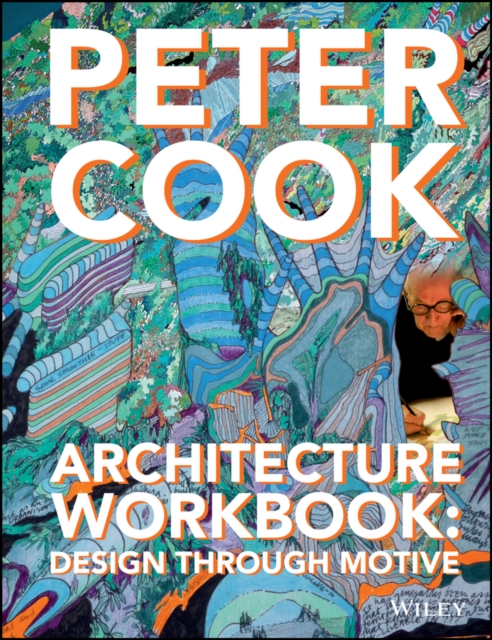
Organised into 9 parts that highlight a wide range of architectural motives, such as 'Architecture as Theatre', 'Stretching the Vocabulary' and 'The City of Large and Small', the workbook provides inspiring key themes for readers to take their cue from when initiating a design. Motives cover a wide-range of work that epitomise the theme. These include historical and Modernist examples, things observed in the street, work by current innovative architects and from Cook's own rich archive, weaving together a rich and vibrant visual scrapbook of the everyday and the architectural, and past and present.
eBook

Architectural design research in small practices
PurposeThere has been a recently growing interest by architects in practice-based research and the impact of research. At the same time, several post-graduate architecture programmes with practice-led research agendas were founded. This shift towards architectural design research is analysed using the notions of “process-driven research”, “output-driven research” and “impact”. The study aims to investigate and unveil the link between graduate programmes and graduates with a research interest and to test the tripartite model of “process-driven research”, “output-driven research” and “impact” in the context of small architectural practices.Design/methodology/approachThe study uses a qualitative and exploratory research approach that includes 11 in-depth interviews conducted in 2020, during the first nationwide COVID-19 lockdown in the United Kingdom (UK) selected interviews were architects representing (1) members or alumni of practice-related graduate architecture programmes in London and (2) founders of London-based small architectural practices within the last decade.FindingsWhile focussing on the London context, the paper offers transferable insights for the key potentials of practice-led design research in small architectural practices and the actions that might improve research practice.Originality/valueThis paper addresses a lack of studies on how design research differs between diverse types and sizes of architectural firms, why emerging small architectural practices increasingly engage with research and how this shapes their practice. This knowledge is important to fully understanding architectural design research and its strengths or weaknesses.
Journal Article
The Embodiment of Architectural Experience: A Methodological Perspective on Neuro-Architecture
People spend a large portion of their time inside built environments. Research in neuro-architecture—the neural basis of human perception of and interaction with the surrounding architecture—promises to advance our understanding of the cognitive processes underlying this common human experience and also to inspire evidence-based architectural design principles. This paper examines the current state of the field and offers a path for moving closer to fulfilling this promise. The paper is structured in three sections, beginning with an introduction to neuro-architecture, outlining its main objectives and giving an overview of experimental research in the field. Afterward, two methodological limitations attending current brain-imaging architectural research are discussed: the first concerns the limited focus of the research, which is often restricted to the aesthetic dimension of architectural experience; the second concerns practical limitations imposed by the typical experimental tools and methods, which often require participants to remain stationary and prevent naturalistic interaction with architectural surroundings. Next, we propose that the theoretical basis of ecological psychology provides a framework for addressing these limitations and motivates emphasizing the role of embodied exploration in architectural experience, which encompasses but is not limited to aesthetic contemplation. In this section, some basic concepts within ecological psychology and their convergences with architecture are described. Lastly, we introduce Mobile Brain/Body Imaging (MoBI) as one emerging brain imaging approach with the potential to improve the ecological validity of neuro-architecture research. Accordingly, we suggest that combining theoretical and conceptual resources from ecological psychology with state-of-the-art neuroscience methods (Mobile Brain/Body Imaging) is a promising way to bring neuro-architecture closer to accomplishing its scientific and practical goals.
Journal Article

Reuse Practices of Ancient Architectural Members: The Presence of Spolia in Monuments of Thessaloniki, Greece
Spolia, defined as reused architectural elements in constructions, constitute a diachronic practice extending from antiquity to modern times, mostly denoting war trophies. Their application was related to multiple parameters including technical, economic, aesthetic, symbolic, and cultural aspects. In all cases, the reuse of high-quality, processed materials could be associated with the diachronic principles of sustainability. Therefore, spolia can be characterized as precursors of the contemporary circular resource management strategies adopted in the constructional sector. In the present paper, the spolia identified in nine monuments in Thessaloniki, dated throughout a wide period of 1.5 millenniums (from the Roman to the Ottoman era), were studied. Analysis results, regarding their location, functional use, type, origin, geometric characteristics, and technology, were statistically processed and concluding remarks were assessed. Their application was classified into three principal categories related to structural, functional, and symbolic usage, rendering spolia material mediators between successive historic periods, through which memory, cultural identity, and architectural continuity can be foreseen in the city of Thessaloniki.
Journal Article

Semantic Network Simulation vs. Traditional Brainstorming: Enhancing Architectural Design Conflict Resolution and Innovation
Comprehensive design thinking is vital for architects to resolve spatial conflicts in architectural design. To address the limitations of traditional brainstorming (TB) in complex constraint scenarios, this study proposes a cognitive science-based semantic network simulation (SN) method. A controlled experiment was conducted with 60 architecture students randomly divided into SN and TB groups, tasked with solving the same rural cultural center entrance design conflict within 10 min, with eye-tracking monitoring subconscious thinking. Multi-dimensional evaluation shows TB generates more proposals, but SN outperforms TB in innovation, conflict resolution, and thought explicitness. For architects, SN provides a structured thinking tool: decompose design conflicts into nodes, establish logical connections, and generate innovative solutions through cross-domain association. The findings offer actionable methods for architectural design practice and education, helping break the “function–innovation–efficiency” trade-off.
Journal Article