
Catalogue Search | MBRL


Are you sure you want to remove the book from the shelf?

{{itemTitle}}
34,736
result(s) for
"Architectural practice"
Sort by:


The Architect as Worker
Directly confronting the nature of contemporary architectural work, this book is the first to address a void at the heart of architectural discourse and thinking. For too long, architects have avoided questioning how the central aspects of architectural “practice” (professionalism, profit, technology, design, craft, and building) combine to characterize the work performed in the architectural office. Nor has there been a deeper evaluation of the unspoken and historically-determined myths that assign cultural, symbolic, and economic value to architectural labor. The Architect as Worker presents a range of essays exploring the issues central to architectural labor. These include questions about the nature of design work; immaterial and creative labor and how it gets categorized, spatialized, and monetized within architecture; the connection between parametrics and BIM and labor; theories of architectural work; architectural design as a cultural and economic condition; entrepreneurialism; and the possibility of ethical and rewarding architectural practice. The book is a call-to-arms, and its ultimate goal is to change the practice of architecture. It will strike a chord with architects, who will recognize the struggle of their profession; with students trying to understand the connections between work, value, and creative pleasure; and with academics and cultural theorists seeking to understand what grounds the discipline.
eBook

Function follows strategy : architects' strategies from the fifties to the present
In past years, architects have been confronted with a changed market, changed sets of tasks and also new requirements. Which strategies can they adopt to get commissions or spark interest in their projects? With selected examples, the author analyses the processes of individual architects since the 1950s. Beginning with the commencement of marketing in the North American post-war era he proceeds to then cast his view to contemporary times. Transformations in society and politics, the changed requirements of clients, and also the crisis in the economy and financial circles all influence the professional existence of architects. While pure construction itself was the focus in previous times, today's architects must adopt a wide variety of roles in relation to clients - ranging from consultant to mediator and brand designer. The book is intended to inspire architects to consider new options and unusual paths.
Book
InnovatiON-Architecture
Compiles ON-A work philosophy: a constant search for innovative ad hoc solutions for each project, using the most updated technologies and design research. This book exposes and collects the innovations developed through 15 years of work at ON-A, through lengthy conversations between its founders and directors (Eduardo Gutiérrez and Jordi Fernández) and the editor. This is not a usual monograph, but rather an exploration of ideas from an innovation point of view, according to four basic criteria: Design, Laboratory, Technology and Emotion.With the aim of understanding the different degrees of innovation on how they operate in ON-A, the book is organized into these four blocks. The first one is routed on Design as a starting point to attend the control of the geometry (inspired on mineral, arboreal, and organic shapes) and encoding the information (using parametric design, BIM, and coding techniques). That methodology allows us to visualize and interact with the continuum of data and workflows of all stages of development, attending to the entire life cycle of the project. Since ON-A considers themselves as a Laboratory rather than as a professional architecture office, the second conversation explores our ways of making innovative architecture throughout bioclimatic and sustainable experiments and tests done in their works and projects. In that chapter they talk about how to incorporate the 'green' feature through bioarchitecture —a layer of technological green that appeals to sustainability from materiality, management and maintenance— in order to re-naturalize cities and reconnect people with the natural environment in favor of an ecosystem balance. Technology is the third chapter, a key tool to enhance design and creativity, carrying out complete material, structural and installation modeling that gives us control of any layout whether we use curved glass, precast GRC, wood or another innovative material technique to build their projects. Last but not least, the fourth conversation is about how ON-A's projects work as a catalyst for creating positive Emotions: physical-visual, well-being, and comfort that contribute occupants' health and flexible usability of the designed spaces.As a result of these four conversations, the book shows how to innovate in architecture from different layers with only one concern: helping to reduce the environmental impact of human intervention, improving citizens' quality of life and seeking the emotional interactions between the inhabitants and their environment.
eBook

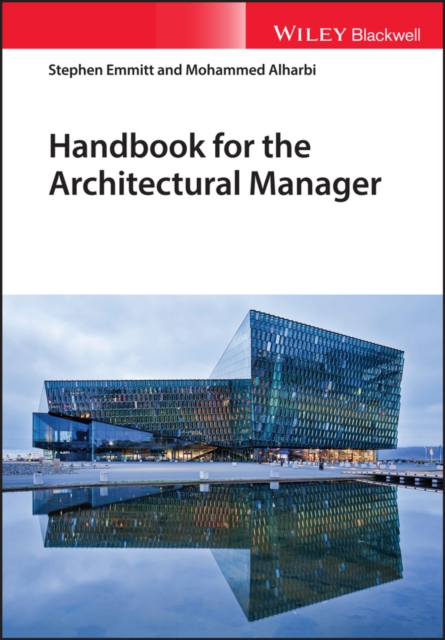
Handbook for the Architectural Manager
The essential resource for becoming more effective in the highly competitive architectural marketplace Handbook for the Architectural Manager offers architects a comprehensive resource that brings together critical information on four interlinked areas: managing the architectural office, projects, stakeholders, and learning.
eBook


Architects
What is creativity? What is the relationship between work life and personal life? How is it possible to live truthfully in a world of contradiction and compromise? These deep and deeply personal questions spring to the fore in Thomas Yarrow's vivid exploration of the life of architects. Yarrow takes us inside the world of architects, showing us the anxiety, exhilaration, hope, idealism, friendship, conflict, and the personal commitments that feed these acts of creativity.
Architectsrethinks \"creativity,\" demonstrating how it happens in everyday practice. It highlights how the pursuit of good architecture, relates to the pursuit of a good life in intimate and individually specific ways. And it reveals the surprising and routine social negotiations through which designs and buildings are actually made.
eBook

Project leadership
The RIBA Plan of Work 2013 Guide: Design Management is part of a brand new series providing must-read practical guidance to running efficient and successful projects using the new RIBA Plan of Work 2013. Each guide takes a core project task - in this case Project Lead - and explains the essential activities and considerations required at each stage of the new Plan of Work. Easy to use and navigate and in a small and handy format these guides will provide the ultimate quick reference support at your desk or on site. The author provides concise and pragmatic advice rooted in real world experience - a 'how to' that will resonate with practitioners. In-text features such as 'hints and tips', 'checklists', 'forms and templates' and 'signposts' to trusted resources will provide user-friendly support. Boxed examples will highlight best practice and illuminate common problems and solutions borne of hard won experience. These guides are designed to be used on all projects - large and small - and across all types of procurement. They are task rather than role-oriented acknowledging that a variety of people take on these responsibilities including the architect, the client, the contractor or a consultant. They will also be useful for architectural students at Part 3 who are getting to grips with the realities of practice and the new Plan of Work. The author and series editor, Dale Sinclair, is a highly successful and experienced practitioner, lecturer and author. He is RIBA Vice President, Practice and Profession, and he led the development of the RIBA Plan of Work 2013.
Book
The architect's handbook of professional practice
The definitive guide to architectural practice Business, legal, and technical trends in architecture are constantly changing. The Architect's Handbook of Professional Practice has offered firms the latest guidance on those trends since 1920. The Fifteenth Edition of this indispensable guide features nearly two-thirds new content and covers all aspects of contemporary practice, including updated material on: * Small-firm practice, use of technologies such as BIM, and project delivery methods, such as IPD and architect-led design-build * Career development and licensure for emerging professionals and state-mandated continuing education for established architects * Business management topics, such as organizational development, marketing, finance, and human resources * Research as an integrated aspect of architectural practice, featuring such topics as evidence-based design and research in a small-firm context The Fifteenth Edition of The Architect's Handbook of Professional Practice includes access to a website that contains samples of all AIA Contract Documents (in PDF format for Mac and PC computers). With comprehensive coverage of contemporary practices in architecture, as well as the latest developments and trends in the industry, The Architect's Handbook of Professional Practice continues to be the essential reference for every architect who must meet the challenges of today's marketplace with insight and confidence.
eBook