
Catalogue Search | MBRL


Are you sure you want to remove the book from the shelf?

{{itemTitle}}
392
result(s) for
"Architectural practice History."
Sort by:

Function follows strategy : architects' strategies from the fifties to the present
In past years, architects have been confronted with a changed market, changed sets of tasks and also new requirements. Which strategies can they adopt to get commissions or spark interest in their projects? With selected examples, the author analyses the processes of individual architects since the 1950s. Beginning with the commencement of marketing in the North American post-war era he proceeds to then cast his view to contemporary times. Transformations in society and politics, the changed requirements of clients, and also the crisis in the economy and financial circles all influence the professional existence of architects. While pure construction itself was the focus in previous times, today's architects must adopt a wide variety of roles in relation to clients - ranging from consultant to mediator and brand designer. The book is intended to inspire architects to consider new options and unusual paths.
Book

Beyond Patronage
Explores contemporary architectural practices and design agendas that are being shaped or enabled by new forms of 'patronage.'.
eBook


François Blondel
First director of the Académie royale d'architecture, François Blondel established a lasting model for architectural education that helped transform a still largely medieval profession into the one we recognize today.
Most well known for his 1676 urban plan of Paris, Blondel is also celebrated as a mathematician, scientist, and scholar. Few figures are more representative of the close affinity between architecture and the \"new science\" of the seventeenth century.
The first full-length study in English to appear on this polymath, this book adds to the scholarship on early modern architectural history and particularly on French classicism under Louis XIV and his minister Jean-Baptiste Colbert. It studies early modern science and technology, Baroque court culture, and the development of the discipline of architecture.
eBook

Isaiah Rogers
When Isaiah Rogers died in 1869, the Cincinnati Daily Times noted that \"in his profession he was, perhaps, better known than any other person in the country.\" Yet until now there has been no study that fully examines his remarkable, influential, and instructive career. Based largely on Rogers's own diary, this book tells his story and adds much to our understanding of architectural practice in the United States before the Civil War.
In 1944 the distinguished historian Talbot Hamlin wrote of New York's Merchant Exchange (1836--42) that the building had \"been so grandly conceived, so simply and directly planned, and so beautifully detailed... [that] the whole was welded inextricably into one powerful organic conception that shows Rogers as a great architect in the fullest sense of the word.\" Rogers's Tremont House in Boston has been called the world's first modern hotel; it spawned many progeny, from his first Astor House in New York to his Burnet House in Cincinnati and beyond.
Rogers designed buildings from Maine to Georgia and from Boston to Chicago to New Orleans, supervising their construction while traveling widely to procure materials and workmen for the job. He finished his career as Architect of the Treasury Department during the Civil War. In this richly illustrated volume, James F. O'Gorman offers a deft portrait of an energetic practitioner at a key time in architectural history, the period before the founding of the American Institute of Architects in 1857.
eBook

Becoming an architect in Renaissance Italy : art, science and the career of Baldassarre Peruzzi
\"A leading architect of the Italian Renaissance, Baldassarre Peruzzi (1481-1536) has, until now, been a little-known, enigmatic figure. A paucity of biographical documentation and a modest number of surviving buildings, coupled with an undeservedly critical assessment by Giorgio Vasari (1511-1574), have long cast Peruzzi's career in shadow. With Becoming an Architect in Renaissance Italy, Ann C. Huppert taps into a known, but neglected resource--Peruzzi's autograph drawings--and reveals the full scope and artistic mastery of Peruzzi's work and its enduring influence. Extraordinary not only in their beauty and design inventiveness, but also in the varied representational techniques and practical mathematics noted within them, Peruzzi's drawings record an evolving artistic process. Reassessing his architectural masterworks, Huppert also explores lesser-known work: his studies of Roman antiquity, realized paintings and unrealized buildings, as well as engineering projects. Huppert shows that Peruzzi anticipated modern representational methods and scientific approaches in architecture, and pinpoints the moment when architecture began to emerge as a profession distinct from the other arts\"-- Provided by publisher.
Book
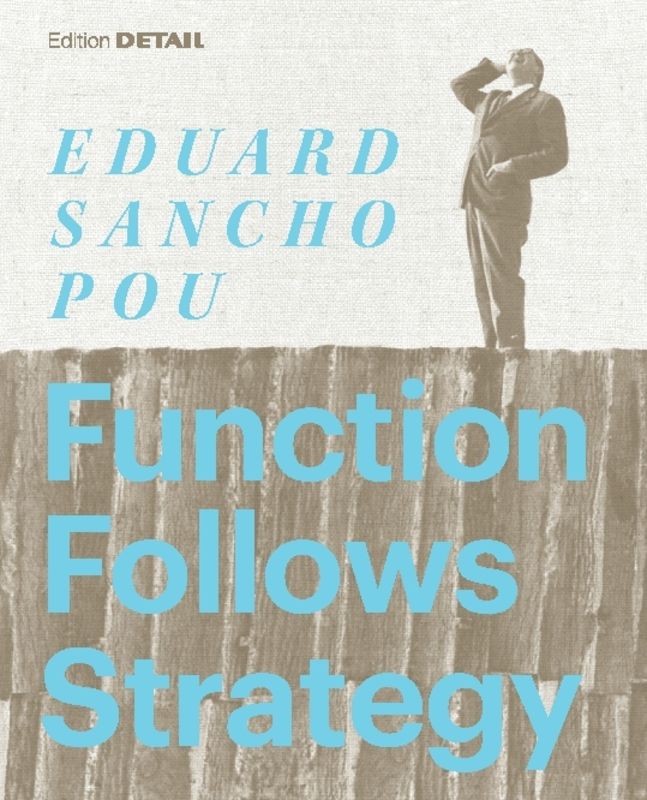
Function follows Strategy
In past years, architects have been confronted with a changed market, changed sets of tasks and also new requirements.Which strategies can they adopt to get commissions or spark interest in their projects?With selected examples, the author analyses the processes of individual architects since the 1950s.
eBook

