
Catalogue Search | MBRL


Are you sure you want to remove the book from the shelf?

{{itemTitle}}
58
result(s) for
"Architectural rendering"
Sort by:


3ds Max Design Architectural Visualization
Learn time-saving techniques and tested production-ready tips for maximum speed and efficiency in creating professional-level architectural visualizations in 3ds Max. Move from intermediate to an advanced level with specific and comprehensive instruction with this collaboration from nine different authors from around the world. Get their experience and skills in this full-color book, which not only teaches more advanced features, but also demonstrates the practical applications of those features to get readers ready for a real production environment. Fully updated for the most recent version of 3ds Max.
eBook


Principia of the legionary fortress in Novae: digital rendering as a tool for analysing Roman army religion and imperial propaganda
A 3D reconstruction of the principia at Novae (Bulgaria) allows modelling of the inscribed statues, altars and building stones as they used to look. By restoring the inscribed monuments to their original contexts, the model means that Roman military religiosity and its messages can be analysed in the legionary headquarters.
Journal Article


Democratization of Virtual Production: Usability Analysis of Three Solutions with Different Levels of Complexity: Professional, Educational and Cloud-Based
The technical and technological advances of recent years in the field of real-time photorealistic rendering have enabled enormous development in virtual production. However, the democratization of this technology faces two main obstacles: the high economic cost of implementation and the high complexity of the necessary software. This paper studies three virtual production software solutions that represent different stages in the democratization process of the technology, ranging from the professional software InfinitySet, to the more generalist and educational environment Edison, and to the cloud version of this same software, Edison OnCloud. To this end, an analysis of their functionalities and interfaces is conducted, the SUS questionnaire is applied, and the three systems are evaluated from the perspective of Nielsen’s usability principles. These tests demonstrate the complexity of the professional software InfinitySet, making it unapproachable for non-expert users without extensive previous training. On the other hand, both Edison and Edison OnCloud show significant usability improvements through limiting and reducing functionalities, which also results in a reduction in implementation costs, making the use of the technology feasible in non-professional environments, such as in education or for streamers.
Journal Article


Drawing from the Model
Bridges traditional and contemporary methods of creating architectural design drawings and 3D models through digital tools and computational processes. Drawing from the Model: Fundamentals of Digital Drawing, 3D Modeling, and Visual Programming in Architectural Design presents architectural design students, educators, and professionals with a broad overview of traditional and contemporary architectural representation methods. The book offers insights into developments in computing in relation to architectural drawing and modeling, by addressing historical analog methods of architectural drawing based on descriptive geometry and projection, and transitioning to contemporary digital methods based on computational processes and emerging technologies. Drawing from the Model offers digital tools, techniques, and workflows for producing architectural design drawings (plans, sections, elevations, axonometrics, and perspectives), using contemporary 2D drawing and 3D modeling design software. Visual programming is introduced to address topics of parametric modeling, algorithmic design, computational simulations, physical computing, and robotics. The book focuses on digital design software used in higher education and industry, including Robert McNeel & Associates Rhinoceros® (Rhino 6 for Windows), Grasshopper®, Adobe Illustrator® CC, and Arduino, and features an appendix filled with 10 design drawing and 3D modeling exercises intended as educational and pedagogical examples for readers to practice and/or teach workflows that are addresses in the book. * Bridges analog hand-drawing and digital design drawing techniques * Provides comprehensive coverage of architectural representation, computing, computer-aided drafting, and 3D modeling tools, techniques, and workflows, for contemporary architectural design drawing aesthetics and graphics. * Introduces topics of parametric modeling, algorithmic design, computational simulation, physical computing, and robotics through visual programming environments and processes. * Features tutorial-based instruction using the latest versions of Rhinoceros® (Rhino 6 for Windows), Grasshopper®, Adobe Illustrator® CC, and Arduino.
eBook

V-Ray my way : a practical designer's guide to creating realistic imagery using V-Ray & 3ds max
\"The essential how-to book that belongs in every designer's collection V-Ray My Way: A Practical Designers Guide to Creating Realistic Imagery Using V-Ray & 3ds Max is a practical, hands-on guide to creating some of the most stunning computer-generated images possible. It caters to the design masses; architects, engineers, interior designers, industrial designers, photographers, and enthusiasts will find this book essential in their quest to express themselves through visual communication. V-Ray My Way is an accumulation of 13 years of experimental experience and will have you creating content within minutes, help grow your company, help develop your portfolio, and help you make that career leap\"-- Provided by publisher.
Book
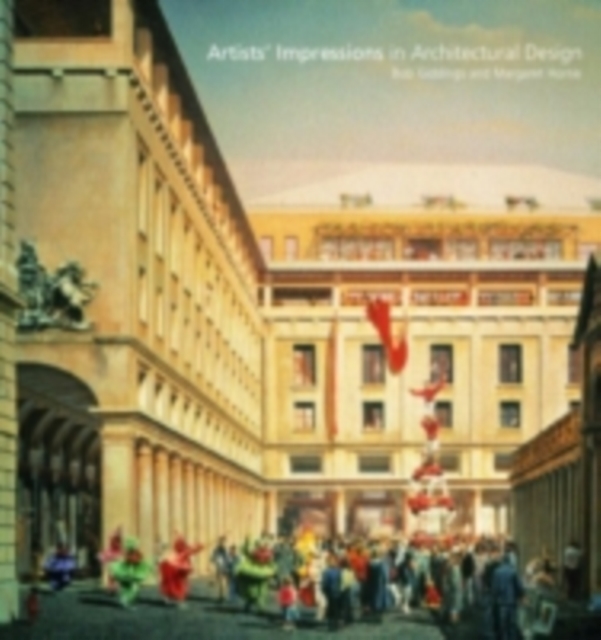
Artists' Impressions in Architectural Design
Artists' Impressions in Architectural Design analyses the ways in which architects have presented their designs for clients and the public, both historically and contemporarily. It spans a period from the fifteenth to the twenty-first century. Architects have become familiar with change. The passage of time has brought with it new and revived styles of architecture, as well as innovative tools and techniques for their representation. The result is that while some methods show a view of the architect's concept for a building, others offer an almost real experience of the intended architecture. This book provides a rare and valuable study in which the exciting technological developments of today are placed in context with the rich heritage of the past. It offers an opportunity to learn how architects have chosen to represent their ideas. The authors dare to glimpse into the future and hopefully offer some reassurance for tomorrow.
Acknowledgements 1. Context and Introduction 2. Theory and Ideas about Envisioning Buildings 3. Historical Methods 4. Artists' Pictures 5. Two Dimensional Drawings 6. Three Dimensional Drawings 7. Thin Straight Lines 8. Realistic Impressions 9. Models 10. Computer Aided Design 11. Virtual Reality 12. Where Next? Ideas and Conclusions. List of Illustrations. References. Index.
'The book provides a rare and valuable study in which exciting technological developments of today are placed in context with the rich heritage of the past. It offers an opportunity to learn how architects have chosen to represent their ideas.' Bollettino Del, Centro Internazionale Promozione Editoriale
Bob Giddings , is Research Director and Head of Postgraduate Studies in the School of the Built Environment at the University of Northmbria at Newcastle upon Tyne. He has been a practising architect for nearly twenty years and has worked on a considerable variety of building projects. Margaret Horne , is a Chartered Information Systems Practitioner with over 30 years computing experience. She has lectured in universities around the world, teaching applications of information technology to built environment staff and students.
eBook