
Catalogue Search | MBRL


Are you sure you want to remove the book from the shelf?

{{itemTitle}}
14,903
result(s) for
"Architecture, American."
Sort by:

Interiors : collaboration + technology : STUDIOS Architecture
\"Showcases the work of STUDIOS Architecture, an international design practice with offices in the USA and Europe. In its 20 years of practice, STUDIOS has amassed a portfolio of more than 2000 built works. The firm is known for its bold, innovative approach to commercial, academic, civic and government architecture projects around the world. Interior design projects featured in this volume include corporate headquarters, entertainment company headquarters, government office interiors and more. Includes introduction by Lisa Findley as well as detailed project descriptions, colour photographs and plans\"--Provided by publisher.
Book

Building antebellum New Orleans : free people of color and their influence
The Creole architecture of New Orleans is one of the city’s most-recognized features, but studies of it largely have focused on architectural typology. In Building Antebellum New Orleans, Tara A. Dudley examines the architectural activities and influence of gens de couleur libres—free people of color—in a city where the mixed-race descendants of whites and other free Blacks could own property.Between 1820 and 1850 New Orleans became an urban metropolis and industrialized shipping center with a growing population. Amidst dramatic economic and cultural change in the mid-antebellum period, the gens de couleur libres thrived as property owners, developers, building artisans, and patrons. Dudley writes an intimate microhistory of two prominent families of Black developers, the Dollioles and Souliés, to explore how gens de couleur libres used ownership, engagement, and entrepreneurship to construct individual and group identity and stability. With deep archival research, Dudley re-creates in fine detail the material culture, business and social history, and politics of the built environment for free people of color and adds new, revelatory information to the canon on New Orleans architecture.
eBook

American architecture : a history
\"More than fifteen years after the success of the first edition, this sweeping introduction to the history of architecture in the United States is now a fully revised guide to the major developments that shaped the environment from the first Americans to the present, from the everyday vernacular to the high style of aspiration. Eleven chronologically organized chapters chart the social, cultural, and political forces that shaped the growth and development of American towns, cities, and suburbs, while providing full description, analysis, and interpretation of buildings and their architects. The second edition features an entirely new chapter detailing the green architecture movement and architectural trends in the 21st century. Further updates include an expanded section on Native American architecture and contemporary design by Native American architects, new discussions on architectural education and training, more examples of women architects and designers, and a thoroughly expanded glossary to help today's readers. The art program is expanded, including 640 black and white images and 62 new color images. Accessible and engaging, American Architecture continues to set the standard as a guide, study, and reference for those seeking to better understand the rich history of architecture in the United States\"-- Provided by publisher.
Book
Oxymoron and Pleonasm Conversation on American Critical
Monika Mitasova interviewed an influential group of current American theorists, historians and practitioners proposing critical and projective architecture, respectively, which forms the first book that brings those perspectives together to show the state of current critical and projective theory, practice and new alternative actions of designing architecture.Interviewed theorists: Kenneth Frampton, K. Michael Hays, Mark Wigley, Mary Mcleod, Beatriz Colomina, Stan Allen, Joan Ockman, Robert Somol, Sarah Whiting, Michael Speaks, Jeffrey Kipnis, Sylvia Lavin.
eBook

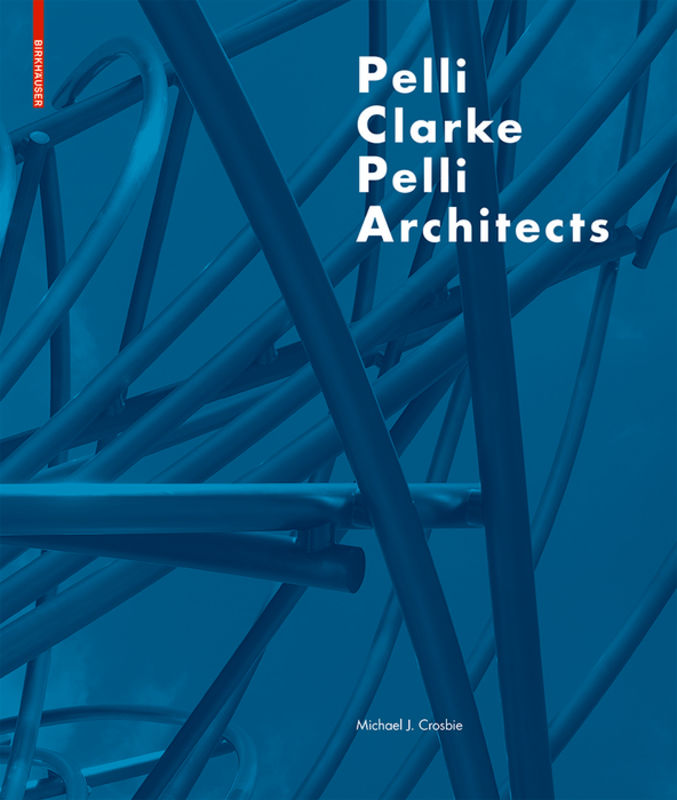
Pelli Clarke Pelli Architects
Berühmt geworden ist Pelli Clarke Pelli Architects durch elegante und technisch anspruchsvolle Hochhauslösungen. Diese zeichnen sich zumeist durch glatte, straffe Hüllen ohne Profile aus - die Gliederung und visuelle Akzentuierung erfolgt dann durch sanfte Abtreppung oder Variation in der Farbigkeit oder der Materialität der Verglassung. Diese Publikation dokumentiert eine Auswahl von Arbeiten des Büros aus den letzten acht Jahren.
eBook


Buffalo at the Crossroads
Buffalo at the Crossroads is a diverse set of cutting-edge essays. Twelve authors highlight the outsized importance of Buffalo, New York, within the story of American urbanism. Across the collection, they consider the history of Buffalo's built environment in light of contemporary developments and in relationship to the evolving interplay between nature, industry, and architecture. The essays examine Buffalo's architectural heritage in rich context: the Second Industrial Revolution; the City Beautiful movement; world's fairs; grain, railroad, and shipping industries; urban renewal and so-called white flight; and the larger networks of labor and production that set the city's economic fate. The contributors pay attention to currents that connect contemporary architectural work in Buffalo to the legacies established by its esteemed architectural founders: Richardson, Olmsted, Adler, Sullivan, Bethune, Wright, Saarinen, and others. Buffalo at the Crossroads is a compelling introduction to Buffalo's architecture and developed landscape that will frame discussion about the city for years to come. Contributors: Marta Cieslak, University of Arkansas - Little Rock; Francis R. Kowsky; Erkin Özay, University at Buffalo; Jack Quinan, University at Buffalo; A. Joan Saab, University of Rochester; Annie Schentag, KTA Preservation Specialists; Hadas Steiner, University at Buffalo; Julia Tulke, University of Rochester; Stewart Weaver, University of Rochester; Mary N. Woods, Cornell University; Claire Zimmerman, University of Michigan
eBook

Disney's land : Walt Disney and the invention of the amusement park that changed the world
\"By the early 1950s Walt Disney's great achievements in animation were behind him, and he was increasingly bored by the two-dimensional film medium. He wanted to work in three, to build an entirely new sort of amusement park, one that relied more on cinematic techniques than on thrill rides ... Disneyland's Main Street sparked an architectural preservation movement that touched every American downtown--and remains controversial: many see it as a retreat from life itself. What is beyond argument is that Disneyland was something new, both in public entertainment and in the way its 'lands' managed to chime with how millions of Americans wanted to view their country\"-- Provided by publisher.
Book

From supermodernism to neotraditionality: the contemporary search for Latin American architectural identity
The purpose of this article is to demonstrate that there is a Latin American condition of contemporary architecture. Therefore, it focuses on the detailed analysis of the epistemological scope of Latin America to subsequently define the essential aspects and arguments in its territory and its architecture. Furthermore, the methodological approach allows establishing identity parameters such as the landscape in Chile, tropicalism in Brazil, the mix of cultures in Mexico, the material in Colombia or the brick in Argentina and Paraguay, which contributes to the determination of Latin American architecture from the global perspective. Finally, the discussions and reflections at the end of the process confirm the relevant role of the development of local identities within the complex global panorama thanks to the understanding of a common Latin American condition.
Journal Article