
Catalogue Search | MBRL


Are you sure you want to remove the book from the shelf?

{{itemTitle}}
16
result(s) for
"Architecture, Ancient Iraq"
Sort by:

The Sacrificial Economy
In the mid-first millennium B.C., the Eanna temple at Uruk
sacrificed a minimum of nine lambs every day in its basic routine
of offerings to its gods; in addition to these, special occasions
and festivals demanded the sacrifice of as many as 90 lambs in a
single day. All told, the Eanna sacrificed about 4,300 lambs per
year. There were more than 120 herdsmen connected to the Eanna at
any given time, and the temple expected there to be tens of
thousands of sheep and goats under their responsibility. These
herdsmen delivered male lambs to the Eanna for sacrifice, and the
temple had an internal infrastructure for the care, maintenance,
and ritual expenditure of these lambs; they also delivered wool,
which the Eanna sold mostly in bulk quantities. This book aims to
analyze the economic organization of this entire system of sheep
and goat maintenance and utilization, to explore the economic and
social relationships between the Eanna and its herdsmen, and to
integrate the study of the Eanna's animal economy into the
developing picture of the Neo-Babylonian temple economy as a whole.
Kozuh's careful examination of the bookkeeping records, the
management records, and legal documents connected with this
substantial enterprise sheds new light on an arcane area of
first-millennium Mesopotamian life that will be sure to enlighten
our understanding of the daily life, economy, and social structure
of this region.
eBook
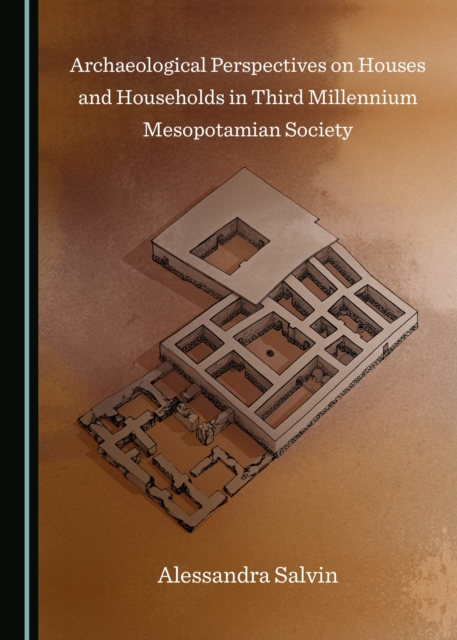
Archaeological Perspectives on Houses and Households in Third Millennium Mesopotamian Society
There have been few studies in Ancient Near Eastern archaeology that have concentrated on domestic buildings, with little existent information about houses. This represents a serious lacuna in the knowledge of Mesopotamian culture, considering the importance of the house in society, as the main space of social dynamics.This book addresses this gap, analysing the characteristics and the variations of Mesopotamian houses in the third millennium, which represents a critical period for early urbanization. It identifies common aspects and differences, and relates those characteristics to the socio-economical history of the period to broaden the understanding of this interesting period in Mesopotamian culture.To examine variations and use of space, seven sites were analysed from north (Tell Melebiya, Titris Höyük, and Tell Taya), central (Khafajah and Tell Asmar) and south Mesopotamia (Tell Abu Salabikh and Shuruppak) for a total number of 68 house plans. Several aspects have been investigated, such as the size of households, the evidence of wealth, the concept of privacy, and the role of women in society.The database of houses collected in this book also offers a reference for other sites to analyse houses and households.
eBook

Les Représentations Architecturales Dans l'iconographie Néo-Assyrienne
In Architectural Representations in the Neo Assyrian Iconography Nicolas Gillmann addresses the specific nature of this rich and complex iconographical source and provides the reader with new interpretation keys.
eBook

On Some Early Dynastic Lagaš Temples
This short article discusses the meaning of the names and the character of three rather obscure temples in Early Dynastic Lagaš, the e₂-ad-da, the an-ta-sur-ra and the e₂-gal ti-ra-aš₂.
Journal Article

Who Owns Antiquity?
Whether antiquities should be returned to the countries where they were found is one of the most urgent and controversial issues in the art world today, and it has pitted museums, private collectors, and dealers against source countries, archaeologists, and academics. Maintaining that the acquisition of undocumented antiquities by museums encourages the looting of archaeological sites, countries such as Italy, Greece, Egypt, Turkey, and China have claimed ancient artifacts as state property, called for their return from museums around the world, and passed laws against their future export. But inWho Owns Antiquity?, one of the world's leading museum directors vigorously challenges this nationalistic position, arguing that it is damaging and often disingenuous. \"Antiquities,\" James Cuno argues, \"are the cultural property of all humankind,\" \"evidence of the world's ancient past and not that of a particular modern nation. They comprise antiquity, and antiquity knows no borders.\"
Cuno argues that nationalistic retention and reclamation policies impede common access to this common heritage and encourage a dubious and dangerous politicization of antiquities--and of culture itself. Antiquities need to be protected from looting but also from nationalistic identity politics. To do this, Cuno calls for measures to broaden rather than restrict international access to antiquities. He advocates restoration of the system under which source countries would share newly discovered artifacts in exchange for archaeological help, and he argues that museums should again be allowed reasonable ways to acquire undocumented antiquities. Cuno explains how partage broadened access to our ancient heritage and helped create national museums in Cairo, Baghdad, and Kabul. The first extended defense of the side of museums in the struggle over antiquities,Who Owns Antiquity?is sure to be as important as it is controversial.
eBook
