
Catalogue Search | MBRL


Are you sure you want to remove the book from the shelf?

{{itemTitle}}
925
result(s) for
"Architecture, Colonial"
Sort by:


The British Empire through buildings
Buildings provide tremendous insights into the character of imperialism, not least in the manner in which Western forms were spread across the globe. They reveal the projection of power and authority in colonised landscapes, as well the economic ambitions and social and cultural needs of colonial peoples in all types of colonies. They also represent a colonial order of social classes and racial divisions, together with the ways in which these were inflected through domestic living space, places of work and various aspects of cultural relations. They illuminate the desires of Europeans to indulge in cultural and religious proselytisation, encouraging indigenous peoples to adopt western norms. But the resistance of the supposedly subordinate people led to the invasion, adoption and adaptation of such buildings for a post-colonial world. The book will be vital reading for all students and scholars interested in the widest aspects of material culture.
eBook

The architecture of conquest : building in the Viceroyalty of Peru, 1535-1635
\"The Architecture of Conquest deals with the practice and ideology of colonial architecture in Latin America, referring particularly to the Viceroyalty of Peru during the period 1535-1635. Colonial building has generally been regarded as being merely a provincial reflection of mainstream European art, but Valerie Fraser argues that, on the contrary, it had its own distinct identity and architectural projects were a powerful tool in the subjugation of the native peoples of South America by the Spaniards. Although the majority of labourers and craftsmen responsible for the churches, towns and cities of the Spaniards were natives, very little evidence of their own traditions of craftsmanship can be found in this colonial architecture. Thus, while the architecture forms employed by the early conquistadores are clearly derived from the European tradition, their purpose and meaning are completely different, being defined by the colonial context. The deliberate display of architectural motifs, the organization of building practice and labour are all shown to have served the ends of the political, religious and economic conquest.\"--Back cover.
Book

Urban Space as Heritage in Late Colonial Cuba
According to national legend, Havana, Cuba, was founded under the shade of a ceiba tree whose branches sheltered the island's first Catholic mass and meeting of the town council (cabildo) in 1519. The founding site was first memorialized in 1754 by the erection of a baroque monument in Havana's central Plaza de Armas, which was reconfigured in 1828 by the addition of a neoclassical work, El Templete. Viewing the transformation of the Plaza de Armas from the new perspective of heritage studies, this book investigates how late colonial Cuban society narrated Havana's founding to valorize Spanish imperial power and used the monuments to underpin a local sense of place and cultural authenticity, civic achievement, and social order.Paul Niell analyzes how Cubans produced heritage at the site of the symbolic ceiba tree by endowing the collective urban space of the plaza with a cultural authority that used the past to validate various place identities in the present. Niell's close examination of the extant forms of the 1754 and 1828 civic monuments, which include academic history paintings, neoclassical architecture, and idealized sculpture in tandem with period documents and printed texts, reveals a \"dissonance of heritage\"—in other words, a lack of agreement as to the works' significance and use. He considers the implications of this dissonance with respect to a wide array of interests in late colonial Havana, showing how heritage as a dominant cultural discourse was used to manage and even disinherit certain sectors of the colonial population.
eBook


Building Apartheid
Through a specific architectural lens, this book exposes the role the British Empire played in the development of apartheid. Through reference to previously unexamined archival material, the book uncovers a myriad of mechanisms through which Empire laid the foundations onto which the edifice of apartheid was built. It unearths the significant role British architects and British architectural ideas played in facilitating white dominance and racial segregation in pre-apartheid Cape Town. To achieve this, the book follows the progenitor of the Garden City Movement, Ebenezer Howard, in its tripartite structure of Country/Town/Suburb, acknowledging the Garden City Movement's dominance at the Cape at the time. This tripartite structure also provides a significant match to postcolonial schemas of Self/Other/Same which underpin the three parts to the book. Much is owed to Edward Said's discourse-analytical approach in Orientalism - and the work of Homi Bhabha - in the definition and interpretation of archival material. This material ranges across written and visual representations in journals and newspapers, through exhibitions and events, to legislative acts, as well as the physicality of the various architectural objects studied. The book concludes by drawing attention to the ideological potency of architecture which tends to be veiled more so through its ubiquitous presence and in doing so, it presents not only a story peculiar to Imperial Cape Town, but one inherent to architecture more broadly. The concluding chapter also provides a timely mirror for the machinations currently at play in establishing a 'post-apartheid' architecture and urbanity in the 'new' South Africa.
eBook
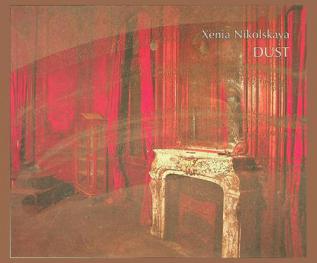
Dust : Egypt's forgotten architecture
This is a photographic exploration of the palaces and lavish buildings of Egypt. The buildings of Egypt incorporate various architectural styles such as Beaux arts and Moorish revival with local design heritage influences and materials. Xenia Nikolskaya has gained exceptional access and photographed buildings all over Egypt.
Book

Música, Arquitectura y Acústica
El paisaje sonoro de la capilla de Santa Bárbara, en Barichara, es el protagonista de esta obra. En Música, arquitectura y acústica se presenta un trabajo artístico transdisciplinar que analiza --por medio de textos, imágenes y música-- el fenómeno sonoro y el contexto social, cultural y político de este recinto. El equipo compuesto por el dúo Música Cortesana --Armando José Fuentes Hernández y Álvaro Huertas Nieto--, la arquitecta Cristina Albornoz Rugeles y el ingeniero Juan Pablo Espitia Hurtado hizo un estudio acústico y arquitectónico de la capilla y su entorno, además de una selección de piezas musicales del Renacimiento y primer Barroco, que adaptaron al lenguaje del clavecín, el órgano, el laúd y la voz para ser interpretadas en esta construcción de finales del siglo xviii. Este libro, que incluye un fonograma con la grabación realizada en la capilla,aporta una perspectiva histórica inmersiva de la música.
eBook


Heritage-Based Evaluation Criteria for French Colonial Architecture on Le Loi Street, Hue, Vietnam
The architectural legacy of the French colonial period forms a key part of Vietnam’s urban identity, especially in Hue. Yet, this heritage is rapidly declining: from over 240 structures in 2000, fewer than 100 remain today. This study introduces a heritage-based evaluation framework to assess and preserve French colonial buildings using Le Loi Street, Hue’s historic “Western quarter” as a pilot site. Fourteen colonial-era buildings were systematically assessed through field surveys and expert consultation. A total of 40 specialists participated in the criteria development process, and eight selected experts conducted detailed building evaluations. The final framework includes three main categories and nine specific criteria, based on a 100-point scale, incorporating architectural integrity, historical and cultural significance, contextual fit, and adaptive reuse potential. The results show that all the surveyed buildings qualify as Group A or B, warranting strict conservation or minimal renovation. The study emphasizes the value of localized, expert-informed approaches to heritage planning. The research provides a practical foundation for integrating historic architecture into context-sensitive urban conservation strategies in Hue and comparable Southeast Asian contexts.
Journal Article