
Catalogue Search | MBRL


Are you sure you want to remove the book from the shelf?

{{itemTitle}}
22
result(s) for
"Architecture, Medieval Great Britain."
Sort by:

Castles : their history and evolution in medieval Britain
Beginning with their introduction in the eleventh century, and ending with their widespread abandonment in the seventeenth, Marc Morris explores many of the country's most famous castles, as well as some spectacular lesser-known examples.
Book

The castle : a history
A vibrant history of the castle in Britain, from the early Middle Ages to the present day The castle has long had a pivotal place in British life, associated with lordship, landholding, and military might, and today it remains a powerful symbol of history. But castles have never been merely impressive fortresses-they were hubs of life, activity, and imagination. John Goodall weaves together the history of the British castle across the span of a millennium, from the eleventh to the twenty-first century, through the voices of those who witnessed it. Drawing on chronicles, poems, letters, and novels, including the work of figures like Gawain Poet, Walter Scott, Evelyn Waugh, and P. G. Wodehouse, Goodall explores the importance of the castle in our culture and society. From the medieval period to Civil War engagements, right up to modern manifestations in Harry Potter, Goodall reveals that the castle has always been put to different uses, and to this day continues to serve as a source of inspiration.
eBook

Architectural Identities
Architectural Identities links Victorian constructions of middle-class identity with domestic architecture. In close readings of a wide range of texts, including fiction, autobiography, housekeeping manuals, architectural guides and floor plans, Andrea Kaston Tange argues that the tensions at the root of middle-class self-definition were built into the very homes that people occupied.
Individual chapters examine the essential identities associated with particular domestic spaces, such as the dining room and masculinity, the drawing room and femininity, and the nursery and childhood. Autobiographical materials by Frances Hodgson Burnett, Thomas and Jane Welsh Carlyle, Elizabeth Gaskell, and Linley and Marion Sambourne offer useful counterpoints to the evidence assembled from fiction, demonstrating how and where members of the middle classes remodelled the boundaries of social categories to suit their particular needs. Including analyses of both canonical and lesser-known Victorian authors, Architectural Identities connects the physical construction of the home with the symbolic construction of middle-class identities.
eBook

The church as sacred space in Middle English literature and culture
This book presents an exciting new approach to the medieval church by examining the role of literary texts, visual decorations, ritual performance and lived experience in the production of sanctity. The meaning of the church was intensely debated in the fourteenth and fifteenth centuries. This book explores what was at stake not only for the church’s sanctity but for the identity of the parish community as a result. Focusing on pastoral material used to teach the laity, it shows how the church’s status as a sacred space at the heart of the congregation was dangerously – but profitably – dependent on lay practice. The sacred and profane were inextricably linked and, paradoxically, the church is shown to thrive on the sacrilegious challenge of lay misbehaviour and sin.
eBook

Anna of Denmark
Approaching the Stuart courts through the lens of the queen consort, Anna of Denmark, this study is underpinned by three key themes: translating cultures, female agency and the role of kinship networks and genealogical identity for early modern royal women. Illustrated with a fascinating array of objects and artworks, the book follows a trajectory that begins with Anna’s exterior spaces before moving to the interior furnishings of her palaces, the material adornment of the royal body, an examination of Anna’s visual persona and a discussion of Anna’s performance of extraordinary rituals that follow her life cycle. Underpinned by a wealth of new archival research, the book provides a richer understanding of the breadth of Anna’s interests and the meanings generated by her actions, associations and possessions.
eBook

Mechanisms of Exchange: Transmission in Medieval Art and Architecture of the Mediterranean, ca. 1000-1500
This special issue of Medieval Encounters examines the means by which portable and monumental art and architectural forms, techniques, and ideas were transmitted, as well as the individuals involved in such exchanges, in the medieval Mediterrean world ca. 1000-1500.
eBook

Doppelganger Dilemmas
The Dutch were culturally ubiquitous in England during the early modern period and constituted London's largest alien population in the second half of the sixteenth century. While many sought temporary refuge from Spanish oppression in the Low Countries, others became part of a Dutch diaspora, developing their commercial, spiritual, and domestic lives in England. The category \"Dutch\" catalyzed questions about English self-definition that were engendered less by large-scale cultural distinctions than by uncanny similarities. Doppelgänger Dilemmas uncovers the ways England's real and imagined proximities with the Dutch played a crucial role in the making of English ethnicity.Marjorie Rubright explores the tensions of Anglo-Dutch relations that emerged in the form of puns, double entendres, cognates, homophones, copies, palimpsests, doppelgängers, and other doublings of character and kind. Through readings of London's stage plays and civic pageantry, English and Continental polyglot and bilingual dictionaries and grammars, and travel accounts of Anglo-Dutch rivalries and friendships in the Spice Islands, Rubright reveals how representations of Dutchness played a vital role in shaping Englishness in virtually every aspect of early modern social life. Her innovative book sheds new light on the literary and historical forces of similitude in an era that was so often preoccupied with ethnic and cultural difference.
eBook

A People’s Reformation
The Elizabethan settlement, and the Church of England that
emerged from it, made way for a theological reformation, an
institutional reformation, and a high political reformation. It was
a reformation that changed history, birthed an Anglican communion,
and would eventually launch new wars, new language, and even a new
national identity. A People's Reformation offers a
fundamental reinterpretation of the English Reformation and the
roots of the Church of England. Drawing on archival material from
across the United States and Britain, Lucy Kaufman examines the
growing influence of state authority and the slow building of a
robust state church from the bottom up in post-Reformation England.
Situating the people of England at the heart of this story, the
book argues that while the Reformation shaped everyday lives, it
was also profoundly shaped by them in turn. England became a
Protestant nation not in spite of its people but through their
active social, political, and religious participation in creating a
new church in England. A People's Reformation explores
this world from the pews, reimagining the lived experience and
fierce negotiation of church and state in the parishes of
Elizabethan England. It places ordinary people at the centre of the
local, cultural, and political history of the Reformation and its
remarkable, transformative effect on the world.
eBook

The Cosmatesque Mosaics of Westminster Abbey
Westminster Abbey contains the only surviving medieval Cosmatesque mosaics outside Italy. They comprise: the ‘Great Pavement’ in the sanctuary; the pavement around the shrine of Edward the Confessor; the saint’s tomb and shrine; Henry III’s tomb; the tomb of a royal child, and some other pieces. Surprisingly, the mosaics have never before received detailed recording and analysis, either individually or as an assemblage. The proposed publication, in two volumes, will present a holistic study of this outstanding group of monuments in their historical architectural and archaeological context. The shrine of St Edward is a remarkable survival, having been dismantled at the Dissolution and re-erected (incorrectly) in 1557 under Queen Mary. Large areas of missing mosaic were replaced with plaster on to which mosaic designs were carefully painted. This 16th-century fictive mosaic is unique in Britain. Conservation of the sanctuary pavement was accompanied by full archaeological recording with every piece of mosaic decoration drawn and colored by David Neal, phase plans have been prepared, and stone-by-stone examination undertaken, petrologically identifying and recording the locations of all the materials present. It has revealed that both the pavements and tombs include a range of exotic stone types. The Cosmati study has shed fresh light on every aspect of the unique series of monuments in Westminster Abbey; this work will fill a major lacuna in our knowledge of 13th-century English art of the first rank, and will command international interest.
eBook
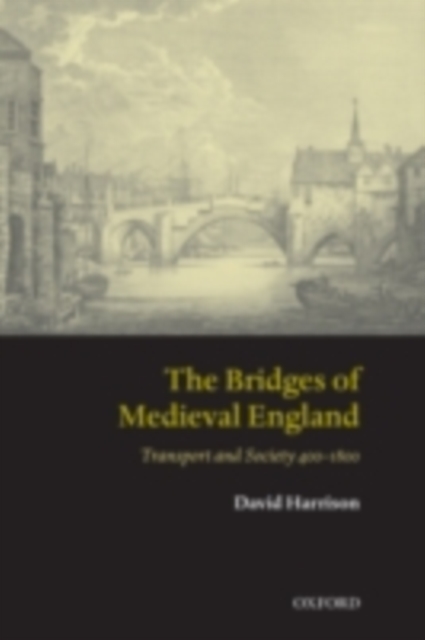
The Bridges of Medieval England
Medieval bridges are remarkable achievements of design and engineering comparable with the great cathedrals of the period, and are also proof of the great importance of road transport in the middle ages, and of the size and sophistication of the medieval economy. This book rewrites their history from early Anglo-Saxon England right up to the Industrial Revolution, providing insights into many aspects of the subject. Looking at the role of bridges in the creation of a new road system, which was significantly different from its Roman predecessor and which largely survived until the 20th century, the book examines their design. Often built in the most difficult circumstances — broad flood plains, deep tidal waters, and steep upland valleys — these bridges withstood all but the most catastrophic floods. The book also investigates the immense efforts put into their construction and upkeep, ranging from the mobilisation of large work forces by the old English state to the role of resident hermits and the charitable donations which produced bridge trusts with huge incomes. The evidence presented in this book shows that the network of bridges, which had been in place since the 13th century, was capable of serving the needs of the economy on the eve of the Industrial Revolution. This has profound implications for our understanding of pre-industrial society, challenging accepted accounts of the development of medieval trade and communications, and bringing to the fore the continuities from the late Anglo-Saxon period to the 18th century.
eBook