
Catalogue Search | MBRL


Are you sure you want to remove the book from the shelf?

{{itemTitle}}
825
result(s) for
"Architecture, Romanesque"
Sort by:

Romanesque : architecture, sculpture, painting
The photographs in the book, together with the main chapters and the sections on forms and techniques, show how much more there is to the Romanesque apart from round arches and heavy, powerful walls. Some of the pictures will convey the special atmosphere which characterizes a medieval church or monastery, and enable the reader to gain an understanding of the very different quality of life enjoyed by the people who lived there.
Book

The Neo-Romanesque Churches of the Annunciation of the Blessed Virgin Mary in Inowrocław and St. Adalbero in Würzburg – the Examples of References to Pre-Romanesque and Romanesque Architecture
The article presents a comparative analysis of the neo-Romanesque churches in Inowrocław and Würzburg. The education, artistic career and publications of the designer of the Church of the Annunciation of the Blessed Virgin Mary in Inowrocław, August Rincklake, as well as the architectural achievements of his younger brother, Wilhelm, proved to be important factors that shaped the church structure. Specific inspirations, correspondences and architectural references used in this monumental building have been identified. The discussion points include the westworks, the idea of the Saxon façade, other tower western structures and the encastellated building, and minor components, such as ornaments. The Church in Inowrocław has served to discuss distinctive features of the Romanesque and neo-Romanesque styles, the relationship between them, the principles governing them and the approach displayed around the year 1900 to the patterns that were distant in time and space. The point of comparison is the neo-Romanesque Church of St. Adalbero [Adalberokirche] in Würzburg to demonstrate numerous uses and the universal application of motifs borrowed from the system developed in proto-Romanesque and Romanesque Lombard architecture.
Journal Article

Romanik
Der Begriff Romanische Kunst bezeichnet in der Kunstgeschichte die Epoche vom 11. bis zum 13. Jahrhundert. Diese Epoche wies eine groe Vielfalt an regionalen Schulen auf, die alle spezifische Merkmale hatten. Sowohl in der Architektur als auch in der Bildhauerei wird die Romanische Kunst durch ihre rauen Formen charakterisiert. Dieses Buch lsst den Leser durch den faszinierenden Text und seinen umfangreichen Bildteil diese Kunst des Mittelalters, die heute im Vergleich mit ihrer unmittelbaren Nachfolgerin, der Kunst der Gotik, so hufig verachtet wird, neu entdecken.
eBook


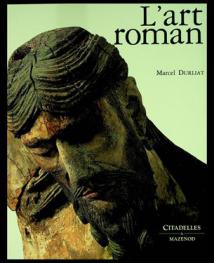
L'Art roman
Terme entré dans l’usage courant au cours de la première moitié du XIXe siècle, l’art roman distingue, en histoire de l’art, la période qui s’étend entre le début du XIe jusqu’à la fin du XIIe siècle. Révélant une grande diversité d’écoles régionales, chacune démontrant ses spécificités, l’art roman, dans l’architecture comme dans la sculpture, est marqué par ses formes brutes. Par sa riche iconographie, au fil d’un texte captivant, cet ouvrage nous propose de redécouvrir cet art moyenâgeux, encore souvent trop peu considéré face à l’art gothique qui lui succéda.
eBook

Design and Construction in Romanesque Architecture
In this 2003 study, Edson Armi offers a fresh interpretation of Romanesque architecture. Armi focuses on buildings in northern Italy, Switzerland, southern France and Catalonia, the regions where Romanesque architecture first appeared around 1000 AD. He integrates the study of medieval structure with an understanding of construction, decoration and articulation in an effort to determine the origins and originality of medieval architecture and the formation of the High Romanesque style, especially in Burgundy, at sites such as Cluny III. Relying on a close analysis of the fabric of key buildings, Armi's in-depth study reveals a lot about design decisions in the early Middle Ages. It also demonstrates that the mature Romanesque of the twelfth century continues many of the applications created and perfected over the previous one hundred years.
eBook

Land- and Skyscapes of the Camino de Santiago: An Astronomy and World Heritage Sustainable Approach
The Romanesque churches dotted along the Way of Saint James are magnificent examples of cultural heritage, and their analysis from the perspective of cultural astronomy may, in an unobtrusive manner, provide information of hitherto unexplored facets of these treasures. This study aims to examine the pilgrimage road as a communication channel and to seek possible regional variations in the Christian kingdoms of Leon, Castile, Navarre and Aragon. Seen as a whole, the Romanesque churches of our sample present two main orientation patterns: towards either the ecclesiastical and astronomical equinox or to certain Easter Sunday celestial phenomena. However, equinoctial orientations are present only in Leon and Navarre, while Easter appears with more or less significance in every kingdom. The Camino de Santiago constitutes a sacred landscape with a common heritage, with a certain degree of cultural diversity that depends on the territory. These subtle differences have surfaced only in light of archaeoastronomical investigations.
Journal Article
