
Catalogue Search | MBRL


Are you sure you want to remove the book from the shelf?

{{itemTitle}}
9,993
result(s) for
"Architecture Aesthetics."
Sort by:

Style and solitude : the history of an architectural problem
\"This book examines conflicting conceptions of style and traces their impact on architecture in the modern period\"-- Provided by publisher.
BOOK
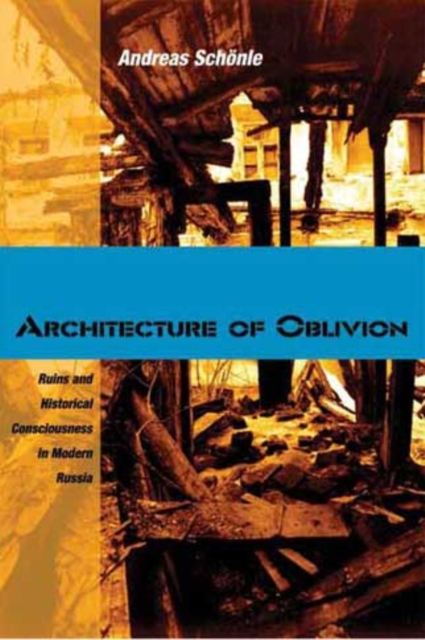
Architecture of Oblivion
Despite attempts to promote the aesthetics of ruins in Russia—from Catherine the Great's construction of fake ruins in imperial parks to Josef Brodsky's elegiac meditations—ruins have never achieved the status they enjoy in Western Europe. While the Soviet Union was notorious for leveling churches, post-Soviet Russia has only intensified the practice of massive destruction and reconstruction. Architecture of Oblivion examines the role of ruins in the development of Russia's historical consciousness from the eighteenth century to the present. Investigating the meaning and functions ruins have acquired in Russian culture, Schönle looks at ideological reasons for the current disregard for the value of ruins and historical buildings, in particular by political authorities, and reveals how ruins have often become a site of resistance to official ideology and an invitation to map out alternative visions of history and of statehood. An interdisciplinary study of Russia's response to ruins has never been attempted, although the topic of ruins has garnered considerable interest in Western Europe and in the U.S. This original work from a leading authority on the subject will appeal to historians of Russian culture and thought, literature and art scholars, and general readers interested in ruins.
eBook

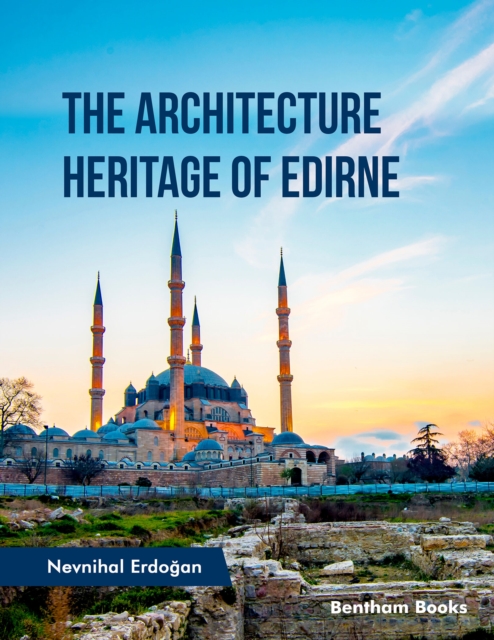
The Architecture Heritage of Edirne
Edirne is a vibrant city of historical importance where civilizations have concentrated throughout the ages, with a unique architectural heritage. Constructions like the Selimiye Mosque from Sinan, the Old Mosque from the fifteenth-century, Üç ?erefeli Mosque, Sultan Beyazid II Mosque, and its many complexes, imarets (public soup kitchens), Dar al-Shifa (medical centers), hans (public inns), baths, bridges, caravanserais, are refined examples of Ottoman-Islamic art. The Architecture Heritage of Edirne is an exploration of the city's architectural Heritage. approaching the past with a historical perspective through works from all the periods it has endured. Starting with the history of Edirne, the book goes into the details of the historical neighborhood, the central district and the historical architecture in the present day city. The book includes notes on the architecture in each notable district and their respective monuments and sites. This is followed by coverage of the architecture of Edirne's former districts. The book concludes with the author's understanding of Edirne's social and economic fabric, both in the past and present. This chapter details the traditional customs, dances, clothing and economic structure of the city. The book is a ley reference for scholars and enthusiasts of urban history, architectural heritage and design, fine arts, humanities and social sciences. The breadth of information covered in the book also makes it a resource for anyone interested in Turkish cultural heritage studies. Readership scholars and enthusiasts of urban history, architectural heritage and design, fine arts, humanities and social sciences. Readers interested in Turkish cultural heritage studies.
eBook

Built upon love : architectural longing after ethics and aesthetics
A vision of architecture that transcends concerns of form and function and finds the connections between the architect's wish to design a beautiful world and architecture's imperative to provide a better place for society.
eBook
The Dynamics of Delight
Rounding off decades of exploration into the various ways in which buildings and urban sequences make an impact on the mind, The Dynamics of Delight emphasizes the qualitative aspects of form and space, providing designers with an analytical framework in which to evaluate projects on an aesthetic level. In laying the foundations for an appreciation of the aesthetic component in architecture, Smith considers the mechanisms which are involved in the aesthetic response and goes on to consider how human perception may be influenced by natural phenomena and draws on chaos theory and biomathematics to illustrate this original argument.
Introduction Part 1: Amsterdam and the Tiger 1. Laying the Foundations 2. The Roots of Aesthetic Perception 3. The Protean Factor 4. Exploring Harmony 5. From Harmony to Chaos 6. From Nature to Artefacts 7. Intelligent Interventions 8. Unity Versus Diversity Part 2: The Parthenon and the Sunflower 9. The Deep Structure of Proportion 10. The Numerology of Beauty 11. Developing the Theme 12. Beyond the Portico and Dome 13. Contemporary Variations 14. Architectural Metaphor 15. Second Level Proportion 16. The Limbic Domain 17. Bioclimatic Opportunities Part 3: The Dynamics of the City 18. The City and Dimensions of Engagement 19. The Rewards of Chance 20. The Street 21. The Square 22. Encounters with Old Gods 23. The Ethical Dimension
Until recently Peter F. Smith was the Vice President of the Royal Institute of British Architects with special responsibility for sustainable development and Professor of Architecture at Sheffield Hallam University. Prior to that he was Head of the Leeds School of Architecture of which he is Professor Emeritus.
eBook

Architecture in Cinema
In Architecture in Cinema, more than 40 architects, writers, thinkers, and academicians examine the magnificent works of cinema that contribute to the art of architecture and bring them to the attention of the architectural community. The contributors have compiled essays on fifty masterpieces of classic and contemporary cinema, including films such as The Cabinet of Dr. Caligari, Ben Hurr, The Lord of The Rings trilogy, Nomadland and more. The book aims to stimulate the imagination of readers and offer approaches to understanding fantasy, sociological concepts, ecological problems, and political ideas. The contributors also focus on the elements of creativity, such as utopian or dystopian themes, aesthetics and artistry. Architecture in Cinema is an informative reference for anyone interested in how architecture is featured in the cinematic medium. Scholars of architecture, urban planning, fine arts, humanities, social sciences, and various design disciplines, will also find the book refreshing. Readership General readers interested in urban and popular culture; scholars of liberal arts and humanities.
eBook