
Catalogue Search | MBRL


Are you sure you want to remove the book from the shelf?

{{itemTitle}}
19
result(s) for
"Architecture Environmental aspects India"
Sort by:

Bamboo as a Sustainable Building Material for Innovative, Low-Cost Housing Construction
Bamboo is commonly used as a construction material in low-cost housing projects located in tropical and subtropical countries. This practice is especially prevalent in rural areas where bamboo grows naturally and families have experience working with it. Bamboo can be a sustainable building material for homes, even in cases where houses need to be resistant to earthquakes or storms. The traditional bahareque technology was enhanced in Costa Rica and Colombia to make it earthquake resistant. After the year 2000, this technology was transferred to several other countries in Latin America and Asia, gaining recognition as an innovative building technique. Many successful examples of bamboo housing constructions can be found in various countries, where modern architectural solutions are combined with innovative bamboo methods. Local communities can play a crucial role in bamboo processing, allowing residents to actively participate in the construction of their homes under technical supervision. This emphasizes the social sustainability aspect associated with bamboo. Ensuring the durability of bamboo housing constructions is paramount for the longevity of the houses, highlighting the need for technical assistance for self-builders and resident groups. With proper organization, bamboo housing has the potential to become part of the social production of housing.
Journal Article
Analyzing and Managing Various Energy-Related Environmental Factors for Providing Personalized IoT Services for Smart Buildings in Smart Environment
More energy is consumed by domestic appliances all over the world. By reducing energy consumption, sustainability can be improved in domestic contexts. Several earlier approaches to this problem have provided a conceptual overview of green and smart buildings. This paper aims to provide a better solution for reducing energy consumption by identifying the fields of abnormal energy consumption. It creates a better environment-friendly smart building to adopt the various lifestyles of people. This paper’s main objective is to monitor and control the energy efficiency of smart buildings by integrating IoT sensors. This paper mainly analyzes various prime factors that can help to improve energy efficiency in smart buildings. Factors impacting energy consumption are analyzed, and outliers of energy consumption are predicted and optimized to save energy. Various parameters are derived from IoT devices to improve energy efficiency in lighting and HVAC controls, energy monitoring, building envelope and automation systems, and renewable energy. The parameters used in water, network convergence, and electrical and environmental monitoring are also used for improving energy efficiency. This paper uses various IoT devices for monitoring and generating data in and around a smart building and analyzes it by implementing an intelligent Information Communication Technology (ICT) model called the Dynamic Semantic Behavior Data Analysis (DSBDA) Model to analyze data concerning dynamic changes in the environment and user behavior to improve energy efficiency and provide better sustainable lifestyle-based smart buildings. From the analyzed output, the outliers of the power consumption and other abnormalities are identified and controlled manually or automatically to improve sustainability regarding energy use in smart buildings.
Journal Article
New Architecture and Urbanism
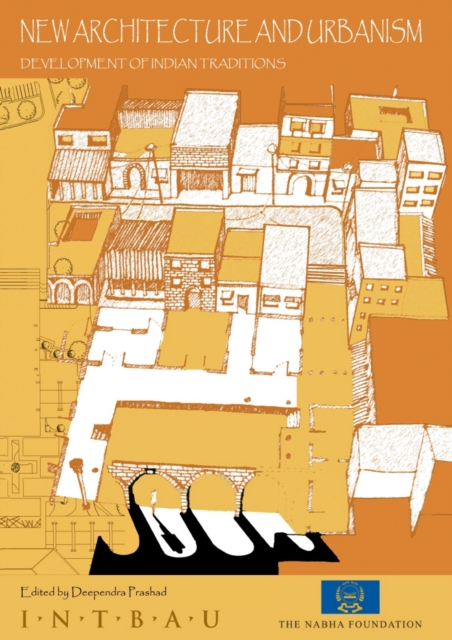
This book on New Architecture and Urbanism: Development of Indian Traditions builds on the contributions from various architects, planners, educationists, decision-makers & others from across the world who gathered together to create a forum for the promotion of traditional processes and techniques for the creation of the built environment. This forum was initiated by INTBAU India, The International Network for Traditional Building, Architecture and Urbanism in India, and supported by The N.
eBook

Building biodiversity in neighbourhood parks in Bangalore city, India: Ordinary yet essential
Cities comprise of mixed green patches that vary in size and are highly scattered and disconnected. Although small green spaces largely dominate the cityscape, they are often neglected and ignored by the naturalists and conservationists, as they do not fulfill the large green spaces criteria. The citizens on the other hand seem to have a different perception and requirements from small green spaces as they are within their neighbourhood. Bangalore, a developing city within South India, consists of a large number of newly formed residential areas which have pocket green spaces in the form of neighbourhood parks (henceforth NPs). They are maintained by the municipality and are mainly designed for recreation purposes, completely neglecting the fact that these spaces could be essential for biodiversity. Here, there is a disconnect between the requirements of the citizens, conservationists and the end product that the municipality delivers. Here, through a questionnaire survey we assess the biodiversity citizens are fond off, and use them as surrogate taxa for the not so immediately obvious taxa, insects to enumerate the biodiversity within NPs. We analyze and identify landscape characteristics around NPs which could enhance the biodiversity within NPs. Our results reveal that people are fond of Birds and Butterflies and we use them as surrogates for the inconspicuous taxa to assess biodiversity within NPs. 55 tree species, 45 species of birds, 41 species of butterflies and 68 morpho species of insects were recorded. We demonstrate that small green spaces are critical systems and help support biodiversity across three scale within the city. Interestingly, results suggests that density of NPs is more important rather than the size of NPs. Also, the presence of high density of NPs within a neighbourhood could support similar biodiversity that large green spaces support. Finally, this study provides insights on the landscape matrix that could help enhance biodiversity support service within NPs and the surrounding neighbourhood.
Journal Article

Sustainable Earthen Construction: A Meta-Analytical Review of Environmental, Mechanical, and Thermal Performance
This study examines the main earthen constructions—such as adobe, compressed earth blocks (CEBs), and rammed earth walls (REWs)—highlighting their potential to reduce the environmental impact compared to conventional materials. Through a systematic literature review (2013–2024) and a meta-analysis, the mechanical, thermal, and sustainability properties of these constructions are analyzed. Emphasis is placed on the use of additives, such as stabilizers and fibers from various industrial and agro-industrial by-products, as leading actors influencing the mechanical and environmental performance of earthen constructions (EnCs). Remarkable improvements in the compressive and flexural strength are found, especially in stabilized CEBs and REWs, where strengths of up to 24 MPa are reached in certain mixtures, comparable to conventional materials such as concrete. However, the impact of these admixtures on environmental aspects, as measured through metrics such as the global warming potential (GWP), remains poorly documented. This review also shows that numerical methods like finite element modeling (FEM) have been crucial to modeling and predicting the performance of these materials, contributing to the understanding of their dynamic and structural responses. The findings suggest that, although CEB is currently the most studied onshore technique, future challenges include the standardization of admixtures and regulation of sustainable practices globally.
Journal Article

Brake segment for agglomeration policy: Engineers as human capital
A 'segment' is a component of the organization of an agglomeration. The organization of agglomeration is formed by the construction of segments. Manufacturing agglomeration segments can be divided into four main categories: human resources including engineers, physical infrastructure, institutions, and living environment. Each segment then has a specific function in the process of building industrial agglomeration. We focus on the process of building segments in agglomeration formation. We define a 'brake segment' as a segment that has a 'function' to decelerate the speed of the process. The purpose of this paper is to identify the existence of this brake segment in the process of constructing the segments of the manufacturing agglomeration. We obtained the following three results. First, a modified version of the spatial economic model yields that the number of agglomerated firms is inversely related to the wages of skilled workers. Second, a factor analysis of the data on investment environment costs indicates that in the case of the manufacturing industry, the number of agglomerated firms are inversely related to the wages of engineers. Third, the factor analysis of the six countries in the JBIC survey reveals that the segment that poses the investment issue in foreign direct investment in India is engineers as human capital. We conclude that engineers as human capital are a brake segment. The implication is that the sustained development of 'engineers' as human capital is essential for the success of manufacturing industry agglomeration.
Journal Article
Study on the Winter Thermal Environment and Thermal Satisfaction of the Post-Disaster Prototype and Vernacular Houses in Nepal
Post-disaster housing, constructed on a massive scale, often overlooks the indoor thermal environment, despite being a crucial design factor for residential satisfaction. This study examined the indoor thermal environment in post-Gorkha earthquake-reconstructed prototype and traditional vernacular houses in the Dolakha district of Nepal. It employed a questionnaire survey and measurement of indoor and outdoor temperature in both house types across two study locations: Panipokhari and Jillu, during the coldest winter month. Despite the indoor temperature in both house types falling below the ASHRAE comfort standard, the study found that prototype houses’ nighttime indoor temperatures were 2.1 °C lower in Panipokhari and 1 °C lower in Jillu compared to vernacular houses. This difference is attributed to the use of local building materials with low U-values, substantial thermal mass in vernacular houses, and a low window-to-wall ratio. Occupants expressed dissatisfaction with the thermal environment in prototype houses compared to vernacular ones. By incorporating climate-responsive features seen in vernacular houses, heating energy could have been reduced by approximately 21% in Panipokhari and 10% in Jillu, easing the economic burden on vulnerable households. These findings hold significance for policy-makers, implementers, designers, and other stakeholders involved in post-disaster resettlement housing programs, offering insights for enhancing long-term satisfaction and sustainability in such programs.
Journal Article
Sprawling Cities And Our Endangered Public Health
Sprawl is an unsustainable pattern of growth that threatens to undermine the health of communities globally. It has been a dominant mid-to-late twentieth century growth pattern in developed countries and in the twenty-first century has shown widespread signs of proliferation in India, China, and other growing countries. The World Health Organization cites sprawl for its serious adverse public health consequences for humans and ecological habitats. The many adverse impacts of sprawl on the health of individuals, communities, and biological ecosystems are well documented. Architects have been rightly criticized for failing to grasp the aesthetic and functional challenge to create buildings and places that mitigate sprawl while simultaneously promoting healthier, active lifestyles in neighbourhoods and communities.
Sprawling Cities and Our Endangered Public Health examines the past and present role of architecture in relation to the public health consequences of unmitigated sprawl and the ways in which it threatens our future. Topics examined include the role of twentieth century theories of architecture and urbanism and their public health ramifications, examples of current unsustainable practices, design considerations for the creation of health-promoting architecture and landscape urbanism, a critique of recent case studies of sustainable alternatives to unchecked sprawl, and prognostications for the future.
Architects, public health professionals, landscape architects, town planners, and a broad range of policy specialists will be able to apply the methods and tools presented here to counter unmitigated sprawl and to create architecture that promotes active, healthier lifestyles. Stephen Verderber is an internationally respected evidence-based researcher/practitioner/educator in the emerging, interdisciplinary field of architecture, health, and society. This, his latest book on the interactions between our build
eBook
