
Catalogue Search | MBRL


Are you sure you want to remove the book from the shelf?

{{itemTitle}}
639
result(s) for
"Architecture Europe History."
Sort by:


Freedom and the Cage
Spurred by ideals of individual liberty that took hold in the Western world in the late nineteenth century, psychiatrists and public officials sought to reinvent asylums as large-scale, totally designed institutions that offered a level of freedom and normality impossible in the outside world. This volume explores the \"caged freedom\" that this new psychiatric ethos represented by analyzing seven such buildings established in the Austro-Hungarian monarchy between the late 1890s and World War I.
In the last two decades of the Habsburg Empire, architects of asylums began to abandon traditional corridor-based plans in favor of looser formations of connected villas, echoing through design the urban- and freedom-oriented impulse of the progressive architecture of the time. Leslie Topp considers the paradoxical position of designs that promoted an illusion of freedom even as they exercised careful social and spatial control over patients. In addition to discussing the physical and social aspects of these institutions, Topp shows how the commissioned buildings were symptomatic of larger cultural changes and of the modern asylum's straining against its ideological anchorage in a premodern past of \"unenlightened\" restraint on human liberty.
Working at the intersection of the history of architecture and the history of psychiatry, Freedom and the Cage broadens our understanding of the complexity and fluidity of modern architecture's engagement with the state, with social and medical projects, and with mental health, psychiatry, and psychology.
eBook


Urbanism and Dictatorship
Der Städtebau der europäischen Diktaturen in der ersten Hälfte des 20. Jahrhunderts diente nicht nur der Herrschaftssicherung im eigenen Lande, sondern auch der Anerkennung durch die demokratischen Staaten. Nach der Machtübergabe an das nationalsozialistische Regime geriet er mehr und mehr zur Trumpfkarte im Wettbewerb unter den großen Diktaturen Europas – fast wie in der Zeit des Absolutismus. Jenseits aller Konflikte und politischer Orientierungen bestand ein intensiver fachlicher Austausch unter den Ländern Europas. Eine nur nationale Sichtweise auf die Diktaturen ist daher nicht hinreichend. Der übergreifende Blick trägt nicht nur dazu bei, die Besonderheiten der jeweiligen Diktatur zu klären, er weist auch manch vereinfachtes Verständnis von deren Städtebau zurück. Das ist keineswegs nur von historischem Interesse: Die Auseinandersetzung mit Diktaturen ist immer auch Ausdruck unserer gesellschaftlichen Verhältnisse, unserer Erinnerungskultur, unserer Fähigkeit, alte und neue Formen von Diktatur zu erkennen - auch heute! Das Buch diskutiert den Stand der Forschung zum Städtebau von fünf Diktaturen der ersten Hälfte des 20. Jahrhunderts und präsentiert exemplarisch neue Forschungsergebnisse.
In the first half of the twentieth century, urban design under the influence of European dictatorships not only served to support the rulers in their own country, but also to gain the recognition of the democratic states. After the National Socialist regime came to power in Germany, urban design increasingly became the trump card in the competition amongst the large dictatorships in Europe - almost as in the time of absolutism. Irrespective of all conflicts and political orientations, there was an intense exchange of ideas amongst the states in Europe. It is therefore not adequate to make an assessment just from the point of view of the dictatorships. The overarching view helps to understand the special characteristics of each dictatorship and also disproves some simplified interpretations of their respective approaches to urban design. That is not just of historic interest; the discussion of the issue of dictatorships is always also an expression of our social condition, our commemorative culture, our ability to recognize old and new forms of dictatorship - even today! The book discusses the state of research into urban design under five dictatorships during the first half of the twentieth century, and presents new research results based on examples.
eBook

Islamesque : the forgotten craftsmen who built Europe's medieval monuments
Who really built Europe's finest Romanesque monuments? At a time when Christendom lacked such expertise, Muslim craftsmen had advanced understanding of geometry and complex ornamentation. They dominated high-end construction in Islamic Spain, Sicily and North Africa, spreading knowledge and techniques across Western Europe. Challenging Euro-centric assumptions, Diana Darke uncovers the profound influence of the Islamic world in 'Christian' Europe, and argues that 'Romanesque' architecture, a nineteenth-century art historians' fiction, should be recognised for what it truly is: Islamesque.
BOOK
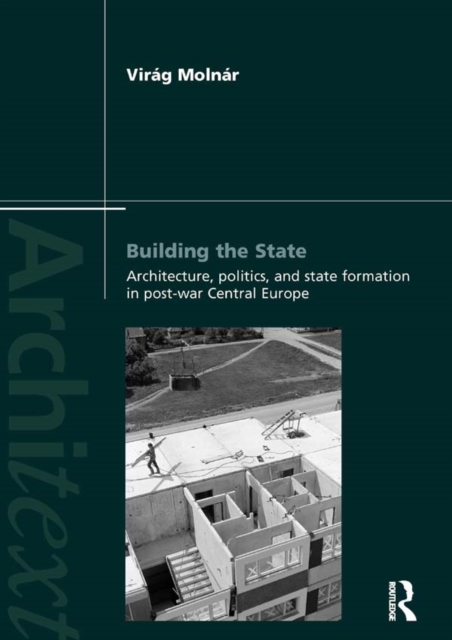
Building the State
The built environment of former socialist countries is often deemed uniform and drab, an apt reflection of a repressive regime. Building the State peeks behind the grey façade to reveal a colourful struggle over competing meanings of the nation, Europe, modernity and the past in a divided continent.
Examining how social change is closely intertwined with transformations of the built environment, this volume focuses on the relationship between architecture and state politics in postwar Central Europe using examples from Hungary and Germany. Built around four case studies, the book traces how architecture was politically mobilized in the service of social change, first in socialist modernization programs and then in the postsocialist transition.
Building the State does not only offer a comprehensive survey of the diverse political uses of architecture in postwar Central Europe but is the first book to explore how transformations of the built environment can offer a lens into broader processes of state formation and social change.
eBook

Designing memory : the architecture of commemoration in Europe, 1914 to the present
\"This innovative study of memorial architecture investigates how design can translate memories of human loss into tangible structures, creating spaces for remembering. Using approaches from history, psychology, anthropology and sociology, Sabina Tanoviâc explores purposes behind creating contemporary memorials in a given location, their translation into architectural concepts, their materialisation in the face of social and political challenges, and their influence on the transmission of memory. Covering the period from the First World War to the present, she looks at memorials such as the Holocaust museums in Mechelen and Drancy as well as memorials for the victims of terrorist attacks, to unravel the private and public role of memorial architecture and the possibilities of architecture as a form of agency in remembering and dealing with a difficult past. The result is a distinctive contribution to the literature on history and memory, and on architecture as a link to the past\"-- Provided by publisher.
Book
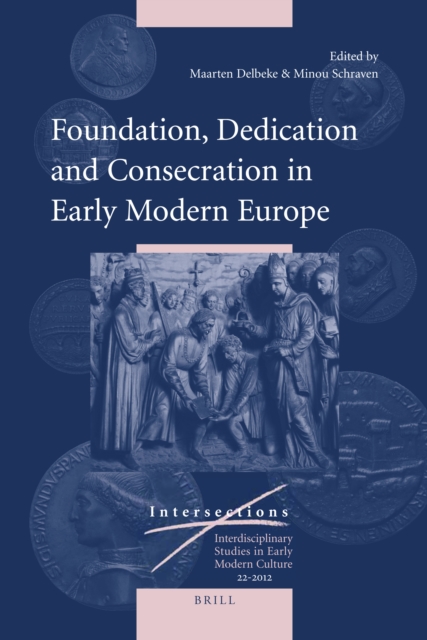
Foundation, Dedication and Consecration in Early Modern Europe
Bringing together contributions from art history, architectural history, historiography and history of law, this volume is the first comprehensive exploration of the manifold meanings of foundation, dedication and consecration rituals and narratives in early modern culture.
eBook


Building a public Judaism : synagogues and Jewish identity in nineteenth-century Europe
Coenen Snyder considers what the architecture and construction of nineteenth-century European synagogues reveal about the social progress of modern European Jews. The process of claiming a Jewish space was a marker of acculturation but not full acceptance, she argues. The new edifices, even if spectacular, revealed the limits of Jewish integration.
eBook