
Catalogue Search | MBRL


Are you sure you want to remove the book from the shelf?

{{itemTitle}}
75
result(s) for
"Architecture Exhibitions History 20th century."
Sort by:

Helmut Jahn : process progress
Helmut Jahn is world-famous for buildings like Frankfurter Messeturm (1985-1991), Sony Center with the Bahntower, Berlin (1993-2000), airport Bangkok-Suvarnabhumi (1995-2005) and the Veer Towers, Las Vegas (2006-2010). In a luxury edition this book shows in large scale and high-quality photos by the well-known photographer Rainer Viertlbèock the increasing international reach of Helmut Jahn's oeuvre, starting in Chicago and the United States in the 1980s and expanding initially to South Africa, then to Europe, with the focus on Germany, and from there via the Middle East to China, Singapore, Japan and Korea. The photos are combined with a comprehensive collection of Helmut Jahn's impressive design sketches. They provide inspiring insights into the development of the buildings and the underlying design process.
Book

Mediated Messages
Mediated Messages presents a collection of original writing exploring the role played by the media in the development of postmodern architecture in the 1970s and 80s. The book’s twelve chapters and case-studies examine a range of contemporary periodicals and exhibitions to explore their role in the postmodern. This focus on mediation as a key feature of architectural post-modernism, and the recognition that post-modernism grew out of developments in the media, opens up the possibility of an important new account of post-modernism distinct from existing narratives. Accompanied by a contextualizing introduction, the essays are arranged across four thematic sections (covering: images; international postmodernisms; high and low culture; and postmodern architects as theorists) and present a range of case-studies with a genuinely international scope. Altogether, this work makes a substantial contribution to the historical account of architectural postmodernism, and will be of great interest to researchers in postmodernism as well as those examining the role of the media in architectural history.
eBook

As seen : exhibitions that made architecture and design history
\"Exhibitions have long played a crucial role in defining disciplinary histories. This volume examines the impact of eleven groundbreaking architecture and design exhibitions held between 1956 and 2006, revealing the different ways they have shaped how these disciplines are understood and practiced today. Featuring written and photographic descriptions of the shows and essays from noted curators, scholars, critics, designers, and artists, As Seen: Exhibitions that Made Architecture and Design History explores the multifaceted ways in which exhibitions have reflected on contemporary dilemmas and opened up new processes and ways of working. Providing a fresh perspective on some of the most important exhibitions of the 20th century from America, Europe, and Japan, including This Is Tomorrow, Expo '70, and Massive Change, this book offers a new framework for thinking about how exhibitions can function as a transformative force in the field of architecture and design\"-- Provided by publisher.
Book
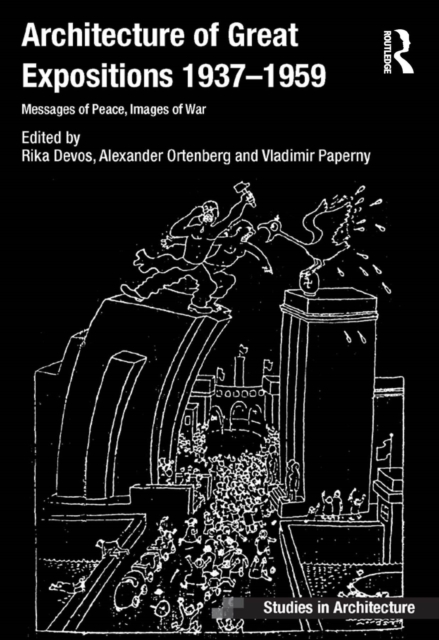
Architecture of Great Expositions 1937-1959
This book investigates architecture as a form of diplomacy in the context of the Second World War at six major European international and national expositions that took place between 1937 and 1959. The volume gives a fascinating account of architecture assuming the role of the carrier of war-related messages, some of them camouflaged while others quite frank. The famous standoffs between the Stalinist Russia and the Nazi Germany in Paris 1937, or the juxtaposition of the USSR and USA pavilions in Brussels 1958, are examples of very explicit shows of force. The book also discusses some less known - and more subtle - messages, revealed through an examination of several additional pavilions in both Paris and Brussels; of a series of expositions in Moscow; of the Universal Exhibition in Rome that was planned to open in 1942; and of London's South Bank Exposition of 1951: all of them related, in one way or another, to either an anticipation of the global war or to its horrific aftermaths. A brief discussion of three pre-World War II American expositions that are reviewed in the Epilogue supports this point. It indicates a significant difference in the attitude of American exposition commissioners, who were less attuned to the looming war than their European counterparts. The book provides a novel assessment of modern architecture's involvement with national representation. Whether in the service of Fascist Italy or of Imperial Japan, of Republican Spain or of the post-war Franquista regime, of the French Popular Front or of socialist Yugoslavia, of the arising FRG or of capitalist USA, of Stalinist Russia or of post-colonial Britain, exposition architecture during the period in question was driven by a deep faith in its ability to represent ideology. The book argues that this widespread confidence in architecture's ability to act as a propaganda tool was one of the reasons why Modernist architecture lent itself to the service of such different masters.
eBook

Architecture in Austria in the 20th and 21st centuries
Revised, updated and expanded by nearly 100 projects, this new edition of the catalog for the 'a_show,' Architekturzentrum Wien's (Az W) permanent exhibition on Austrian architecture of the 20th and 21st century, has become a stand-alone reference book. Its scope extends beyond the themes of the exhibition. Apart from condensing the current discourse on Austrian architecture of the last 150 years, it also documents relevance and singularity of the Az W collection. Featuring more than 2300 images and plans, accompanied by explanatory texts structured chronologically as well as thematically the book points out both historical connections and contemporary tendencies. Paired with a timeline, offering also an overview of all relevant media since 1836, brief biographies, and an index, this is the authoritative survey of modern and contemporary Austrian architecture.
Book
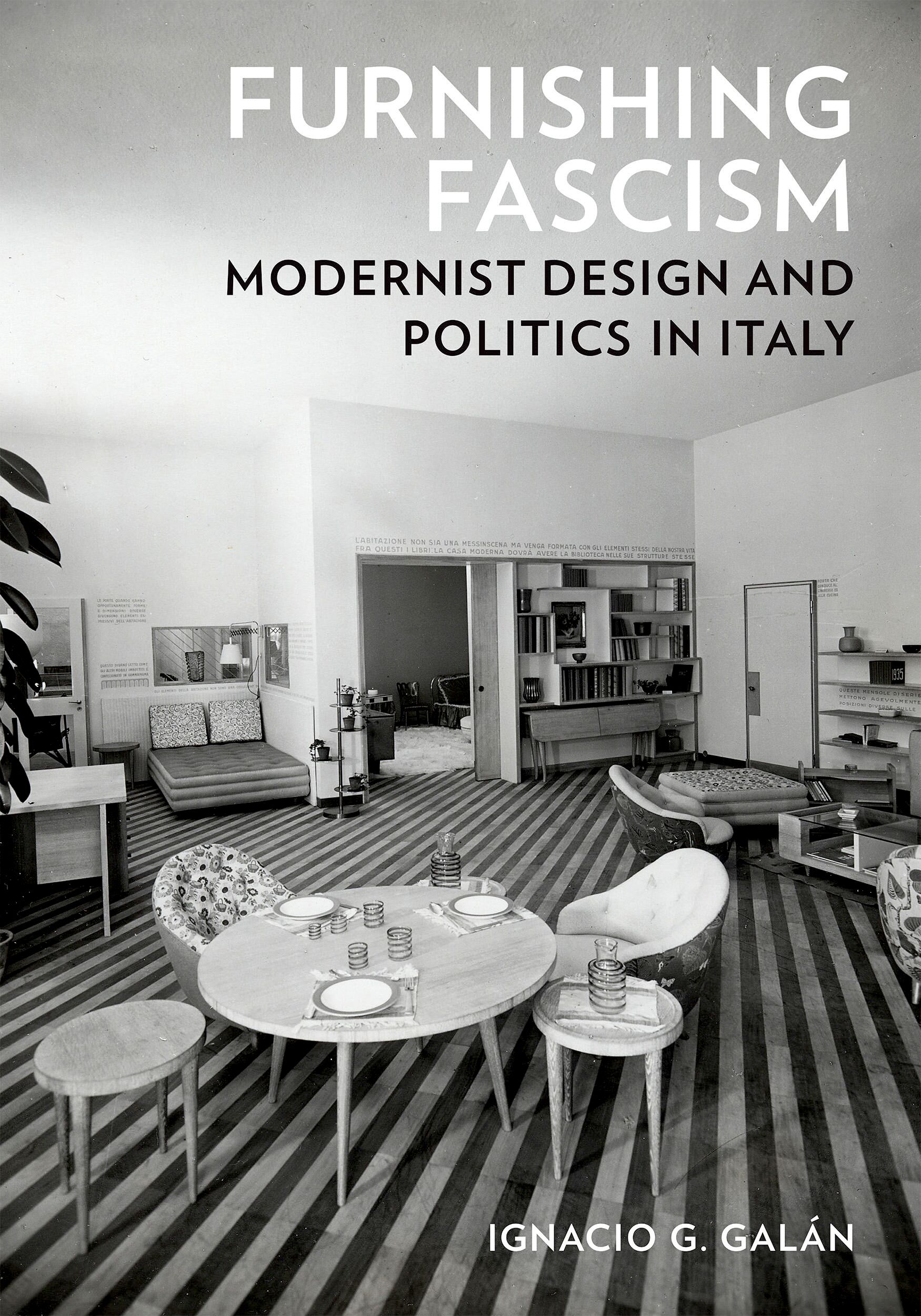
Furnishing Fascism
The role of modernist interior design in the construction of Italian nationalism Along with the rise of Mussolini's fascist regime, the interwar years in Italy also saw the widespread development of its modernist interior design and furnishing practices. While the regime's politics were overtly manifest in monumental government architecture, Furnishing Fascism examines the subtler yet effective role of household goods and decor in the cultivation of Italy's exclusionary sense of national identity. Presenting a fresh look at the work of various architects and designers, including iconic figures such as Gio Ponti and Carlo Enrico Rava, Ignacio G. Galán explores how seemingly neutral products of everyday life contributed to the propagation of fascist ideology. Through extensive promotion in popular magazines and department stores, on the film sets of Cinecittà Studios, and throughout the country's colonial territories, Italy's modernist design practices were part of a larger political project that aimed to produce a totalizing image of cultural hegemony. Interweaving design theory, architectural history, and media scholarship, Furnishing Fascism reexamines the period's so-called minor arts to reveal the political entanglement of modernism in early twentieth-century Italy and offers valuable insight into the complications of cultural production under the auspices of authoritarian power. Retail e-book files for this title are screen-reader friendly with images accompanied by short alt text and/or extended descriptions.
eBook


Open Architecture
The International Building Exhibition 1984/87 in Berlin constitutes one of the most remarkable examples to discuss \"open architecture\".Almost 10,000 dwellings were constructed or restored in the Kreuzberg districts adjacent to the Berlin Wall, inhabited about halfway by immigrants.
eBook

The spirit of the Bauhaus
'Architects, sculptors, painters, we all must return to the crafts!' declared architect Walter Gropius in his Bauhaus manifesto. Founded in 1919 as an art school in Weimar, the Bauhaus established itself as a major influence on twentieth-century art and design. Uncovering the sources of inspiration that brought the Bauhaus into existence, from medieval cathedrals of Europe and Hokusai prints to William Morris and Arts and Crafts, 'The Spirit of the Bauhaus' explores workshops and courses in detail, illustrating the extraordinary wealth of experimentation in every medium: ceramics, wood and metalwork, textiles, glass- painting, sculpture, mural, printing and binding, theater, architecture, and photography.
Book

Reclaiming Darajani Creek: colonial sanitation, urban transformation, conservation and heritage memory in Stone Town of Zanzibar, a UNESCO World Heritage Site
This article examines Darajani Creek in Stone Town, Zanzibar, which is a UNESCO World Heritage Site, and analyses its reclamation, urban development, memory, and conservation. Drawing on archival sources and ethnographic research, the creek’s complex colonial, ecological, and sociocultural histories, which have been shaped by administrative control, public health interventions, racial segregation, and environmental disruption, are examined. While reclamation was justified through sanitation narratives, it also caused social exclusion, displacement, and cultural erasure, resulting in enduring impacts on the town’s collective memory. Contemporary heritage management must be leveraged to address these legacies while integrating community engagement, tourism development, and postcolonial perspectives. In this article, the adoption of the Historic Urban Landscape (HUL) approach is advocated to harmonise heritage conservation with urban growth, thereby preserving both tangible and intangible values. Practical strategies include the establishment of exhibitions, installation of interpretive markers, and expansion of heritage tours to enhance public awareness, education, and economic benefits. By balancing heritage preservation, tourism, and urban development, Darajani Creek’s historical and cultural significance can be safeguarded, thereby reinforcing Stone Town’s Outstanding Universal Value (OUV). The study also contributes to the World Heritage Cities Programme by promoting context-sensitive interventions that bring environmental, social, and cultural objectives into alignment with sustainable urban development.
Journal Article