
Catalogue Search | MBRL


Are you sure you want to remove the book from the shelf?

{{itemTitle}}
9,882
result(s) for
"Architecture Exhibitions."
Sort by:
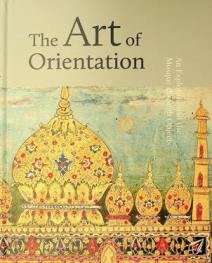
The art of orientation : an exploration of the mosque through objects
\"The art of orientation explores the origin, meaning and functions of the mosque through 116 selected artifacts from across the Islamic world. It employs an original and contemporary approach by incorporating essays from leading Arab and international authors, who provide fresh insights into the fascinating cultural history behind each of the objects. The contributors also illuminate the progression of the mosque from the humble mud-brick enclosure of the original Prophet's Mosque in Medina to the imposing stone structures of Cairo and Istanbul.\"-- Back cover.
Book
Ambiguous Territory
The writers and designers in this collection are among the most thoughtful architects, artists, landscape architects, and theorists working today. The editors organized these essays and works of art and design around three territories: the atmospheric, the biologic, and the geologic. Each cluster of essays is further framed by forewords and afterwords, which draw individual points of view into a larger articulation of what an ambiguous territory might be and how it operates.
Ambiguous Territory emerged from a symposium and exhibition held at the University of Michigan in the fall of 2017, and exhibitions at the University of Virginia and Pratt Manhattan Gallery in 2018, and at Ithaca College in 2019. The conversations that arise in this book are inquisitive and critically engaged. They pressure assumptions we routinely make about what constitutes meaningful and principled perspectives in architecture, landscape architecture, and art. Both the texts and the work take on some of the trickiest issues of our time.
-- Excerpt from a foreword to the book by Catherine Ingraham
Professor, Graduate Architecture and Urban Design, Pratt Institute
The works in Ambiguous Territory exist in a creative space, in the moody realm of possibilities. It's a sphere of design in which solutions (or lack thereof) have yet to settle. That should be a familiar feeling for all creative people, whose daily life may include exploring a way out of a problem without being able to nail down an exact answer. This volume belongs in that territory of ambiguity and curiosity, a place where there is room for musings, laughter, and despair. The projects convey, in different ways, a hope for a better future, but also a sense of not knowing if that future is at all possible.
-- Excerpt from an afterword to the book by Peder Anker
Professor, the Gallatin School of Individualized Study, New York University
With Contributions of Ellie Abrons, Paula Gaetano Adi, amid.cero9, Amy Balkin, Philip Beesley, Ursula Biemann, The Bittertang Farm, Edward Burtynsky, Bradley Cantrell, Gustavo Crembil, Brian Davis, Design Earth, Mark Dion, Formlessfinder, Lindsey french, Adam Fure, Futureforms, Michael Geffel, Rania Ghosn, David Gissen, El Hadi Jazairy, Harrison Atelier, Cornelia Hesse-Honegger, Lisa Hirmer, Catherine Ingraham, Lydia Kallipoliti, Perry Kulper, Sean Lally, Landing Studio, Lateral Office, LCLA, Mark Lindquist, LiquidFactory, Ariane Lourie-Harrison, Meredith Miller, Thom Moran, Ricardo de Ostos, NaJa & deOstos, Nemestudio, Mark Nystrom, OMG / O'Donnell Miller Group, The Open Workshop, Ricardo de Ostos, oOR / Office of Outdoor Research, Jennifer Peeples, pneumastudio, Alessandra Ponte, Office for Political Innovation, Rachele Riley, RVTR, Smout Allen, smudge studio, Neil Spiller, Terreform ONE, Andreas Theodoridis, Unknown Fields, Liam Young, Marina Zurkow
eBook
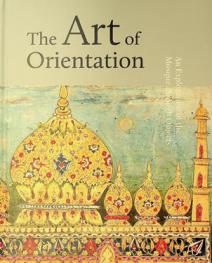
The art of orientation : an exploration of the mosque through objects
\"The art of orientation explores the origin, meaning and functions of the mosque through 116 selected artifacts from across the Islamic world. It employs an original and contemporary approach by incorporating essays from leading Arab and international authors, who provide fresh insights into the fascinating cultural history behind each of the objects. The contributors also illuminate the progression of the mosque from the humble mud-brick enclosure of the original Prophet's Mosque in Medina to the imposing stone structures of Cairo and Istanbul.\"-- Back cover.
Book

Books that were also Exhibitions
Many of the books that have recorded the history of architecture in Colombia were also exhibitions. Between 1977 and 1992, when the study of the history of Colombian architecture reached great growth, architecture exhibitions and their accompanying publications were decisive actors in shaping Colombian architectural culture. In addition to documenting these ephemeral events, the publications fostered criticism, academic research, and heritage conservation. Although the enduring nature of books has ensured their significance, the history of architecture exhibitions has been forgotten. Through archival research and interviews, this article recovers the history of two architecture exhibitions from 1980 and 1985, a history that reveals the entanglement of the exhibition of architecture and its editorial dissemination. Muchos de los libros que han registrado la historia de la arquitectura en Colombia también fueron exposiciones. Entre 1977 y 1992, cuando el estudio de la historia de la arquitectura colombiana alcanzó gran auge, las exposiciones de arquitectura y sus publicaciones fueron actores decisivos en la configuración de la cultura arquitectónica Colombiana. Además de documentar estos eventos efímeros, las publicaciones fomentaron la crítica, la investigación académica y la conservación del patrimonio. Aunque la perdurabilidad de los libros ha asegurado su trascendencia, la historia de las exposiciones ha sido olvidada. Mediante investigación de archivo y entrevistas, este artículo recupera la historia de dos exposiciones de arquitectura de 1980 y 1985, una historia que permite entrever el entrelazamiento de la exposición de arquitectura y su difusión editorial.
Journal Article


Scenari futuri per il patrimonio fieristico. Ipotesi di conservazione, riuso e valorizzazione della Fiera di Cagliari
The architectural production in Sardinia during the 20th century reflects the advancement of a modernity that deeply marked and transformed both urban and rural landscapes. Among its most significant witness is the Cagliari fairground, built from 1951 without a defined and unitary design, and progressively modified over the decades. Initially composed of temporary and simple structures, it later saw the construction of innovative buildings, drawn by both local designers and popolar Italian architects. Since the 1980s, however, the site has suffered inappropriate alterations, and demolitions due to a lack of cultural recognition. This study aims to (1) promote awareness of historical and architectural value of the site and its architectures, and (2) propose sustainable reuse strategies. The research is based on archival investigation, urban analysis, and a survey of the current state, assessing materials, construction techniques, and conservation issues.
Journal Article

Architecture connecting : living structures
'Architecture Connecting' accompanies an exhibition series at the Louisiana Museum of Modern Art and presents three design studios with a diverse use of biology and biochemistry as a basis for their practices: ecoLogicStudio, Atelier LUMA and Jenny Sabin Studio. Conscious of our connection to all living things and tracking technological advances, not least in artificial intelligence tools, the studios are developing new methods to review issues of sustainable architecture and climate concerns. This book unfolds their practices, highlighting some of their most important projects.
BOOK

Mediated Messages
Mediated Messages presents a collection of original writing exploring the role played by the media in the development of postmodern architecture in the 1970s and 80s. The book’s twelve chapters and case-studies examine a range of contemporary periodicals and exhibitions to explore their role in the postmodern. This focus on mediation as a key feature of architectural post-modernism, and the recognition that post-modernism grew out of developments in the media, opens up the possibility of an important new account of post-modernism distinct from existing narratives. Accompanied by a contextualizing introduction, the essays are arranged across four thematic sections (covering: images; international postmodernisms; high and low culture; and postmodern architects as theorists) and present a range of case-studies with a genuinely international scope. Altogether, this work makes a substantial contribution to the historical account of architectural postmodernism, and will be of great interest to researchers in postmodernism as well as those examining the role of the media in architectural history.
eBook
A Method Suggestion Through National Architecture Exhibition For Evaluation of Turkish Architecture Periodically
Beyond designing space, architecture is a versatile field which is influenced from physical, social and cultural environment, from people and their needs. Therefore, architecture is a tangible production field which has tight bonds with every kind of development, change and transformation in the society and at the same time has the power of changing and transforming. So in order to understand the architectural production in a society, first of all we need to analyse dynamics of social structure. In this scope, the aim of this study is to propose a method suggestion which enables evaluation of development of current architecture, changing-transforming dynamics of social structure and analyse them through new dimensions introduced to architecture and to determine the representations of architecture periodically. These periodical evaluations were carried out through 'Catalogue of National Architecture Exhibition and Prizes' which has the aim of representing Turkish architecture and enable nationalization of architecture. The reason is that the event serves as a resource of Turkish architecture and has the archive attribute. On the other hand, these social structure data are related with social sciences and have qualitative characteristics. Therefore the method proposed was mostly arranged on qualitative research methods used in social researches. The method which is basically based on systematic is composed of four stages defined as grouping-defining, summary-coding, superposition and evaluation which includes gathering, grouping, decreasing, superposing and discussing subsequent data. In the study these stages were defined on flow chart, every stage was detailed and explained on each period catalogue with examples.
Journal Article