
Catalogue Search | MBRL


Are you sure you want to remove the book from the shelf?

{{itemTitle}}
130
result(s) for
"Architecture France Paris."
Sort by:

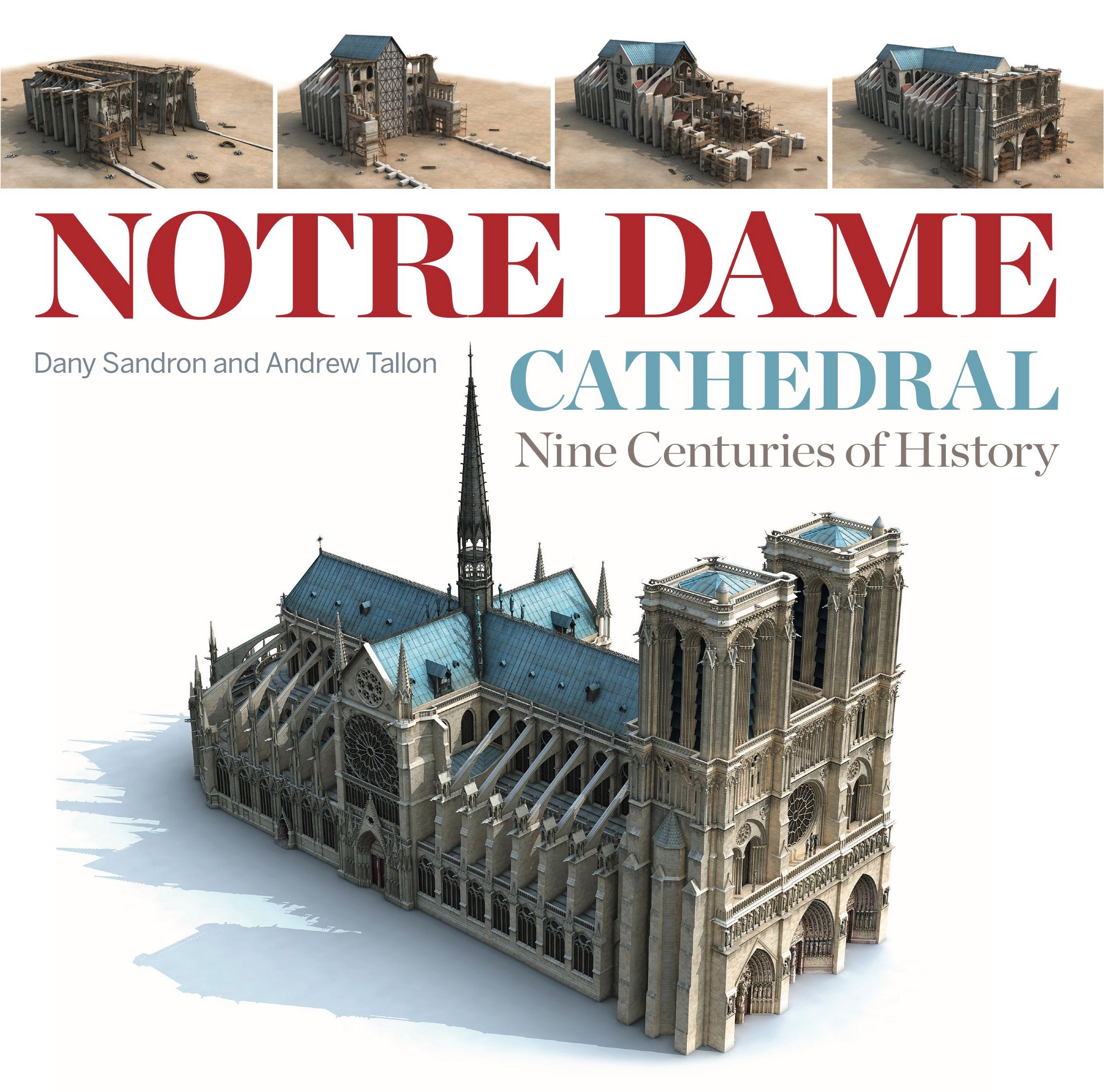
Notre Dame Cathedral
Since its construction, Notre Dame Cathedral has played a
central role in French cultural identity. In the wake of the tragic
fire of 2019, questions of how to restore the fabric of this
quintessential French monument are once more at the forefront. This
all-too-prescient book, first published in French in 2013, takes a
central place in the conversation.
The Gothic cathedral par excellence , Notre Dame set the
architectural bar in the competitive years of the third quarter of
the twelfth century and dazzled the architects and aesthetes of the
Enlightenment with its structural ingenuity. In the nineteenth
century, the cathedral became the touchstone of a movement to
restore medieval patrimony to its rightful place at the cultural
heart of France: it was transformed into a colossal laboratory in
which architects Jean-Baptiste Lassus and Eugène-Emmanuel
Viollet-le-Duc anatomized structures, dismembered them, put them
back, or built them anew-all the while documenting their work with
scientific precision.
Taking as their point of departure a three-dimensional laser
scan of the cathedral created in 2010, architectural historians
Dany Sandron and the late Andrew Tallon tell the story of the
construction and reconstruction of Notre Dame in visual terms. With
over a billion points of data, the scan supplies a highly accurate
spatial map of the building, which is anatomized and rebuilt
virtually. Fourteen double-page images represent the cathedral at
specific points in time, while the accompanying text sets out the
history of the building, addressing key topics such as the
fundraising campaign, the construction of the vaults, and the
liturgical function of the choir.
Featuring 170 full-color illustrations and elegantly translated
by Andrew Tallon and Lindsay Cook, Notre Dame Cathedral is
an enlightening history of one of the world's most treasured
architectural achievements.
eBook

Forever Paris : green spaces & sustainable living in the City of Light
\"Photographer Michael Arnaud spotlights green spaces and sustainable living in Paris\"--Back cover.
BOOK

The glass state : the technology of the spectacle Paris, 1981-1998
A study of the technological, theoretical, and cultural significance of the transparency of the glass structures of François Mitterand's Grands Projects in Paris.
eBook

Les Eglises de Paris
Extrait : \"L'eglise cathedrale de Paris est comme les heros, elle a deux histoires, l'une legendaire, l'autre reelle, et comme toujours aussi, la legende est au-dessous de la realite.\"
eBook

Les Monuments de Paris Souvenirs de Vingt Siècles
Histoire des principaux monuments de Paris, sur 20 siecles.
eBook

Paris : impressions in ink
This book displays more than fifty pen and ink drawings - my impressions of Paris. These impressions have been gathered and documented since my first memorable visit to Paris in the early 1970s. --page 7.
Book

Mirrors of Memory
As society becomes more global, many see the world's great cities as becoming increasingly similar. But while contemporary cultures do depend on and resemble each other in previously unimagined ways, homogenization is sometimes overestimated. In his compelling new book, James W. White considers how two of the world's great cities, Paris and Tokyo, may appear to be growing more alike--both are vast, modern, dominating, capitalist cities--but in fact remain profoundly different places.
Tokyo's growth appears particularly organic, with a pronounced austerity and boundaries far less clear than those of Paris, which has been planned and manipulated constantly. Paris has a thriving center and a noticeably more contentious relationship with its nation, and its own suburbs, than Tokyo does. White explores how the roles of cities and urbanism in each society, and the balance between nature and artifice, account for some of these differences. He also examines the role of authority in each location and considers the way catastrophes, such as war, alter a city--as well as the role fear plays in a city's construction.
While the author acknowledges that Tokyo is more physically fluid and superficially chaotic than Paris, he also demonstrates that it has an invisible order of its own (including a center that, contrary to most assumptions, is not empty at all). White depicts a Tokyo that relies less on the monumental, and is less influenced by government, than most cities in the West. Where the culture of Paris emphasizes clarity, exclusion, and marginality, the public spaces of Tokyo express ambiguity, inclusiveness, and impermanence.
In the end, White makes us reconsider which city better deserves the name \"City of Light.\" Nonetheless, he warns, several factors may combine to discourage Tokyo's international ascendance and even to threaten the future of provincial Japan. Thus it may be Paris, paradoxically, that is better poised to improve both its own position and its country's in the years ahead.
eBook