
Catalogue Search | MBRL


Are you sure you want to remove the book from the shelf?

{{itemTitle}}
13
result(s) for
"Architecture History Austria 20th century."
Sort by:

Architecture in Austria in the 20th and 21st centuries
Revised, updated and expanded by nearly 100 projects, this new edition of the catalog for the 'a_show,' Architekturzentrum Wien's (Az W) permanent exhibition on Austrian architecture of the 20th and 21st century, has become a stand-alone reference book. Its scope extends beyond the themes of the exhibition. Apart from condensing the current discourse on Austrian architecture of the last 150 years, it also documents relevance and singularity of the Az W collection. Featuring more than 2300 images and plans, accompanied by explanatory texts structured chronologically as well as thematically the book points out both historical connections and contemporary tendencies. Paired with a timeline, offering also an overview of all relevant media since 1836, brief biographies, and an index, this is the authoritative survey of modern and contemporary Austrian architecture.
Book
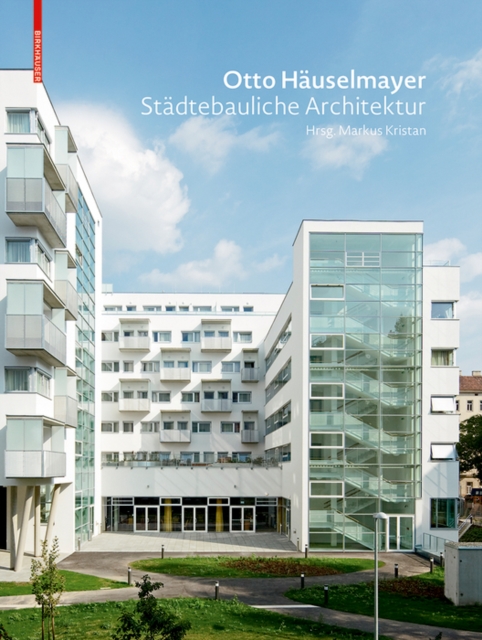
Otto HauselmayerStadtebauliche Architektur: Stadtplanung, Bauten und Projekte 1976-2018
Zwei Kirchen, 1.500 Wohnungen und die Planung von Stadtquartieren fur rund 5.000 Wohnungen umfasst das Werk des Wiener Architekten Otto Hauselmayer. Hinzu kommen eine Brucke, Nutzbauten, Platzgestaltungen und die international viel beachtete Uberdachung der archaologischen Ausgrabungen in Ephesos. Sie wirkt im Kontext seines Werkes wie eine retrospektive Stadtintervention. Auch der Entwurf fur das Linzer Musiktheater fehlt nicht, welches bereits juriert und beauftragt war, fur das jedoch in letzter Sekunde der Auftrag zuruckgezogen wurde: als Bauernopfer eines politischen Rankespiels. Das Buch dokumentiert erstmals Hauselmayers Bauten, die sich bei den Nutzern groter Beliebtheit erfreuen, da er mit Liebe zum Detail plant und zugleich den urbanen Kontext berucksichtigt.
eBook


Freedom and the Cage
Spurred by ideals of individual liberty that took hold in the Western world in the late nineteenth century, psychiatrists and public officials sought to reinvent asylums as large-scale, totally designed institutions that offered a level of freedom and normality impossible in the outside world. This volume explores the \"caged freedom\" that this new psychiatric ethos represented by analyzing seven such buildings established in the Austro-Hungarian monarchy between the late 1890s and World War I.
In the last two decades of the Habsburg Empire, architects of asylums began to abandon traditional corridor-based plans in favor of looser formations of connected villas, echoing through design the urban- and freedom-oriented impulse of the progressive architecture of the time. Leslie Topp considers the paradoxical position of designs that promoted an illusion of freedom even as they exercised careful social and spatial control over patients. In addition to discussing the physical and social aspects of these institutions, Topp shows how the commissioned buildings were symptomatic of larger cultural changes and of the modern asylum's straining against its ideological anchorage in a premodern past of \"unenlightened\" restraint on human liberty.
Working at the intersection of the history of architecture and the history of psychiatry, Freedom and the Cage broadens our understanding of the complexity and fluidity of modern architecture's engagement with the state, with social and medical projects, and with mental health, psychiatry, and psychology.
eBook

The new space : movement and experience in Viennese modern architecture
Scholars have long explored the problem of ornament and expression when considering Viennese modernism. By the first decade of the 20th century, however, the avant-garde had shifted its focus from the surface to the interior. Adolf Loos (1870-1933), together with Josef Frank (1885-1967) and Oskar Strnad (1879-1935), led this generation of architects to interpret modernism through culture and lifestyle. They were interested in the experience of architectural space: how it could be navigated, inhabited, and designed to reflect the modern way of life while also offering respite from it. The New Space traces the theoretical conversation about space carried out in the writings and built works of Loos, Frank, and Strnad over four decades. The three ultimately foregrounded what Le Corbusier would later-independently-term the architectural promenade. Lavishly illustrated with new photography and architectural plans, this important book enhances our understanding of the development of modernism and of architectural theory and practice.
Book

The viennese café and fin-de-siècle culture
The Viennese café was a key site of urban modernity around 1900. In the rapidly growing city it functioned simultaneously as home and workplace, affording opportunities for both leisure and intellectual exchange. This volume explores the nature and function of the coffeehouse in the social, cultural, and political world of fin-de-siècle Vienna. Just as the café served as a creative meeting place within the city, so this volume initiates conversations between different disciplines focusing on Vienna at the beginning of the twentieth century. Contributions are drawn from the fields of social and cultural history, literary studies, Jewish studies and art, and architectural and design history. A fresh perspective is also provided by a selection of comparative articles exploring coffeehouse culture elsewhere in Eastern Europe.
eBook

POST OTTO WAGNER : Von der Postsparkasse zur Postmoderne = From the Postal Savings Bank to Post-Modernism
Otto Wagner is considered as the \"father of the Viennese modernism\" and one of the most important international architects. The publication on the MAK exhibition illustrates the resonance of Wagner?s oeuvre by protagonists of early modernism as well as his influence on his contemporaries, students and subsequent generations of architects and designers such as Josef Hoffmann, Jo?e Plecnik, Leopold Bauer, Rudolph M. Schindler, Frank Lloyd Wright, Auguste Perret, Frei Otto, Aldo Rossi and Robert Venturi/Denise Scott Brown.0With generous and often unknown image material the book illustrates Wagner?s influence on international architecture from the turn of the century to the present, and thus a link between the intricate relationship of modernism and postmodernism.
BOOK

Sigmund Freud—early network theories of the brain
Since the early days of modern neuroscience, psychological models of brain function have been a key component in the development of new knowledge. These models aim to provide a framework that allows the integration of discoveries derived from the fundamental disciplines of neuroscience, including anatomy and physiology, as well as clinical neurology and psychiatry. During the initial stages of his career, Sigmund Freud (1856–1939), became actively involved in these nascent fields with a burgeoning interest in functional neuroanatomy. In contrast to his contemporaries, Freud was convinced that cognition could not be localised to separate modules and that the brain processes cognition not in a merely serial manner but in a parallel and dynamic fashion—anticipating fundamental aspects of current network theories of brain function. This article aims to shed light on Freud’s seminal, yet oft-overlooked, early work on functional neuroanatomy and his reasons for finally abandoning the conventional neuroscientific “brain-based” reference frame in order to conceptualise the mind from a purely psychological perspective.
Journal Article

Perceptions. The Unbuilt Synagogue in Buda through Controversial Architectural Tenders (1912–1914)
The unbuilt synagogue in Buda is an almost forgotten chapter in Hungarian architectural history which drew great attention between 1911 and 1914. It was discussed extensively by the contemporary press in the early 20th century and by architects in the Hungarian capital of Austria–Hungary. Between 1912 and 1914 three tenders for the design of the synagogue of Buda were announced, with the participation of well-known (synagogue) architects of Hungary, who represented the diverse architectural styles of the period. The efforts to build the synagogue, including the three failed tenders, the 30 competition designs and the opinions of contemporaries raised, and continue to raise, many provocative questions. The present study is based on the analysis of the designs submitted and criticisms published in official architecture magazines between 1912 and 1914, but not yet studied and published elsewhere. Through these, the study showcases the controversial architectural decisions that could have changed the appearance of a neighbourhood but failed to do so. The study puts the townscape of Széll Kálmán Square in Buda in a new context, revealing another layer of architecture, urban design and architectural-sociology and perception of the capital’s synagogue on the eve of World War I and the dissolution of the Austro-Hungarian Empire.
Journal Article
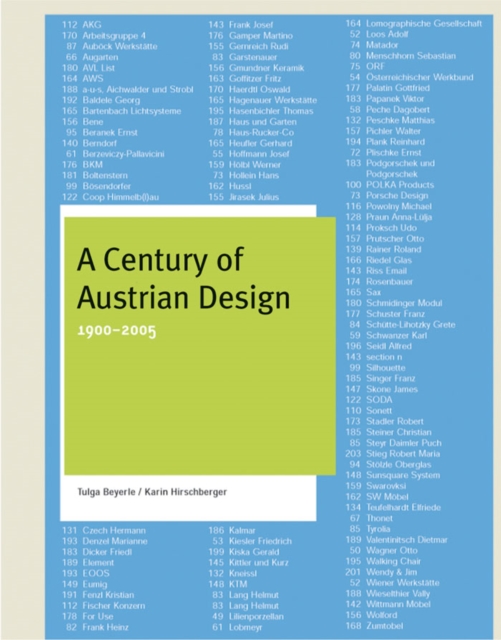
A Century of Austrian Design
A \"Century of Austrian Design\" offers a highly accessible overview of Austrian design culture from 1900 to the present against the background of the country's extremely turbulent industrial history. In the process, the key aspects are explained in essays by celebrated experts. The book attempts to delineate a specifically \"Austrian\" formal language, citing as examples specific achievements in historical and contemporary design. As it does so, it also sheds light on other defining moments of Austria's design culture, including the enormous potential of its inventors, the phenomenon of semi-industrial manufacturing, and the innovative design solutions advanced by the Austrian sporting goods industry. A yellow pages section with selected design addresses rounds off the volume.
eBook