
Catalogue Search | MBRL


Are you sure you want to remove the book from the shelf?

{{itemTitle}}
180
result(s) for
"Architecture Iraq"
Sort by:

Systematics significance of morphological and anatomical diversity of Portulaca oleracea
This study was aimed to investigate the Portulaca oleracea is a succulent plant in Portulacaceae family distributed around different regions of Iraq as collected widely in the gardens of Baghdad governorate. The results of this study shown that a systematic significant of morphological and anatomical data. Individuals of purslane showed herb habit with branched shoot stems. Stems and leaves are glabrous and leaves are alternate, the petiole is absent. There is variation in morphological characters as (Flowers, inflorescence architecture), these inflorescences were viewed as clustered in the form of small one carrying many male and female flowers as the inflorescences take the form of long-stemmed. The flowering season for this species is from April till August as a weed in plains, however, anatomical techniques have been used as it revealed two patterns of stomatal complex, paracytic which is the most common followed by tetacytic is limited distributed type and it is recorded for the first time in this species. Druses crystals have been found distributed in the stem with angular collenchyma alternating with xylem parenchyma cells with large intercellular space. As well as, root anatomy has been done and the results showed casperian strips cells clearly in section with xylem and phloem regions.
Journal Article

Mohamed Makiya : a modern architect renewing islamic tradition
Makiya was Baghdad and Baghdad was Makiya.' These words sum up the life of one of the Middle East's most famous architects. Mohamed Makiya's career spanned seven decades and included projects in more than ten countries. He was a master of incorporating traditional and classical styles into modern architecture. For Makiya, the continuity of tradition as a 'living dimension' was the justification for his work. 0Makiya was revered as a teacher of architecture in Iraq, where he set up the first Department of Architecture at Baghdad University in 1959. Makiya was also a promoter of Iraqi art, which he displayed at his Kufa Gallery in London that was set up to build a bridge between the East and the West. 0This compelling biography reveals the life of a visionary who achieved remarkable feats in Iraq and whose philosophy and humanity crossed all borders and cultures.
Book

The Sacrificial Economy
In the mid-first millennium B.C., the Eanna temple at Uruk sacrificed a minimum of nine lambs every day in its basic routine of offerings to its gods; in addition to these, special occasions and festivals demanded the sacrifice of as many as 90 lambs in a single day. All told, the Eanna sacrificed about 4,300 lambs per year. There were more than 120 herdsmen connected to the Eanna at any given time, and the temple expected there to be tens of thousands of sheep and goats under their responsibility. These herdsmen delivered male lambs to the Eanna for sacrifice, and the temple had an internal infrastructure for the care, maintenance, and ritual expenditure of these lambs; they also delivered wool, which the Eanna sold mostly in bulk quantities. This book aims to analyze the economic organization of this entire system of sheep and goat maintenance and utilization, to explore the economic and social relationships between the Eanna and its herdsmen, and to integrate the study of the Eanna's animal economy into the developing picture of the Neo-Babylonian temple economy as a whole. Kozuh's careful examination of the bookkeeping records, the management records, and legal documents connected with this substantial enterprise sheds new light on an arcane area of first-millennium Mesopotamian life that will be sure to enlighten our understanding of the daily life, economy, and social structure of this region.
eBook


Chemical-mineralogical features and physical properties of archaeological adobe: The evidence from Tell Zurghul/Nigin (Dhi Qar, Iraq)
This study examines the chemical, mineralogical, hydric, and mechanical properties of archaeological adobe bricks and earthen plasters from the site of Tell Zurghul/Nigin in southern Iraq, which are associated with recently excavated buildings dated to the 5 th and 3 rd millennium BCE. As integral components of earthen architecture, adobe structures are susceptible to rapid deterioration when subjected to environmental conditions and other degradation factors. Consequently, their preservation is a critical focus within cultural heritage initiatives involving earthen constructions. A comprehensive understanding of the materials used in buildings and their inherent properties is essential for identifying optimal conservation methods for archaeological earthen structures. The research is driven by two primary objectives. Firstly, it seeks to explore construction techniques within a diachronic framework, assessing their temporal evolution while considering the geological context and availability of local raw materials. Secondly, mineralogical and chemical analyses, alongside hydric and mechanical tests, aim to evaluate the characteristics of the adobe bricks, including their resistance and durability against weathering.
Journal Article

The world is not a rectangle : a portrait of architect Zaha Hadid
A biography of architect Zaha Hadid, who grew up in Baghdad and went on to design buildings all over the world.
Book
The monument : art and vulgarity in Saddam Hussein's Iraq
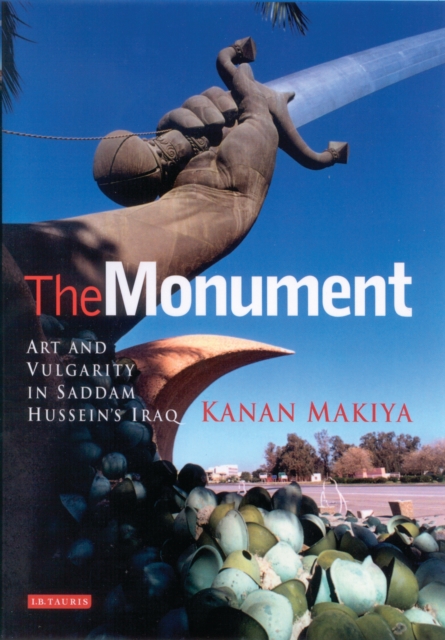
In Baghdad, an enormous monument nearly twice the size of the Arc de Triomphe towers over the city. Two huge forearms emerge from the ground, clutching two swords that clash overhead. Those arms are enlarged casts of those of Saddam Hussein, showing every bump and follicle. The \"Victory Arch\" celebrates a victory over Iran (in their eight-year-long war) that never happened. This text is a study of the interplay between art and politics - of how culture, normally an unquestioned good, can play into the hands of a power with devastating effects. Kanan Makiya uses the culture invented by Saddam Hussein as a window into the nature of totalitarianism and shows how art can become the weapon of dictatorship. Under Saddam Hussein, culture connived in his evil - this text explains how. It should be useful reading for anyone concerned with the power of culture and the culture of power.
eBook

Zaha Hadid
\"Hadid grew up in Baghdad, Iraq, surrounded by music. She was a curious and confident child who designed her own modernist bedroom at nine years old. As a young woman studying at University in Beirut, she was described as the most outstanding pupil the teacher had ever met. With her ... vision and belief in the power of architecture, she founded her own firm and designed [world-famous] buildings ... including the London 2012 Olympic Aquatic Centre\"--Publisher marketing
Book

The effects of material, structural characteristics, and construction technology on the identity of contemporary mosques in Erbil city
Mosques serve as a symbolic architectural feature in Islamic cities, representing their spiritual and cultural identity. Modern mosques incorporate new technologies in their structural systems and use innovative materials, addressing social and cultural needs while adapting to local economic conditions. Architectural identity refers to a unique style in building design and its social environment. Erbil, the capital of the Kurdistan Region in Iraq, has experienced significant developments in various areas since 1991. This study aims to identify the architectural identity of contemporary mosques that were influenced by new technology and materials. The study compares traditional (≤2002) and contemporary (2003–2023) mosques in Erbil in terms of materials, structural systems, and implications for construction technology, durability, and maintenance. This is achieved via a qualitative analysis of traditional mosques’ spatial and mass composition throughout the ages, creating a basic framework for studying contemporary mosque architecture in Erbil (sample of 32 mosques classified into 4 groups). The results demonstrate that traditional buildings were based on brickwork, load-bearing walls, vaults, and domes that require mortar deterioration. Contemporary mosques use reinforced concrete frames (2–4 core columns) with brick, stone, marble, GRC panels, and synthetic claddings. Industrializing the building process changes implementation requirements and deterioration profiles (e.g., cladding separation, reinforcement corrosion, exterior ageing). In addition, the symbolic identity of Erbil’s traditional mosque was shaped by the influence of the traditional Erbil architecture, which remains deeply rooted in people’s memories. Hybrid Islamic, a typical rationalist, and new modern architecture mosque styles characterize contemporary mosques. The research concludes that traditional and modern mosques in Erbil feature distinct design elements, but some new contemporary mosques still retain a traditional identity. The conclusion highlights the need for two separate sets of operational and conservation guidelines tailored to the material-structural characteristics and projected life cycles.
Journal Article