
Catalogue Search | MBRL


Are you sure you want to remove the book from the shelf?

{{itemTitle}}
843
result(s) for
"Architecture Italy."
Sort by:
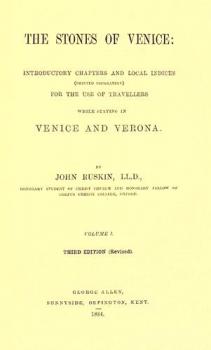
The stones of Venice : introductory chapters and local indices (printed separately) for the use of travellers while staying in Venice and Verona
\"The Stones of Venice examines Venetian architecture in detail, describing for example over eighty churches. He discusses architecture of Venice's Byzantine, Gothic and Renaissance periods, and provides a general history of the city\"--Wikipedia, June 24, 2019. https://en.wikipedia.org/wiki/The_Stones_of_Venice_(book)
Unknown

The Aurelian Wall and the Refashioning of Imperial Rome, AD 271–855
This book explores the relationship between the city of Rome and the Aurelian Wall during the six centuries following its construction in the 270s AD, a period when the city changed and contracted almost beyond recognition, as it evolved from imperial capital into the spiritual center of Western Christendom. The Wall became the single most prominent feature in the urban landscape, a dominating presence which came bodily to incarnate the political, legal, administrative, and religious boundaries of urbs Roma, even as it reshaped both the physical contours of the city as a whole and the mental geographies of 'Rome' that prevailed at home and throughout the known world. With the passage of time, the circuit took on a life of its own as the embodiment of Rome's past greatness, a cultural and architectural legacy that dwarfed the quotidian realities of the post-imperial city as much as it shaped them.
eBook


Renovatio urbis
Examining the urban and architectural developments in Rome during the Pontificate of Julius II (1503-13) this book focuses on the political, religious and artistic motives behind the changes. Each chapter focuses on a particular project, from the Palazzo dei Tribunali to the Stanza della Segnatura, and examines their topographical and symbolic contexts in relationship to the broader vision of Julian Rome.
This original work explores not just historical sources relating to buildings but also humanist/antiquarian texts, papal sermons/eulogies, inscriptions, frescoes and contemporary maps. An important contribution to current scholarship of early sixteenth century Rome, its urban design and architecture.
eBook

Mussolini, Architect
During the fascist years in Italy, architecture and politics enjoyed a close alliance. Benito Mussolini used architecture to educate the masses, exploiting its symbolic prowess as a powerful tool for achieving political consensus.
Mussolini, Architect examines Mussolini in Italy from 1922 to 1943 and expands the traditional interpretations of fascism, advancing the claim that Mussolini devised and implemented architecture as a tool capable of determining public behaviour and influencing opinion. Paolo Nicoloso challenges the assertion that Mussolini was of minimal influence on Italian architecture and argues that in fact the fascist leader played a strong role in encouraging civic architectural development in order to reflect the totalitarian values of the period. Drawing on archival documents, Nicoloso lists the architects who gave Mussolini ideas and describes the times when the dictator himself sometimes picked up a pencil and suggested changes.
Examining the political, social, and architectural history of the fascist period, Mussolini, Architect gives careful attention to the final years of fascist rule in order to demonstrate the extent to which Mussolini was intent on shaping Italy and its citizens through architectural projects.
eBook


A Renaissance Architecture of Power
Urbino, Rome, Florence, Milan, Ferrara... but also Mantua and Imola, Carpi and Saluzzo, Naples and Sicily: a collection of case studies on the Renaissance renewal of Italian court palaces from a comparative perspective.
eBook

Florentine villas in the fifteenth century : an architectural and social history
This book investigates the architecture and patronage strategies of Florentine villas in 15th century Italy.
Book

Poggio Civitate (Murlo)
Poggio Civitate in Murlo, Tuscany, is home to one of the best-preserved Etruscan communities of the eighth through the sixth centuries BCE. In this book, Anthony Tuck, the director of excavations, provides a broad synthesis of decades of data from the site.The results of many years of excavation at Poggio Civitate tell a story of growth, urbanization, ancient industrialization, and dissolution. The site preserves traces of aristocratic domestic buildings, including some of the most evocative and enigmatic architectural sculpture in the region, along with remnants of non-elite domestic spaces, enabling illuminating comparisons across social strata. The settlement also features evidence of large-scale production systems, including tools and other objects that reflect the daily experiences of laborers. Finally, the site contains the story of its own destruction. Tuck finds in the data clear indications that Poggio Civitate was methodically dismantled, and he posits hypotheses concerning the circumstances around this violent social and political act.
eBook