
Catalogue Search | MBRL


Are you sure you want to remove the book from the shelf?

{{itemTitle}}
4
result(s) for
"Architecture Saudi Arabia Mecca"
Sort by:
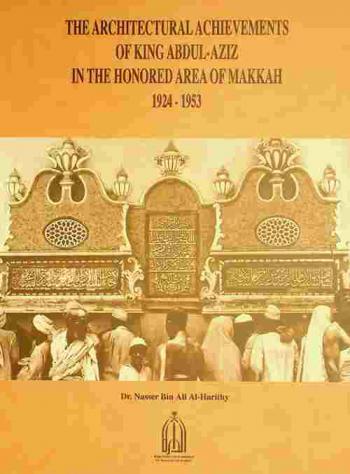

GROWTH OF THE HOLY MOSQUE IN MECCA AND THE FIRST LEGISLATION OF HERITAGE CONSERVATION IN SAUDI ARABIA (1955–2010)
Mecca city is one of the oldest cities in the world since the first nuclei of the city was laid down more than 3700 years ago by the Prophet Ibrahim, and since that time it has been a sacred city. When the Prophet Mohammed began the call to Islam in 620 AD, the city entered a new era in its history to become the most important religious and commercial centre of the Hejaz. The holy Mosque with its courtyard containing the “Ka’aba” is the most important building not only in Mecca but in the Islamic world, and the “Ka’aba” is considered as the heart of the city. The pilgrimage to the city of Mecca (Hajj) is the fifth pillar of Islam, and unlike pilgrimage in other religions, it is a mandatory character for every member of the faithful who can afford it. For this reason, visitor numbers to Mecca have grown exponentially during the last few decades ranging between 1.5–2.5 million pilgrims per season, peaking to 3.2 million pilgrims in 2012 AD. This trend is closely connected with the different expansions of the holy mosque since 1955 AD, when the first Saudi extension doubled its area. The project was followed by two other major expansions in 1988 and 2010 AD. These projects were done at the cost of destroying some historical neighbourhoods where, however, the historical Ottoman portico has been conserved by a royal decree in 1969 AD. This paper will analyse the expansions of the holy Mosque focusing in the projects that took place in the Saudi rule and discussing how these expansions have affected the urban fabric of the city as well as their impacts in the historical area despite the first legislation of heritage conservation policies approved in 1972 AD by using a mixed approach of gathering data through a literature review as a secondary data and the primary sources which include official and non-official reports as well as government and non-government archive records.
Journal Article
The hidden art of Islam
Muslim belief and tradition specifies that there should be no depictions of God or the Prophet Muhammad. In religious contexts, this constraint extends to human figures and other living creatures. Host Rageh Omaar traces the effect of these beliefs over the centuries on the art and artists of the Islamic world.
Streaming Video

New Look for Mecca: Gargantuan and Gaudy
As a non-Muslim, I was not permitted to visit the city, but many Muslims I spoke to who know it well -- including architects, preservationists and even some government officials -- believe the real motive behind these plans is money: the desire to profit from some of the most valuable real estate in the world. [...] they add, it has been facilitated by Saudi Arabia's especially strict interpretation of Islam, which regards much history after the age of Muhammad, and the artifacts it produced, as corrupt, meaning that centuries-old buildings can be destroyed with impunity.
Newspaper Article