
Catalogue Search | MBRL


Are you sure you want to remove the book from the shelf?

{{itemTitle}}
10,647
result(s) for
"Architecture Standards."
Sort by:

2018 international building code illustrated handbook
A comprehensive visual companion to the International Building Code, 2018 edition. Thoroughly updated to address the provisions of the ICC's 2018 International Building Code, this fully illustrated guide makes it easy to understand and apply the most critical code requirements. Covering both fire- and life-safety and structural provisions, this practical resource contains hundred of user-friendly diagrams designed to clarify the application and intent of the IBC.--Page 4 of cover.
Book
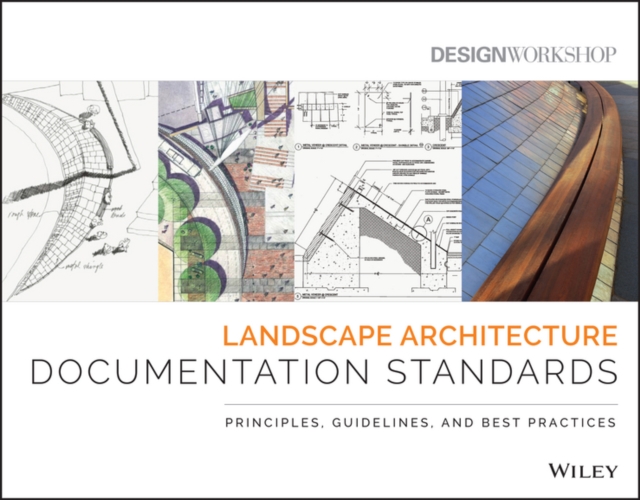
Landscape architecture documentation standards : principles, guidelines, and best practices
SUPERB EXECUTION RELIES UPON RIGOROUS PROJECT DOCUMENTATION A project will only be built as well as it is documented.This publication focuses on the key documentation needs of the landscape architectural design and construction documentation process.
eBook


Evaluation of virtual tour in an online museum: Exhibition of Architecture of the Forbidden City
Online virtual museum tours combine museum authority and an academic approach with the diversity and interactivity of online resources; such tours have become an essential resource for online scientific research and education. Many important museums around the world are developing this type of online service. Comprehensive evaluation of such tours is, however, urgently needed to ensure effectiveness. This paper establishes a heuristic evaluation scale based on the literature. Taking the online virtual tour of the Exhibition of Architecture of the Forbidden City as a case study, confirmatory factor analysis was then carried out to improve the scale. Interviews were conducted to discuss and analyze the research results. The developed evaluation scale has four dimensions: authenticity , interaction , navigation , and learning . The results from the case study showed, first, that the exhibition had visual authenticity, but the behavioral authenticity was insufficient; second, the exhibition was generally interactive, but this aspect could be improved by enriching the links; third, the lack of effective navigation design for the exhibit was the main factor affecting experience quality. Fourth, the exhibition was informative and supported learning, but needs further improvement to the quantity and quality of information provided. Finally, the interviews revealed that the online exhibition did not entirely support people of different ages and abilities, so it needs further improvement to be wholly inclusive.
Journal Article


Impact of Passive Shading and Orientation on the Energy Efficiency of the Building
The article deals with a quick assessment of the architectural envelope of the building from an energy perspective in the design process. The software Grasshopper implemented in Rhino 3D, in combination with the energy simulation add-on Ladybug Tools, is used for evaluating passive energy savings. The first part presents the results of optimizing the orientation of the building and its impact on improving the building’s energy efficiency. The second part of the article assesses the impact of passive shading on the building’s energy balance.
Journal Article

PHPP illustrated : a designer's companion to the Passive House Planning Package
Concise, user-friendly and illustrated, this step-by-step book is ideal for practitioners and students looking to utilise the Passive House Planning Package (PHPP) as a design tool. Readers will be empowered as they better understand the essential criteria for all low energy building schemes, including: the impact of orientation, envelop to treated-floor ratios, and shading effects on the energy balance.
Book

Documentary analysis in the study of architectural designs of a hospital in the city of São Paulo
ABSTRACT Objectives: to report the experience of using architectural designs of a hospital for a historical documentary research. Methods: report of the experience of the methodological route of using architectural designs of a model hospital from 1974 to 2002. Results: after being spread on a worksheet, the projects of interest were selected, enabling the data arrangement, where the analytical chart was applied, containing: context; authorship; authenticity/ reliability; nature of the text and preliminary analysis. The findings were grouped by pertinence and similarity, resulting in the construction of categories of analysis. Final Considerations: architectural design is a challenging source, both for its pursuit, since it took two and a half years until it was legally licensed, as well as for involving specific terminologies and symbology of its own. A special attention should be given to the selection criteria, organization and analysis of the document, and sharing the access of unusual sources with the health area, like this one, so as to stimulate the development of research. RESUMO Objetivos: relatar a experiência do uso de projetos arquitetônicos de um hospital para uma pesquisa histórico-documental. Métodos: relato de experiência do percurso metodológico do uso de projetos arquitetônicos de 1974 a 2002 de um hospital modelar. Resultados: após planilhados, os projetos de interesse foram selecionados, criando um arranjo de dados em que foi aplicada a ficha analítica contendo: contexto; autoria; autenticidade/confiabilidade; natureza do texto e análise preliminar. Os achados foram agrupados por pertinência e similaridade, resultando na construção de categorias de análise. Considerações Finais: o projeto arquitetônico é uma fonte desafiadora, tanto em sua busca, visto que foram necessários dois anos e meio até que fossem licenciados legalmente, como por envolver terminologias específicas e simbologias próprias. Deve-se ter atenção aos critérios de seleção, à organização e à análise do documento, e compartilhar o manejo de fontes incomuns na área da saúde, como esta, a fim de favorecer o desenvolvimento da pesquisa. RESUMEN Objetivos: informar la experiencia del uso de proyectos arquitectónicos de un hospital, en una investigación histórica y documental. Métodos: reporte de experiencia del recorrido metodológico del uso de proyectos arquitectónicos de 1974 a 2002 de un hospital modelar. Resultados: después de insertar los proyectos en planillas, se seleccionaron los proyectos de interés, creando un arreglo de datos en que se aplicó la ficha analítica que contenía: contexto; autoría; autenticidad/fiabilidad; naturaleza del texto y análisis preliminar. Los hallazgos fueron agrupados por pertinencia y semejanza, resultando en la construcción de categorías de análisis. Consideraciones Finales: el proyecto arquitectónico es una fuente desafiante, tanto para su búsqueda, ya que fueron necesarios dos años y medio hasta que recibieron la licencia legal, como por involucrar terminologías específicas y simbologías propias. Se debe prestar atención a los criterios de selección, organización y análisis del documento y compartir el manejo de fuentes inusuales en el área de la salud, como ésta, a fin de favorecer el desarrollo de la investigación.
Journal Article


Optimization method of fatigue maintenance for cable-beam anchorage zone of suspension bridge
The cable-beam anchorage zone is the vital load-bearing component in suspension bridge. For maintenance of such structure, a method of probabilistic optimization was proposed by combining linear elastic fracture mechanics, structural reliability and life cycle cost analysis. In this method, the optimal maintenance time is obtained by determining the relative proportion between the costs under the condition that the structural reliability is higher than the minimum allowable reliability. While, the minimum total maintenance cost is obtained by determining the maintenance interval. Then, an example is presented to verify this method, with the following conclusions: the reliability index is inversely proportional to the failure probability, the change of maintenance cost and failure cost affects the optimal maintenance time, the optimal maintenance time will be ahead of time when consider the risk cost. And finally, when the maintenance time interval is determined, the optimal maintenance cost is affected by the maintenance probability and the failure probability.
Journal Article