
Catalogue Search | MBRL


Are you sure you want to remove the book from the shelf?

{{itemTitle}}
144
result(s) for
"Architecture Syria."
Sort by:

The Architecture and Liturgy of the Bema in Fourth- to Sixth-Century Syrian Churches
In fourth to sixth century Syria a nave-platform known as the Bema became popular in some regions before mysteriously disappearing; this study seeks to explain how these bemata functioned and which elements led to their decline.
eBook


The image of an Ottoman city : imperial architecture and urban experience in Aleppo in the 16th and 17th centuries
This urban and architectural study of Aleppo reconstructs the city's evolution over the first two centuries of Ottoman rule and proposes a new model for the understanding of the reception and adaptation of imperial forms, institutions and norms in a provincial setting.
eBook

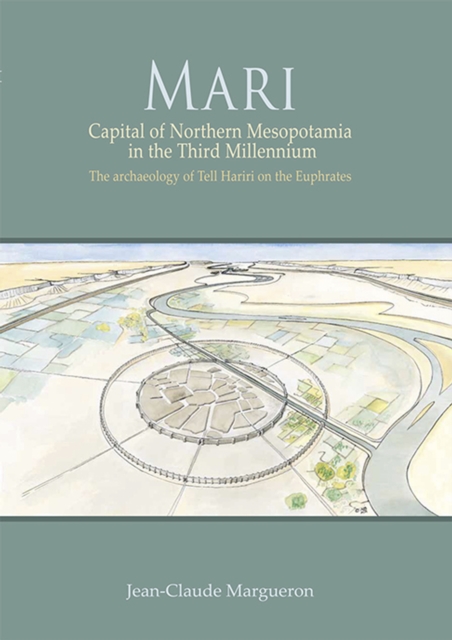
Mari : capital of northern Mesopotamia in the third millennium BC : the archaeology of Tell Hariri on the Euphrates
According to archaeological evidence gleaned over more than 70 years, Mari appears to have been the most important city in northern Mesopotamia from its foundation at about 2950 BC to 1760 BC. Situated at the heart of a river system and progressively linked with an overland network, Mari was the city that controlled the relations of central and southern Mesopotamia with the regions bordering the Taurus and Zagros mountains to the north and east and the Mediterranean coastal zone to the west. Mari drew its power from this situation, and the role it played accounts for the particularity of its features, positioned as it was between the Syrian, Assyrian, Iranian, Babylonian and Sumerian worlds.The evidence shows that there was not one city of Mari, but three successive cities, each having specific features, although there is a striking permanence in the original forms. The first, City I, founded in about 2950 BC, was based on remarkable principles of city planning, including a broad regional development with the creation of canals for irrigation and transport, one more than 120 km long. In the 23rd century BC City II was founded using impressive technology in city planning. Probably destroyed by Naram-Sin of Akkad about 2200 BC, it was entirely reconstructed as City III by a new dynasty, the Shakkanakku. In the 19th century BC this was replaced by an Amorite dynasty, which ruled until Hammurabi of Babylon destroyed Mari in 1760 BC. The diversity of the information and material that has been recovered confirms Mari's place as one of the best sources for understanding the brilliant Mesopotamian civilisation that developed between the beginning of the 3rd and the end of the 1st millennium BC.
eBook


In the shadow of the church : the building of mosques in early medieval Syria
In his book In the Shadow of the Church: The Building of Mosques in Early Medieval Syria Mattia Guidetti explains how late antique church architecture influenced the rise of Islamic religious architecture in the Syrian region.
eBook


Mari
According to archaeological evidence gleaned over more than 70 years, Mari appears to have been the most important city in northern Mesopotamia from its foundation at about 2950 BC to 1760 BC. Situated at the heart of a river system and progressively linked with an overland network, Mari was the city that controlled the relations of central and southern Mesopotamia with the regions bordering the Taurus and Zagros mountains to the north and east and the Mediterranean coastal zone to the west. Mari drew its power from this situation, and the role it played accounts for the particularity of its features, positioned as it was between the Syrian, Assyrian, Iranian, Babylonian and Sumerian worlds. The evidence shows that there was not one city of Mari, but three successive cities, each having specific features, although there is a striking permanence in the original forms. The first, City I, founded in about 2950 BC, was based on remarkable principles of city planning, including a broad regional development with the creation of canals for irrigation and transport, one more than 120 km long. In the 23rd century BC City II was founded using impressive technology in city planning. Probably destroyed by Naram-Sin of Akkad about 2200 BC, it was entirely reconstructed as City III by a new dynasty, the Shakkanakku. In the 19th century BC this was replaced by an Amorite dynasty, which ruled until Hammurabi of Babylon destroyed Mari in 1760 BC. The diversity of the information and material that has been recovered confirms Mari’s place as one of the best sources for understanding the brilliant Mesopotamian civilisation that developed between the beginning of the 3rd and the end of the 1st millennium BC.
eBook