
Catalogue Search | MBRL


Are you sure you want to remove the book from the shelf?

{{itemTitle}}
14,582
result(s) for
"Architecture as Topic"
Sort by:


Brain Landscape
We know as architects that the ability to measure human response to environmental stimuli still requires more years of work. Neuroscience is beginning to provide us with an understanding of how the brain controls all of our bodily activities, and ultimately affects how we think, move, perceive, learn, and remember. In an address to the American Institute of Architects convention in 2003, “Rusty” Gage made the following observations that set the core premise for this book: (1) The brain controls our behavior; (2) Genes control the blueprints for the design and structure of the brain; (3) The environment can modulate the function of genes, and ultimately, the structure of the brain; (4) Changes in the environment change the brain; (5) Consequently, changes in the environment change our behavior; and (6) Therefore, architectural design can change our brain and our behavior.
eBook


Application of spectrometric analysis to the identification of pollution sources causing cultural heritage damage
Black crusts are recognized to have been, up to now, one of the major deterioration forms affecting the built heritage in urban areas. Their formation is demonstrated to occur mainly on carbonate building materials, whose interaction with an SO
2
-loaded atmosphere leads to the transformation of calcium carbonate (calcite) into calcium sulfate dihydrate (gypsum) which, together with embedded carbonaceous particles, consequently forms the black crusts on the stone surface. An analytical study was carried out on black crust samples collected from limestone monumental buildings and churches belonging to the European built Heritage, i.e., the Corner Palace in Venice (Italy), the Cathedral of St. Rombouts in Mechelen (Belgium), and the Church of St. Eustache in Paris (France). For a complete characterization of the black crusts, an approach integrating different and complementary techniques was used, including laser ablation inductively coupled plasma mass spectrometry (LA-ICP-MS), Fourier transform infrared spectroscopy, optical and scanning electron microscopy. In particular, the application of LA-ICP-MS permitted to obtain a complete geochemical characterization in terms of trace elements of the black crusts from the inner parts to the external layers contributing to the identification of the major combustion sources responsible for the deterioration over time of the monuments under study. In addition, the obtained results revealed a relation between the height of sampling and the concentration of heavy metals and proved that the crust composition can be a marker to evaluate the variation of the fuels used over time.
Journal Article

Building American public health : urban planning, architecture, and the quest for better health in the United States
\"From the industrial revolution in the nineteenth century to the rise of the obesity epidemic after 1980, a long series of reformers and advocates have sought to protect and promote health by manipulating how we build housing and neighborhoods. This book is a history of using urban planning and architecture to better public health in the United Sates. It highlights the work of tenement reformers, zoning advocates, modernist architects, new urbanists, and members of the new built environment and health movement, among others, to improve the health and social conditions of their time by modifying the environment around them\"--Provided by publisher.
Book
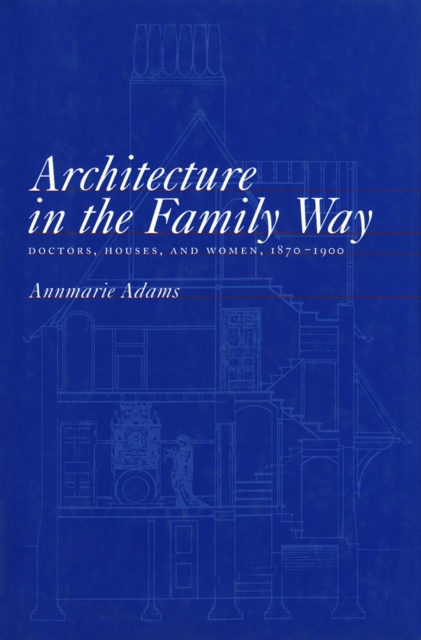
Architecture in the Family Way
Adams argues that the many significant changes seen in this period were due not to architects' efforts but to the work of feminists and health reformers. Contrary to the widely held belief that the home symbolized a refuge and safe haven to Victorians, Adams reveals that middle-class houses were actually considered poisonous and dangerous and explores the involvement of physicians in exposing \"unhealthy\" architecture and designing improved domestic environments. She examines the contradictory roles of middle-class women as both regulators of healthy houses and sources of disease and danger within their own homes, particularly during childbirth.
eBook


Asylum : inside the closed world of state mental hospitals
Powerful photographs of the grand exteriors and crumbling interiors of America's abandoned state mental hospitals.For more than half the nation's history, vast mental hospitals were a prominent feature of the American landscape. From the mid-nineteenth century to the early twentieth, over 250 institutions for the insane were built throughout the United States; by 1948, they housed more than a half million patients. The blueprint for these hospitals was set by Pennsylvania hospital superintendant Thomas Story Kirkbride: a central administration building flanked symmetrically by pavilions and surrounded by lavish grounds with pastoral vistas. Kirkbride and others believed that well-designed buildings and grounds, a peaceful environment, a regimen of fresh air, and places for work, exercise, and cultural activities would heal mental illness. But in the second half of the twentieth century, after the introduction of psychotropic drugs and policy shifts toward community-based care, patient populations declined dramatically, leaving many of these beautiful, massive buildings-and the patients who lived in them-neglected and abandoned. Architect and photographer Christopher Payne spent six years documenting the decay of state mental hospitals like these, visiting seventy institutions in thirty states. Through his lens we see splendid, palatial exteriors (some designed by such prominent architects as H. H. Richardson and Samuel Sloan) and crumbling interiors-chairs stacked against walls with peeling paint in a grand hallway; brightly colored toothbrushes still hanging on a rack; stacks of suitcases, never packed for the trip home. Accompanying Payne's striking and powerful photographs is an essay by Oliver Sacks (who described his own experience working at a state mental hospital in his book Awakenings). Sacks pays tribute to Payne's photographs and to the lives once lived in these places, \"where one could be both mad and safe.\"
eBook

Changes in BMI over 6 years: the role of demographic and neighborhood characteristics
Objective:
To undertake a 6-year longitudinal investigation of the relationship between the built environment (perceived and objectively measured) and change in body mass index (BMI). Specifically, this research examined whether change in BMI was predicted by objectively measured neighborhood walkability and socioeconomic status (SES), and perceived neighborhood characteristics (for example, crime, traffic and interesting things to look at) in addition to other factors such as age, gender, education, physical activity, fruit and vegetable consumption and smoking.
Design:
Longitudinal study
Subjects:
500 adults who provided complete data in 2002 and 2008 and who did not move over the course of the study (47.8% female; age in 2002: 18–90 years).
Measurements:
Telephone surveys in 2002 and 2008 measuring perceptions of their neighborhood environment and demographic factors. Objective measures of neighborhood characteristics were calculated using census data and geographical information systems in 2006.
Results:
Age, neighborhood SES and perceived traffic were significantly related to increased BMI over the 6 years. Younger participants and those in lower SES neighborhoods were more likely to have increased BMI. Agreement with the statement that traffic made it difficult to walk also predicted increased BMI.
Conclusion:
This study adds to the literature to show that BMI increased in low SES neighborhoods. Although more research is needed to fully understand how neighborhood SES contributes to obesity, it is without question that individuals in socially disadvantaged neighborhoods face more barriers to health than their wealthier counterparts. This study also calls into question the relationship between walkability and changes in BMI and emphasizes the necessity of longitudinal data rather than relying on cross-sectional research.
Journal Article

The Indoor Environment Handbook
Winner of the Choice Outstanding Academic Titles of 2010 award.
Ensuring that buildings are healthy and comfortable for their occupants is a primary concern of all architects and building engineers. This highly practical handbook will help make that process more efficient and effective.
It begins with a guide to how the human body and senses react to different indoor environmental conditions, together with basic information on the parameters of the indoor environment and problems that can occur. It then moves on to give a background to the development of the study and control of the indoor environment, examining the main considerations (including thermal, lighting, indoor air and sound-related aspects) for a healthy and comfortable indoor environment and discussing the drivers for change in the field. The final section presents a new approach towards health and comfort in the indoor environment, where meeting the wishes and demands of the occupants with a holistic strategy becomes the over-riding priority. The book is filled with useful facts, figures and analysis, and practical methods that designers who are keen to assess and improve the user experience of their buildings will find invaluable.
eBook