
Catalogue Search | MBRL


Are you sure you want to remove the book from the shelf?

{{itemTitle}}
48
result(s) for
"Architecture et climat."
Sort by:

Climate inheritance
Climate Inheritance' is a speculative design research publication that reckons with the complexity of world and heritage in the Anthropocene. The impacts of climate change on heritage sites -- from Venice flooding to extinction in the Galápagos Islands -- have garnered empathetic media attention in a landscape that has otherwise failed to communicate the urgency of the climate crisis. In a strategic subversion of the media aura of heritage, DESIGN EARTH casts ten World Heritage sites as narrative figures to visualize pervasive climate risks -- rising sea levels, extinction, droughts, air pollution, melting glaciers, material vulnerability, unchecked tourism, and the massive displacement of communities and cultural artifacts -- all while situating the present emergency within the wreckages of other ends of world, replete with the salvages of extractivism, racism, and settler colonialism. The possibilities of such climate inheritances are narrated in drawing triptychs and mythologies that bequeath other worlds and values.
Book

Fierce Climate, Sacred Ground
With three roads and a population of just over 500 people,
Shishmaref, Alaska seems like an unlikely center of the climate
change debate. But the island, home to Iñupiaq Eskimos who still
live off subsistence harvesting, is falling into the sea, and
climate change is, at least in part, to blame. While countries
sputter and stall over taking environmental action, Shishmaref is
out of time.
Publications from the New York Times to
Esquire have covered this disappearing village, yet few
have taken the time to truly show the community and the two
millennia of traditions at risk. In Fierce Climate, Sacred
Ground , Elizabeth Marino brings Shishmaref into sharp focus as
a place where people in a close-knit, determined community are
confronting the realities of our changing planet every day. She
shows how physical dangers challenge lives, while the stress and
uncertainty challenge culture and identity. Marino also draws on
Shishmaref's experiences to show how disasters and the outcomes of
climate change often fall heaviest on those already burdened with
other social risks and often to communities who have contributed
least to the problem. Stirring and sobering, Fierce Climate,
Sacred Ground proves that the consequences of unchecked
climate change are anything but theoretical.
eBook

Climatic architecture
\"This book is about climate and architecture. Written by the Swiss architect Philippe Rahm, it is at the same time a monograph on the architectural, urbanistic and landscape work of the office \"Philippe Rahm architectes\", a manifesto for a climatic architecture to face global warming, and a theoretical and practical treatise on the art of building atmospheres. Architecture and urbanism were traditionally based on climate and health, as we can read in treatises of Vitruvius, Palladio or Alberti, where exposure to wind and sun and variations in temperature and humidity influenced the forms of cities and buildings. These fundamental causes of urban planning and buildings were ignored in the second half of the 20th century thanks to the enormous use of fossil energy by heating and air conditioning systems, pumps and refrigerators, that today cause the greenhouse effect and global warming. The fight against climate change forces the architects and urban designer to take back seriously the climatic issue in order to base their design on more consideration to the local climatic context and energy resources. Faced with the climatic challenge of the 21st century, we propose to reset our discipline on its intrinsic atmospheric qualities, where air, light, heat or humidity are recognized and real materials of building, convection, thermal conduction, evaporation, emissivity, or effusivity are becoming design tools for composing architecture and cities, and through materialism dialectic, are able to revolutionize esthetic and social values\"-- Publisher's description.
Book
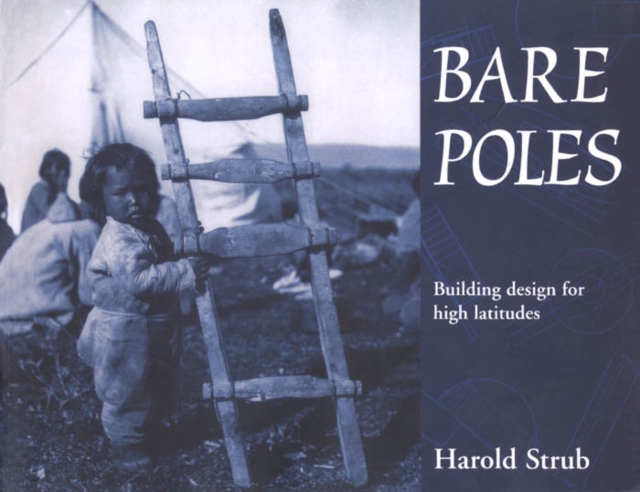
Bare Poles
Designing successfully for people in the world's coldest climates demands a broad understanding of site conditions and their unique social context. Until now such knowledge often lay unarticulated in the minds of a few experienced practitioners or in the disappearing traditions of aboriginal peoples.
eBook

Globalising the Climate
iiiFrequently presented as a historic last chance to set the world on a course to prevent catastrophic climate change, the 21st Conference of the Parties to the Climate Convention (COP21) was a global summit of exceptional proportions. Bringing together negotiators, scientists, journalists and representatives of global civil society, it also constituted a privileged vantage point for the study of global environmental governance \"in the making\".
This volume offers readers an original account of the current state of play in the field of global climate governance. Building upon a collaborative research project on COP21 carried out by a multidisciplinary team of twenty academics with recognised experience in the field of environmental governance, the book takes COP21 as an entry point to analyse ongoing transformations of global climate politics, and to scrutinise the impact of climate change on global debates more generally. The book has three key objectives:
To analyse global climate governance through a combination of long-term analysis and on-sight observation;
To identify and analyse the key spaces of participation in the global climate debate;
To examine the \"climatisation\" of a series of cross-cutting themes, including development, energy, security and migration.
This book will be of great interest to students, scholars and policymakers of climate politics and governance, international relations and environmental studies.
eBook

Cosmopolitanism in Mexican Visual Culture
Since the colonial era, Mexican art has emerged from an ongoing process of negotiation between the local and the global, which frequently involves invention, synthesis, and transformation of diverse discursive and artistic traditions. In this pathfinding book, María Fernández uses the concept of cosmopolitanism to explore this important aspect of Mexican art, in which visual culture and power relations unite the local and the global, the national and the international, the universal and the particular. She argues that in Mexico, as in other colonized regions, colonization constructed power dynamics and forms of violence that persisted in the independent nation-state. Accordingly, Fernández presents not only the visual qualities of objects, but also the discourses, ideas, desires, and practices that are fundamental to the very existence of visual objects.
Fernández organizes episodes in the history of Mexican art and architecture, ranging from the seventeenth century to the end of the twentieth century, around the consistent but unacknowledged historical theme of cosmopolitanism, allowing readers to discern relationships among various historical periods and works that are new and yet simultaneously dependent on their predecessors. She uses case studies of art and architecture produced in response to government commissions to demonstrate that established visual forms and meanings in Mexican art reflect and inform desires, expectations, memories, and ways of being in the world-in short, that visual culture and cosmopolitanism are fundamental to processes of subjectification and identity.
eBook

Nature's Line
Goyder was the first European explorer to see great salt lakes in the inland in flood and to witness the amazing transformation that follows the breaking of drought. When he attempted to adapt the pattern of settlement to climatic reality by defining the border of the zone of reliable rainfall, his warnings about the threat of drought were scorned.
eBook
Building for a Changing Climate
There is now a practically universal consensus that our climate is changing rapidly, and as a direct result of human activities. While there is extensive debate about what we can do to mitigate the damage we are causing, it is becoming increasingly clear that a large part of our resources will have to be directed towards adapting to new climatic conditions, with talk of survivability replacing sustainability as the new and most pressing priority. Nowhere is this more evident than in the built environment - the stage on which our most important interactions with climatic conditions are played out.
In this frank yet pervasively positive book, sustainable architecture guru Peter Smith lays out his vision of how things are likely to change, and what those concerned with the planning, design and construction of the places we live and work can and must do to avert the worst impacts. Beginning with the background to the science and discussion of the widely feared graver risks not addressed by the politically driven IPCC reports, he moves on to examine the challenges we will face and to propose practical responses based on real world experiences and case studies taking in flood and severe weather protection, energy efficient retrofitting, distributed power generation and the potential for affordable zero carbon homes. He ends with a wider discussion of options for future energy provision. This will be a provocative, persuasive and - crucially - practical read for anyone concerned with the measures we must take now to ensure a climate-proofed future for humanity.
eBook
Architecture in a Climate of Change
Revised to incorporate and reflect changes and advances since it was first published the new edition of Architecture in a Climate of Change provides the latest basic principals of sustainability and the future of sustainable technology.Including new material on wind generation, domestic water conservation, solar thermal electricity as well as international case studies Architecture in a Climate of Change encourages readers to consider new approaches to building making minimum demand on fossil based energy.
eBook
Klimaatwerk
Collectiebeherend Nederland ging altijd uit van strikte klimaatnormen. Deze werden gebruikt als ontwerpeisen en instelwaarden voor installaties en vervolgens deed de techniek de rest. Plaatsing van installaties bracht soms grote ingrepen in het gebouw met zich mee, evenals ruimteverlies en steeds hogere exploitatiekosten. Het vertrouwen op de techniek groeide en het gevoel heerste dat alle risico’s waren uitgesloten. Maar uit de praktijk blijkt niets minder waar.
eBook