
Catalogue Search | MBRL


Are you sure you want to remove the book from the shelf?

{{itemTitle}}
5,631
result(s) for
"Archival materials."
Sort by:


Documenting Performance
Performance in the digital age has undergone a radical shift in which a once ephemeral art form can now be relived, replayed and repeated. Until now, much scholarship has been devoted to the nature of live performance in the digital age; Documenting Performance is the first book to provide a collection of key writings about the process of documenting performance, focused not on questions of liveness or the artistic qualities of documents, but rather on the professional approaches to recovering, preserving and disseminating knowledge of live performance. Through its four-part structure, the volume introduces readers to important writings by international practitioners and scholars on:
the contemporary context for documenting performanceprocesses of documenting performancedocumenting bodies in motiondocumenting to create In each, chapters examine the ways performance is documented and the issues arising out of the process of documenting performance. While theorists have argued that performance becomes something else whenever it is documented, the writings reveal how the documents themselves cannot be regarded simply as incomplete remains from live events. The methods for preserving and managing them over time, ensuring easy access of such materials in systematic archives and collections, requires professional attention in its own right. Through the process of documenting performance, artists acquire a different perspective on their own work, audiences can recall specific images and sounds for works they have witnessed in person, and others who did not see the original work can trace the memories of particular events, or use them to gain an understanding of something that would otherwise remain unknown to them and their peers.
eBook

The politics of mass digitization
\"Today, anyone with an internet connection can access hundreds of millions of digitized cultural artifacts from the comfort of their desk. And every day cultural institutions and private bodies add thousands of new cultural works to the digital sphere. Mass digitization is forming new central nexuses of knowledge and new ways of engaging with that knowledge. What at first glance appears to be a simple act of digitization (a transformation of singular books from boundary objects to open sets of data), at closer examination reveals a complex process teeming with diverse political, legal, and cultural investments. This book argues that mass digitization has become a global cultural political project. It offers an in-depth examination of mass digitization of cultural memory in the West and beyond. It suggests a new approach to the study of digital cultural memory archives, proposing to understand mass digitization not as neutral technical processes, but rather as distinct subpolitical processes that build new kinds of archives and new ways of interacting with these archives. And it seeks to develop a critical theoretical framework for understanding the new archival apparatuses and the politics and memory dynamics they give rise to\"-- Provided by publisher.
Book

From Dust to Digital
\"Much of worldâ s documentary heritage rests in vulnerable, little-known and often inaccessible archives. Many of these archives preserve information that may cast new light on historical phenomena and lead to their reinterpretation. But such rich collections are often at risk of being lost before the history they capture is recorded. This volume celebrates the tenth anniversary of the Endangered Archives Programme at the British Library, established to document and publish online formerly inaccessible and neglected archives from across the globe. From Dust to Digital showcases the historical significance of the collections identified, catalogued and digitised through the Programme, bringing together articles on 19 of the 244 projects supported since its inception. These contributions demonstrate the range of materials documented â including rock inscriptions, manuscripts, archival records, newspapers, photographs and sound archives â and the wide geographical scope of the Programme. Many of the documents are published here for the first time, illustrating the potential these collections have to further our understanding of history.\"
eBook
Manuscripts and archives : comparative views on record-keeping
\"Archives are considered to be collections of administrative, legal, commercial and other records or the actual place where they are located. They have become ubiquitous in the modern world, but emerged not much later than the invention of writing. Following Foucault, who first used the word archive in a metaphorical sense as 'the general system of the formation and transformation of statements' in his 'Archaeology of knowledge' (1969), postmodern theorists have tried to exploit the potential of this concept and initiated the 'archival turn'. In recent years, however, archives have attracted the attention of anthropologists and historians of different denominations regarding them as historical objects and 'grounding' them again in real institutions. The papers in this volume explore the complex topic of the archive in a historical, systematic and comparative context and view it in the broader context of manuscript cultures by addressing questions like how, by whom and for which purpose were archival records produced, and if they differ from literary manuscripts regarding materials, formats, and producers (scribes).\"--Publisher's website
Book
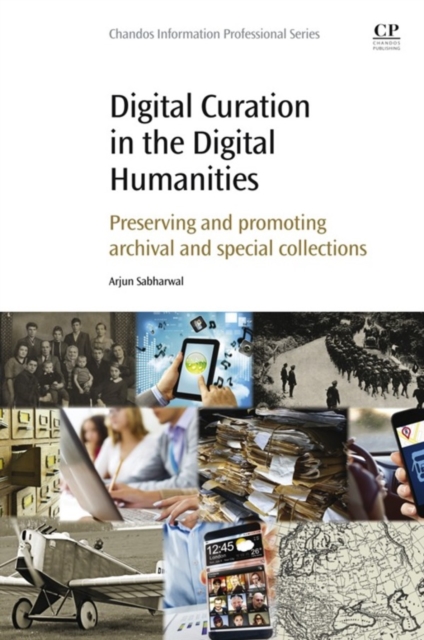
Digital curation in the digital humanities : preserving and promoting archival and special collections
Archives and special collections departments have a long history of preserving and providing long-term access to organizational records, rare books, and other unique primary sources including manuscripts, photographs, recordings, and artifacts in various formats.
eBook


Transmediation and the Archive
This book explores the possibilities of archival objects as diverse as early modern printed books and funeral masks, and asks what activities stand behind the making of heritage objects, and how digitization practices can inform our knowledge of various media.
eBook

The European Repository Landscape 2008
It is widely acknowledged that a common knowledge base for European research is necessary. Research repositories are an important innovation to the scientific information infrastructure. In 2006, digital repositories in the 27 countries of the European were surveyed, covering 114 repositories from 17 European countries. In follow-up, this book presents the results of the 2008 survey. It shows an increasing number of respondents, but also a further diversification in the character of a repository. Repositories may be institutional or thematically based, and as such non-institutional as well. 178 Institutional research repositories and 14 thematic and other noninstitutional repositories from 22 European countries took part actively.
European practices should be harmonized and the development of state-of-the-art technology facilitated. Authors, institutes and information users are stakeholders in this process. In presenting a state-of-the art of developments, this book is a valuable guide for them in developing their policy on research repositories without losing contact with others. The ongoing process of widespread and diversification of digital repositories puts urgency on coherent approach, as a basic feature of repositories is the retrievability of information that may be dispersed over many of them. Continued monitoring of developments will be necessary.
eBook