
Catalogue Search | MBRL


Are you sure you want to remove the book from the shelf?

{{itemTitle}}
338,132
result(s) for
"Area studies"
Sort by:


Emporialism
This book examines what Amr Kamal calls the phenomenon of
emporialism , or the convergence between the spaces and
imaginaries of empires and emporia in the context of a modern
Mediterranean divided among the British, French, and Ottoman
empires. By \"emporia,\" Kamal refers to the commercial network of
nineteenth-century department stores, which gained prominence after
the Suez Canal project. Taking as a focal point French and Egyptian
department stores, the author examines emporialism as a set of
phenomenological experiences, discursive and social praxes, and
mechanisms of control and resistance, born from the intersection of
modernity, colonialism, and mass consumption. Drawing on archival
evidence, Kamal reads iconographic and literary representations of
emporia in English, French, Arabic, and Hebrew, from the nineteenth
century to the present, addressing works by Émile Zola, Huda
Shaarawi, Jacqueline Kahanoff, and others. Emporialism, Kamal
argues, served to rewrite the history of the Mediterranean, to
reinvent national belonging, and to interrogate issues of modernity
and social justice.
eBook


Rethinking African Studies
This article takes stock of the state of African Studies and argues that (1) research on Africa is strongly dominated by outside, non-African, mostly Western views; (2) there is a tendency towards undifferentiated views on “Africa,” which usually concentrate on negative aspects, overlooking progress in many areas; (3) methodologies that focus on causal identification are rarely used; and (4) the field focuses on micro-perspectives while few works examine the big picture and the longue durée. The article then argues that Comparative African Studies, which builds upon the concept of Comparative Area Studies, can address some of these challenges. A pronouncedly comparative perspective would help to systematically combine and contrast “outside” and “inside” perspectives in order to better identify causal relationships and general trends both within Africa and between Africa and other regions. Consequently, African Studies requires more resources and should more effectively engage in multi-disciplinary and mixedmethods research.
Dieser Artikel nimmt eine Bestandsaufnahme der Afrikaforschung vor und stellt fest, dass (1) Forschung zu Afrika stark von externen, nicht afrikanischen, meist westlichen Perspektiven dominiert wird, (2) es eine Tendenz zu undifferenzierten Aussagen zu„ Afrika” gibt, die sich in der Regel auf negative Aspekte konzentrieren und positive Entwicklungen in vielen Bereichen übersehen, (3) Methoden mit einem Fokus auf kausale Identifikation selten angewandt werden, und (4) die Forschung eher Mikroperspektiven einnimmt und wenige Arbeiten das große Ganze („big picture“) und langfristige Entwicklungen („longue durée“) in den Blick nehmen. In der Folge wird argumentiert, dass Vergleichende Afrikastudien (Comparative African Studies), die auf dem Konzept der Comparative Area Studies aufbauen, zur Lösung dieser Probleme beitragen können. Eine dezidiert vergleichende Perspektive würde unter anderem helfen, externe und lokale Perspektiven zu kombinieren, um kausale Beziehungen, generelle Trends in Afrika sowie zwischen Afrika und anderen Regionen zu identifizieren. Die Forschung zu Afrika benötigt mehr Ressourcen und sollte effektiver multidisziplinäre und multimethodische Ansätze nutzen.
Journal Article


Education among Indigenous Palestinians in Israel
Unparalleled in its scope, this book provides a detailed longitudinal analysis of indigenous Palestinian education in Israel since the establishment of the state. Taking a comparative approach, Majid Al-Haj juxtaposes the Arab and Hebrew education systems in Israel, from early childhood through higher education, looking at their administration, resources, curriculum content, and outcomes. Significantly, the book represents the first systematic examination of an authentic model for social change and educational empowerment initiated by Palestinian Arabs in Israel through a civil society organization. Blending quantitative and qualitative methods, Al-Haj addresses widely debated theoretical questions about the role of education among indigenous minorities and disadvantaged groups in the context of cultural hegemony and inequalities, on the one hand, and self-empowerment and social change, on the other. Lastly, Al-Haj offers a review of the pre-state period and considers the impact of the ongoing Israel-Palestinian conflict on the goals, substance, and narratives of Arab and Hebrew education.
eBook

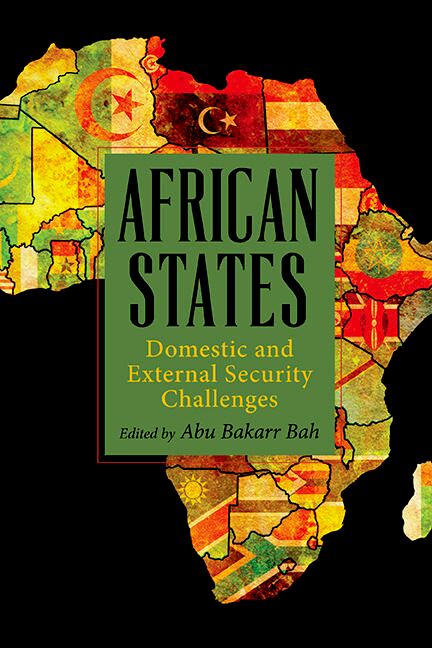
African States
Essays on the security challenges faced by African
states.
The central concern that shapes this edited volume is the
nature of the African state. Contributors point to an
interesting intersection of domestic and external issues that
is framed as a
glocalized security situation. Individual chapters
shed new insights on conflict drivers through case studies on
Sierra Leone, Cameroon, Mali, Nigeria, and Somalia, as well as
broader issues on the nature of African states. Arguments pivot
on three issues, which show the intersection of the domestic
and external forces that render the African state as a glocal
problem: (a) the colonial roots of the state, (b) problems of
governance, and (c) international and regional security
imperatives. By problematizing the African state and connecting
the security challenges of African states to colonialism,
patrimonial rule, and geopolitical security issues,
African States brings forth a new way of examining
African states through the notion of glocalized security.
eBook


Authoritarian Resilience in MENA Countries in the Era of Autocratization: a Comparative Area Study of Authoritarian Deepening
Building on studies on authoritarian resilience in the Middle East and North Africa (MENA), the article engages the current debate on global autocratization. It does so through the analysis of authoritarian deepening as a manifestation of contemporary authoritarianism from a cross-regional perspective. After framing theoretically and methodologically the study of authoritarian deepening, a Comparative Area Study—based on the most-different case study design—is conducted looking at countries from different regions that share similar trends of growing authoritarianism (Egypt, Cameroon, Cambodia, and Venezuela) to illustrate its characteristics. The article shows that authoritarian deepening is experienced by autocracies all over the world, although the MENA region is particularly affected. The comparative analysis of the four cases provides evidence that the process of authoritarian deepening has resulted in clear suppression of political competition, concentration of power in the executive, and even stricter control of rights and freedoms.
Journal Article