
Catalogue Search | MBRL


Are you sure you want to remove the book from the shelf?

{{itemTitle}}
5
result(s) for
"Ariosto, Ludovico, 1474–1533"
Sort by:

The Quest for Epic
Translated here for the first time into English, Sergio Zatti'sThe Quest for Epicis a selection of studies on the two major poets of the Italian Renaissance, Ludovico Ariosto and Torquato Tasso, by one of the most important literary critics writing in Italy today. An original and challenging work,The Quest for Epicdocuments the development of Italian narrative from the chivalric romance at the end of the fifteenth century to the genre of epic in the sixteenth century.
Zatti focuses on Ariosto'sOrlando Furioso, written in the early 1500s, and progresses to Tasso'sJerusalem Delivered, written at the end of the century, but also touches briefly on Boiardo, Ariosto's great predecessor at the Estense court in Ferrara, as well as on Pulci, Trissino, and many other Italian writers of the period. Zatti highlights the critical debates over narrative form in the sixteenth century that become signposts on the way to literary modernity and the eventual rise of the modern novel. Albert Russell Ascoli's introduction provides context by mapping Zatti's criticism and situating it among Italian and Anglo-American literary critical studies, making a case for the contribution this book will have for English-language readers.
eBook

The Romance Epics of Boiardo, Ariosto, and Tasso
InThe Romance Epics of Boiardo, Ariosto, and Tasso, Jo Ann Cavallo attempts a new interpretation of the history of the renaissance romance epic in northern Italy, focusing on the period's three major chivalric poets. Cavallo challenges previous critical assumptions about the trajectory of the romance genre, especially regarding questions of creative imitation, allegory, ideology, and political engagement.
In tracing the development of the romance epic against the historical context of the Ferrarese court and the Italian peninsula, Cavallo moves from a politically engaged Boiardo, whose poem promotes the tenets of humanism, to an individualistic Tasso, who opposed the repressive aspects of the counter-reformation culture he is often thought to represent. Ariosto is read from the vantage of his predecessor Boiardo, and Cavallo describes his cynicism and later mellowing attitude toward the real-world relevance of his and Boiardo's fiction.The Romance Epics of Boiardo, Ariosto, and Tassois the first critical study to bring together the three poets in a coherent vision that maps changes while uncovering continuities.
eBook

Ariosto Today
Ludovico Ariosto's Orlando furioso is one of the masterpieces of the Renaissance, a work which, many argue, signalled the apogee of Renaissance fancy on the precipice of irony and decline. This collection of essays brings together twelve noted Italian and American scholars to provide a complete picture of Ariosto and all his works, covering topics such as historical criticism relating to Ariosto's place and time; philological investigations into the varying literary styles of the author, especially outside of the Furioso ; Ariosto's extrinsic relationships with other literary traditions; and formal and thematic excavations of the immanent aesthetics of the Furioso .
Each essayist acknowledges the fact that Ariosto's creations are charged with allusions and allegiances variously inviting recognition or demanding the status of record. This reading of his works reveals that Ariosto was not a writer who believed, as it was previously thought, that literature is something escapist or fantastic in nature, but one who, in writing and re-writing his works, tried to re-interpret literary tradition while incorporating the new literary instruments that were available to him at the time: Ariosto's literary production is an integration of tradition and invention. This new reading of his work will be essential to any Italianist's library.
eBook

Hopeless Love
Book three of the Italian poet Matteo Maria Boiardo's epic poem Orlando innamorato (Orlando in Love) was published posthumously in 1494; in 1532, the poet Ludovico Ariosto published his final version of a sequel, Orlando furioso (The Frenzy of Orlando). At the end of his poem, Boiardo tells the tale of the princess Fiordispina's unfulfilled desire for the maiden warrior Bradamante, a story that Ariosto retells in the body of his later work.
In Hopeless Love , Mary-Michelle DeCoste examines both versions of the Fiordispina and Bradamante episode using feminist and queer theory. DeCoste then links these treatments of queer female desire to their wider cultural contexts by exploring their antecedents in genres such as medieval romance epic and hagiography and by examining similar tropes in other sixteenth-century romance epics. An important work on a previously overlooked subject, Hopeless Love uncovers the diffusion of queer female desire in Italian literature and promotes a better understanding of sexuality in medieval and Renaissance Europe.
eBook
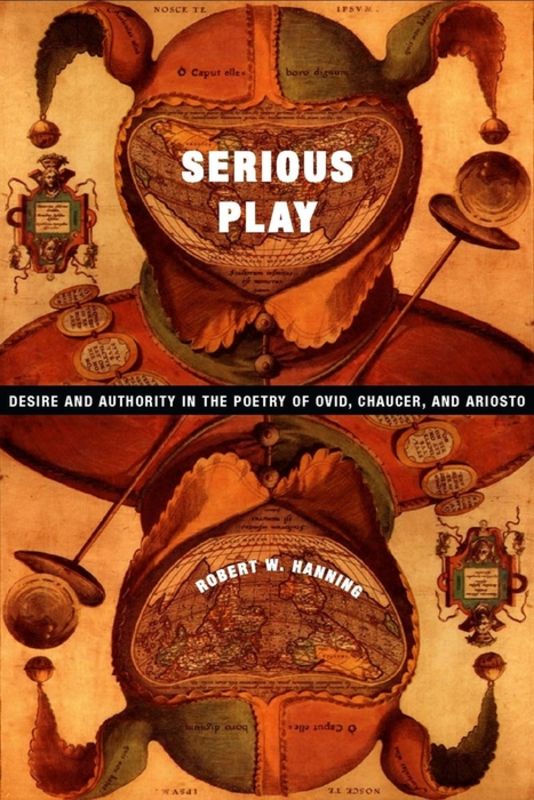
Serious play
Ovid, Chaucer, and Ariosto, premodern Europe's three greatest comic poets, found abundant cause for laughter in the foibles and follies of human desire. Yet they also excelled at the dangerous game of skewering the elites on whom they depended for patronage. The resulting depictions of addled lovers and rattled rulers create a unique dynamic of trenchant critique wrapped in amusing, enlightening, and disturbing fantasy, an achievement hailed as serio ludere, serious play, by Renaissance theorists. Through an imaginative analysis of Ovid's amatory poetry, Chaucer's dream poems and excerpts from the Canterbury Tales, and Ariosto's epic Orlando Furioso, Robert W. Hanning illuminates the contrast and continuities in often hilarious, always empathetic representations of bungled desire and thwarted political authority. He also documents the response of all three poets to the \"authority\" of cultural predecessors and poetic convention. Each poet lived through exciting times (Augustan Rome, late-medieval London, and high-Renaissance Italy, respectively) and their outsider-insider status links them as memorable speakers of comedic truth to power. Providing fresh perspectives on Ovid, Chaucer, and Ariosto within their rich historical moments, Serious Play isolates the elements that make their work so appealing centuries after they lived, observed, and wrote.
eBook