
Catalogue Search | MBRL


Are you sure you want to remove the book from the shelf?

{{itemTitle}}
7,709
result(s) for
"Arms control Government policy."
Sort by:

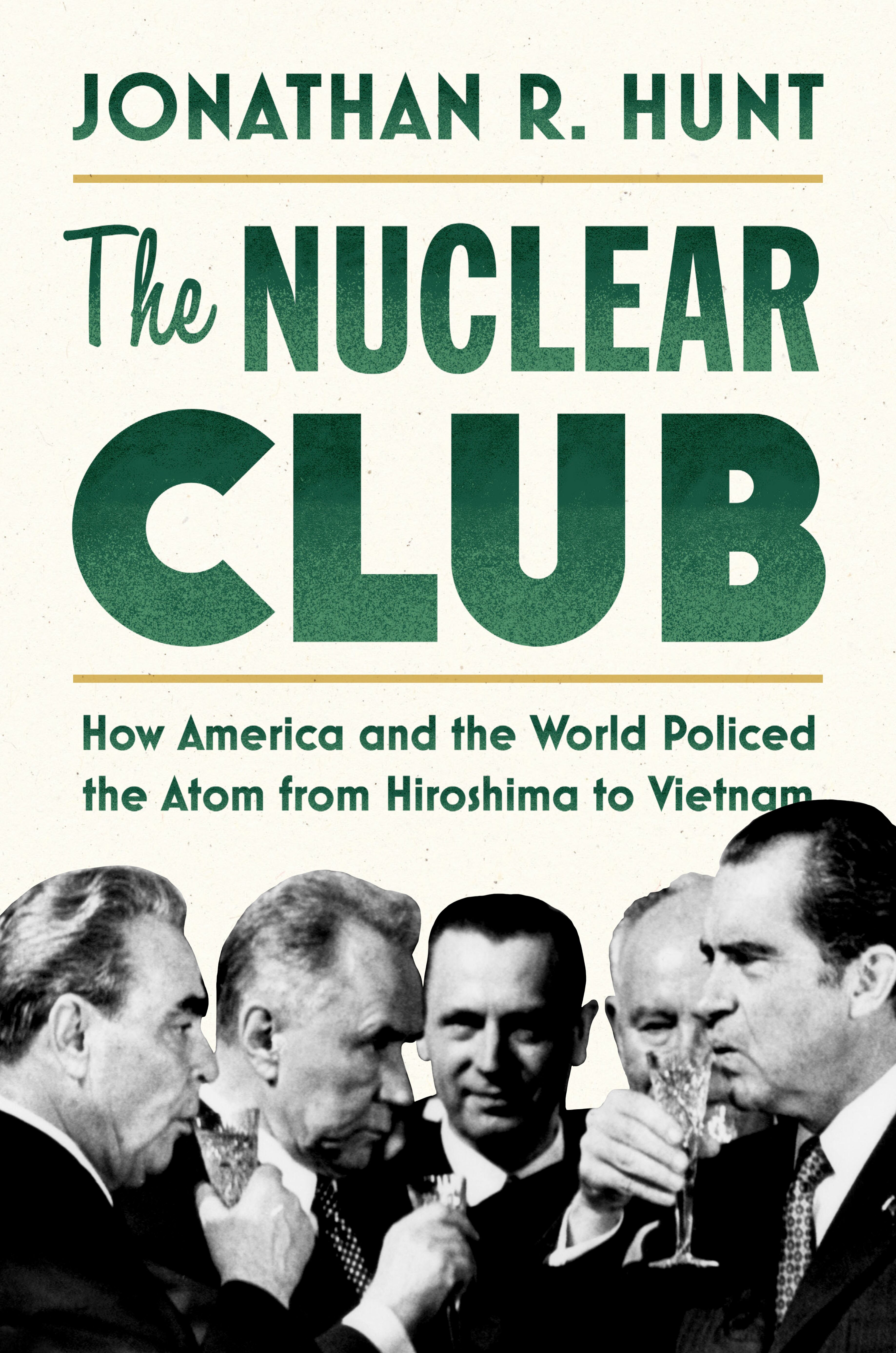
The nuclear club : how America and the world policed the atom from Hiroshima to Vietnam
The Nuclear Club reveals how a coalition of powerful and developing states embraced global governance in hopes of a bright and peaceful tomorrow. While fears of nuclear war were ever-present, it was the perceived threat to their preeminence that drove Washington, Moscow, and London to throw their weight behind the 1963 Limited Test Ban Treaty (LTBT) banishing nuclear testing underground, the 1967 Treaty of Tlatelolco banning atomic armaments from Latin America, and the 1968 Nuclear Non-Proliferation Treaty (NPT) forbidding more countries from joining the most exclusive club on Earth.
International society, the Cold War, and the imperial U.S. presidency were reformed from 1945 to 1970, when a global nuclear order was inaugurated, averting conflict in the industrial North and yielding what George Orwell styled a \"peace that is no peace\" everywhere else. Today the nuclear order legitimizes foreign intervention worldwide, empowering the nuclear club and, above all, the United States, to push sanctions and even preventive war against atomic outlaws, all in humanity's name.
eBook


Nuclear Statecraft
\"Gavin not only succeeds in disentangling postwar
nuclear history from the US-Soviet rivalry of the Cold War, but
provides a deeper and more complex understanding of the long-term
effects of nuclear weapons on Great Power relations.\" -
Matthew Jones ― International Affairs
We are at a critical juncture in world politics. Nuclear
strategy and policy have risen to the top of the global policy
agenda, and issues ranging from a nuclear Iran to the global zero
movement are generating sharp debate. The historical origins of our
contemporary nuclear world are deeply consequential for
contemporary policy, but it is crucial that decisions are made on
the basis of fact rather than myth and misapprehension. In
Nuclear Statecraft , Francis J. Gavin
challenges key elements of the widely accepted narrative about the
history of the atomic age and the consequences of the nuclear
revolution.
On the basis of recently declassified documents, Gavin
reassesses the strategy of flexible response, the influence of
nuclear weapons during the Berlin Crisis, the origins of and
motivations for U.S. nuclear nonproliferation policy, and how to
assess the nuclear dangers we face today.
In case after case, he finds that we know far less than we think
we do about our nuclear history. Archival evidence makes it clear
that decision makers were more concerned about underlying
geopolitical questions than about the strategic dynamic between two
nuclear superpowers.Gavin's rigorous historical work not only tells
us what happened in the past but also offers a powerful tool to
explain how nuclear weapons influence international relations.
Nuclear Statecraft provides a solid
foundation for future policymaking.
We are at a critical juncture in world politics. Nuclear
strategy and policy have risen to the top of the global policy
agenda, and issues ranging from a nuclear Iran to the global zero
movement are generating sharp debate. The historical origins of our
contemporary nuclear world are deeply consequential for
contemporary policy, but it is crucial that decisions are made on
the basis of fact rather than myth and misapprehension. In
Nuclear Statecraft , Francis J. Gavin challenges key
elements of the widely accepted narrative about the history of the
atomic age and the consequences of the nuclear revolution.On the
basis of recently declassified documents, Gavin reassesses the
strategy of flexible response, the influence of nuclear weapons
during the Berlin Crisis, the origins of and motivations for U.S.
nuclear nonproliferation policy, and how to assess the nuclear
dangers we face today. In case after case, he finds that we know
far less than we think we do about our nuclear history. Archival
evidence makes it clear that decision makers were more concerned
about underlying geopolitical questions than about the strategic
dynamic between two nuclear superpowers.Gavin's rigorous historical
work not only tells us what happened in the past but also offers a
powerful tool to explain how nuclear weapons influence
international relations. Nuclear Statecraft provides a
solid foundation for future policymaking.
eBook

Security, economics and nuclear non-proliferation morality : keeping or surrendering the bomb
This book seeks to elucidate the decisions of states that have chosen to acquire nuclear arms or inherited nuclear arsenals, and have either disarmed or elected to retain their warheads. It examines nuclear arms policy via an interconnected framework involving the eclectic use of national security based realism, economic interdependence liberalism, and nuclear weapons norms or morality based constructivism. Through the various chapters examining the nuclear munitions decisions of South Africa, Ukraine and North Korea, a case is built that a state's leadership decides whether to keep or give up \"the Bomb\" based on interlinked security, economic and norms governed motivations. Thereafter, frameworks evaluating the likelihood of nuclear proliferation and accessing the feasibility of disarmament are then applied to North Korea and used to examine recent Iranian nuclear negotiability. This book is an invaluable resource for international relations and security studies scholars, WMD analysts and post graduate or undergraduate candidates focusing on nuclear arms politics related courses.
Book


The Obama Administration's Nuclear Weapon Strategy
This book comprehensively outlines and evaluates the key Obama nuclear weapons policies, developments and initiatives from 2008-2012. Beginning with the administration's vision and goals posited in the 2009 Prague Speech and reaffirmed in the National Security Strategy of 2010, the book assesses the congressionally mandated Nuclear Posture Review, the New START Treaty, the pursuit of Comprehensive Nuclear-Test-Ban Treaty ratification, the Proliferation Security Initiative, the Fissile Material Cut-off Treaty, the Nuclear Non-Proliferation Review Conference, the Global Nuclear Security Summit - and the extent to which Obama, in the context of such initiatives, has actually upheld the lofty goals posited in Prague and differentiated himself from the nuclear path pursued by the Bush Administration. Additionally, the book evaluates the Obama Administration's dealings with other states in the context of its nuclear weapons policy - in particular, North Korea, Iran, Pakistan, Israel, India, and China.
Offering a comprehensive analysis of the current status of the US nuclear weapons strategy, this volume will be of great interest to scholars and students of American foreign policy, security studies and international relations.
eBook


Atomic Assurance
Do alliances curb states from developing nuclear weapons? If so, what kind of alliances work best and how do they function? This book looks at what makes alliances credible enough to prevent nuclear proliferation, how alliances can breakdown and encourage nuclear proliferation, and whether security guarantors like the United States can use their alliance ties to end the nuclear efforts of their allies. The author finds that military alliances are, surprisingly, less useful for preventing allies from acquiring nuclear weapons; that it is easier to prevent an ally from initiating a nuclear program than to stop an ally that has already started one; and that economic or technological reliance works better to reverse or to halt an ally’s nuclear bid than other factors. This book uses intensive case studies on West Germany, Japan, and South Korea, as well as a series of smaller cases on Great Britain, France, Norway, Australia, and Taiwan, to examine this critical issue.
eBook