
Catalogue Search | MBRL


Are you sure you want to remove the book from the shelf?

{{itemTitle}}
8,047
result(s) for
"Art, Baroque"
Sort by:

Relics, dreams, voyages : world baroque
Presents a wide-ranging and original meditation on cartographies of connection in all the arts of the baroque period.
BOOK

Between Renaissance and Baroque
Between Renaissance and Baroque is a stunning achievement – the first book to be written about the original painting commissions of the Jesuits in Rome. Offering a uniquely comprehensive and comparative analysis of the paintings and stuccoes which adorned all of the Jesuit foundations in the city during their first half century of existence, the study treats some of the most crucial monuments of late Renaissance painting including the original decorations of the church of the Gesù and the Collegio Romano, and the martyrdom frescoes at S. Stefano Rotondo.
Based on extensive new archival research from Rome, Florence, Parma, and Perugia, Gauvin Alexander Bailey's study presents an original, revisionist treatment of Italian painting in the last four decades of the sixteenth century, a critical transitional period between Renaissance and Baroque. Bailey relates the Jesuit painting cycles to the great religious and intellectual climate of the period, isolates the new stylistic trends which appeared after the Council of Trent, and looks at the different ways in which artists met the challenges for devotional art made by the religious climate of the post-Tridentine period.
Bailey also succeeds in providing the first ever written reconstructions of the Jesuit churches of S. Tommaso di Canterbury, S. Saba, and S. Apollinare, and the original novitiate complex of S. Andrea al Quirinale, the site of the most complex and original hospital decoration in late Renaissance Italy. Through these reconstructions, Bailey sheds new light on such works as Louis Richeôme's meditation manual on the paintings at S. Andrea, Le peinture spirituelle , a lively and detailed treatise on late Renaissance art that has never before been the subject of a thorough study. Ultimately, Bailey provides us with a new understanding of the stylistic and iconographic strands which shortly afterward were woven together to form the Baroque.
eBook
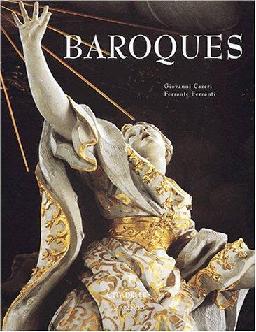

Baroque Seville
Baroque art flourished in seventeenth-century Seville during a tumultuous period of economic decline, social conflict, and natural disasters. This volume explores the patronage that fueled this frenzy of religious artistic and architectural activity and the lasting effects it had on the city and its citizens.
Amanda Wunder investigates the great public projects of sacred artwork that were originally conceived as medios divinos—divine solutions to the problems that plagued Seville. These commissions included new polychromed wooden sculptures and richly embroidered clothing for venerable old images, gilded altarpieces and monumental paintings for church interiors, elaborate ephemeral decorations and festival books by which to remember them, and the gut renovation or rebuilding of major churches that had stood for hundreds of years. Meant to revive the city spiritually, these works also had a profound real-world impact. Participation in the production of sacred artworks elevated the social standing of the artists who made them and the devout benefactors who commissioned them, and encouraged laypeople to rally around pious causes. Using a diverse range of textual and visual sources, Wunder provides a compelling look at the complex visual world of seventeenth-century Seville and the artistic collaborations that involved all levels of society in the attempt at its revitalization.
Vibrantly detailed and thoroughly researched, Baroque Seville is a fascinating account of Seville's hard-won transformation into one of the foremost centers of Baroque art in Spain during a period of crisis.
eBook


The matter of miracles
This book investigates baroque architecture through the lens of San Gennaro’s miraculously liquefying blood in Naples. This vantage point allows a bracing and thoroughly original rethink of the power of baroque relics and reliquaries. It shows how a focus on miracles produces original interpretations of architecture, sanctity and place which will engage architectural historians everywhere. The matter of the baroque miracle extends into a rigorous engagement with natural history, telluric philosophy, new materialism, theory and philosophy. The study will transform our understanding of baroque art and architecture, sanctity and Naples. Bristling with new archival materials and historical insights, this study lifts the baroque from its previous marginalisation to engage fiercely with materiality and potentiality and thus unleash baroque art and architecture as productive and transformational.
eBook

Baroque & Rococo
'Baroque and Rococo' is a perfect detailed introduction to two styles of art, architecture and expression that bridged the Renaissance with the Enlightenment period. 'Baroque and Rococo' explores the key artists and works of the period, such as Rembrandt and Bernini, while expanding it's reach to include Asia and Latin America. 'Baroque and Rococo' contains excellent illustrations, maps, glossaries and biographies to capture the diversity of two art forms growing against the backdrop to a world of plague, war, rioting, rebellion and religious dissent. 'Baroque and Rococo' encompasses all arts - religious and profane painting and sculpture, church architecture and interiors, public buildings, palaces, domestic interiors, festivals, gardens, theatres, music, ceramics and furniture - to provide the reader with a thorough understanding of this great period in art history.
Book

Neobaroque in the Americas
In a comparative and interdisciplinary analysis of modern and postmodern literature, film, art, and visual culture, Monika Kaup examines the twentieth century's recovery of the baroque within a hemispheric framework embracing North America, Latin America, and U.S. Latino/a culture. As \"neobaroque\" comes to the forefront of New World studies, attention to transcultural dynamics is overturning the traditional scholarship that confined the baroque to a specific period, class, and ideology in the seventeenth century. Reflecting on the rich, nonlinear genealogy of baroque expression,Neobaroque in the Americasenvisions the baroque as an anti-proprietary expression that brings together seemingly disparate writers and artists and contributes to the new studies in global modernity.
eBook

Velázquez
\"Diego Velázquez (1599-1660) was one of the towering figures of Western painting and Baroque art, a technical master renowned for his focus on realism and startling veracity. Everything he painted was treated as a portrait, from Spanish royalty and Pope Innocent X to a mortar and pestle. In this comprehensive introduction to Velázquez's life and art by Richard Verdi, the artist's major works are discussed along with most of his surviving output of approximately 110 paintings. Velázquez's greatest innovation, his unorthodox and revolutionary technique, is explored in relation to his most-celebrated contemporaries both in Spain and beyond, including Titian and Peter Paul Rubens. Velázquez concludes with a final chapter on the influence and importance of Velázquez's art on later painters from the time of his death to the art of recent times, including Francisco Goya, Pablo Picasso, Francis Bacon, and the Impressionists.\"-- Publisher marketing.
Book

Historical dictionary of Baroque art and architecture
The baroque period deals with the art created roughly between the end of the 16th and the early years of the 18th centuries. The masters of the era include Caravaggio, Gianlorenzo Bernini, Rembrandt, Vermeer, Diego Velazquez, and Nicolas Poussin. The Historical Dictionary of Baroque Art and Architecture, Second Edition covers the most salient works of baroque artists, the most common themes depicted, historical events and key figures responsible for shaping the artistic vocabulary of the era, and definitions of terms pertaining to the topic at hand.
This second edition of Historical Dictionary of Baroque Art and Architecture contains a chronology, an introduction, and an extensive bibliography. The dictionary section has over 600 cross-referenced entries on famous artists, sculptors, architects, patrons, and other historical figures, and events. This book is an excellent resource for students, researchers, and anyone wanting to know more about Baroque art.
eBook