
Catalogue Search | MBRL


Are you sure you want to remove the book from the shelf?

{{itemTitle}}
4
result(s) for
"Art, Chinese China Hong Kong 21st century."
Sort by:

Art in Hong Kong : portrait of a city in flux
'Art in Hong Kong' is a fascinating analysis of the history, current status and possible future of Hong Kong as an international art hub, written by a local journalist who has reported on the city's cultural landscape for many years. Enid Tsui presents a balanced and insightful picture of recent changes in the city which was once the poster-child of artistic freedom in Asia as well as the undisputed leader of the region's booming contemporary-art market.
BOOK
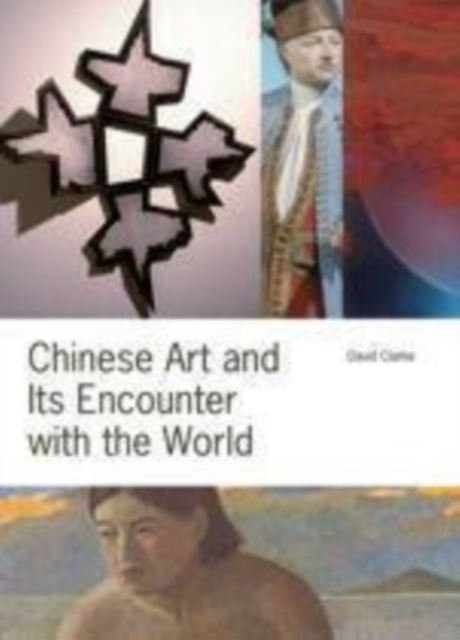
Chinese Art and Its Encounter with the World
This book examines Chinese art from the mid-eighteenth century to the present, beginning with discussion of a Chinese portrait modeler from Canton who traveled to London in 1769, and ending with an analysis of art and visual culture in post-colonial Hong Kong. By means of a series of six closely-focused case studies, often deliberately introducing non-canonical or previously marginalized aspects of Chinese visual culture, it analyzes Chinese art’s encounter with the broader world, and in particular with the West. Offering more than a simple charting of influences, it uncovers a pattern of richly mutual interchange between Chinese art and its others. Arguing that we cannot fully understand modern Chinese art without taking this expanded global context into account, it attempts to break down barriers between areas of art history which have hitherto largely been treated within separate and often nationally-conceived frames. Aware that issues of cultural difference need to be addressed by art historians as much as by artists, it represents a pioneering attempt to produce an art historical writing which is truly global in approach. It hopes to appeal both to those with a special interest in modern Chinese art and those who are only now becoming aware of this fascinating but previously under-explored field.
eBook

Media, Social Mobilisation and Mass Protests in Post-colonial Hong Kong
Since 2003, Hong Kong has witnessed a series of large-scale protests which have constituted the core of a reinvigorated pro-democracy movement. What drove tens of thousands of citizens to the street on a yearly basis to protest? What were the social and organizational bases of the protest movement? How did media and public discourses affect the protests’ formation and mobilization? How did the protesters understand their own actions and the political environment? This book tackles such questions by using a wide range of methods, including population and protest onsite surveys, media content analysis, and in-depth interviews with activists, politicians, and protest participants. It provides an account of the \"self-mobilization processes\" behind the historic July 1, 2003 protest, and how the protest kick-started new political dynamics and discursive contestations in the public arena which not only turned a single protest into a series of collective actions constituting a movement, but also continually shaped the movement’s characteristics and influence. The book is highly pertinent to readers interested in political development in Hong Kong, and as a case study on \"the power of critical events,\" the book also has broad implications on the study of both media politics and social movements in general.
1. Introduction: From a Critical Event to Ritualistic Protests 2. Public Opinion on the Eve of Explosion 3. Organization, Communication, and Mobilization 4. The Reshaping of Public Discourse 5. Constructing the Call for Democracy 6. Contextual Changes and Strategic Responses 7. Development of the Movement Organization 8. The Social Bases of Continual Protests 9. Making Sense of Participation 10. The June 4 Connection
Francis L. F. Lee is Associate Professor at the School of Journalism and Communication, Chinese University of Hong Kong. Joseph M. Chan is Professor of Journalism and Communication at the Chinese University of Hong Kong. He also served as the Changjiang Chair Professor of Journalism at Fudan University, Shanghai.
The authors also co-edited Media and Politics in Post-handover Hong Kong (also published by Routledge, 2008).
eBook

Lost in Transition
In this timely and insightful book, Yiu-Wai Chu takes stock of Hong Kong's culture since its transition to a Special Administrative Region of the People's Republic of China in 1997. Hong Kong had long functioned as the capitalist and democratic stepping stone to China for much of the world. Its highly original popular culture was well known in Chinese communities, and its renowned film industry enjoyed worldwide audiences and far-reaching artistic influence.
Chu argues that Hong Kong's culture was \"lost in transition\" when it tried to affirm its international visibility and retain the status quo after 1997. In an era when China welcomed outsiders and became the world's most rapidly developing economy, Hong Kong's special position as a capitalist outpost was no longer a privilege. By drawing on various cultural discourses, such as film, popular music, and politics of everyday life, Chu provides an informative and critical analysis of the impact of China's ascendency on the notion of \"One Country, Two Cultures.\" Hong Kong can no longer function as a bridge between China and the world, writes Chu, and must now define itself from global, local, and national perspectives.
eBook